.png)

Must-have watch accessories for serious collectors
- lewisvrichards3
- 11 minutes ago
- 7 min read
TL;DR:
Protecting luxury watches like Rolex and Patek Philippe requires specialized accessories and regular maintenance.
Using tools, care kits, and replacements can preserve the watch’s appearance, function, and value over time.
What every luxury watch collector needs
Protecting a Rolex, Patek Philippe, Audemars Piguet, Omega, or Cartier requires more than careful wearing. The right accessories prevent damage, preserve movement accuracy, and extend the life of pieces worth thousands. For collectors and investors, these are not optional extras.
The must-have watch accessories every serious collector should own:
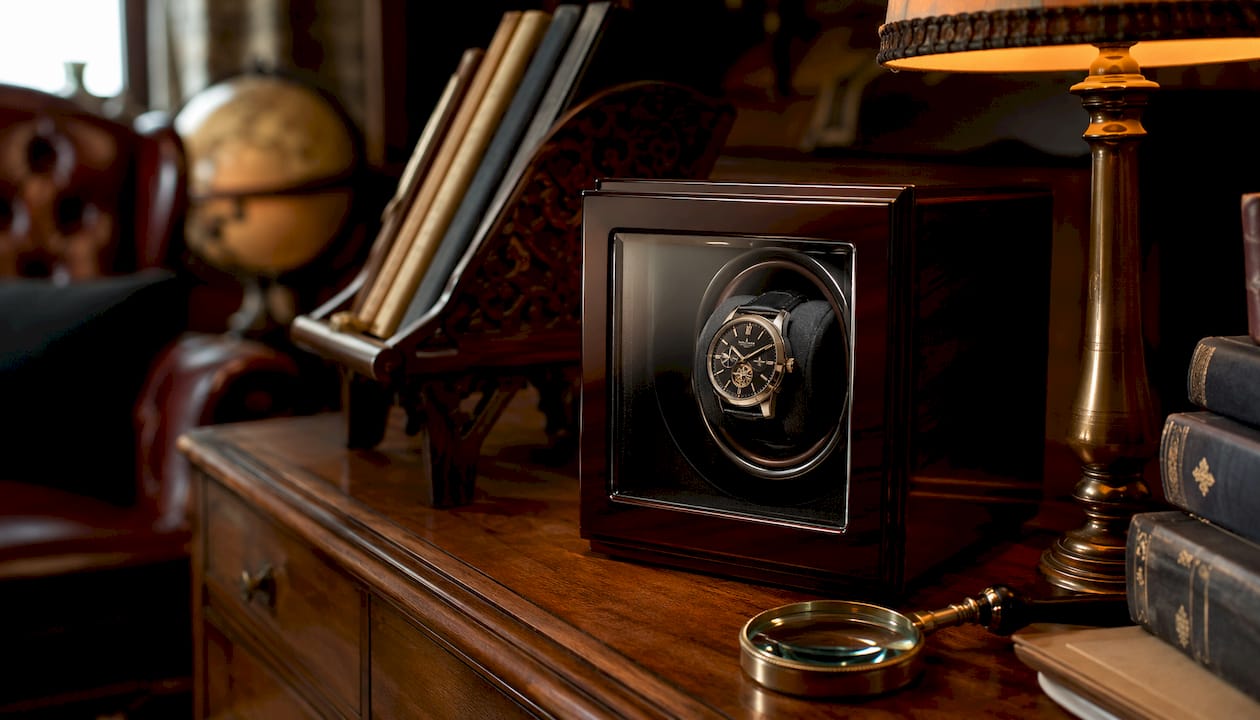
Watch winder — keeps automatic movements running and lubricants circulating when pieces are off the wrist
Specialist care kit — pH-balanced solutions, horsehair brushes, and ultra-fine microfibre cloths safe on all premium materials
Quality replacement straps — vulcanised rubber, nylon, leather, and hybrid options that protect original bracelets
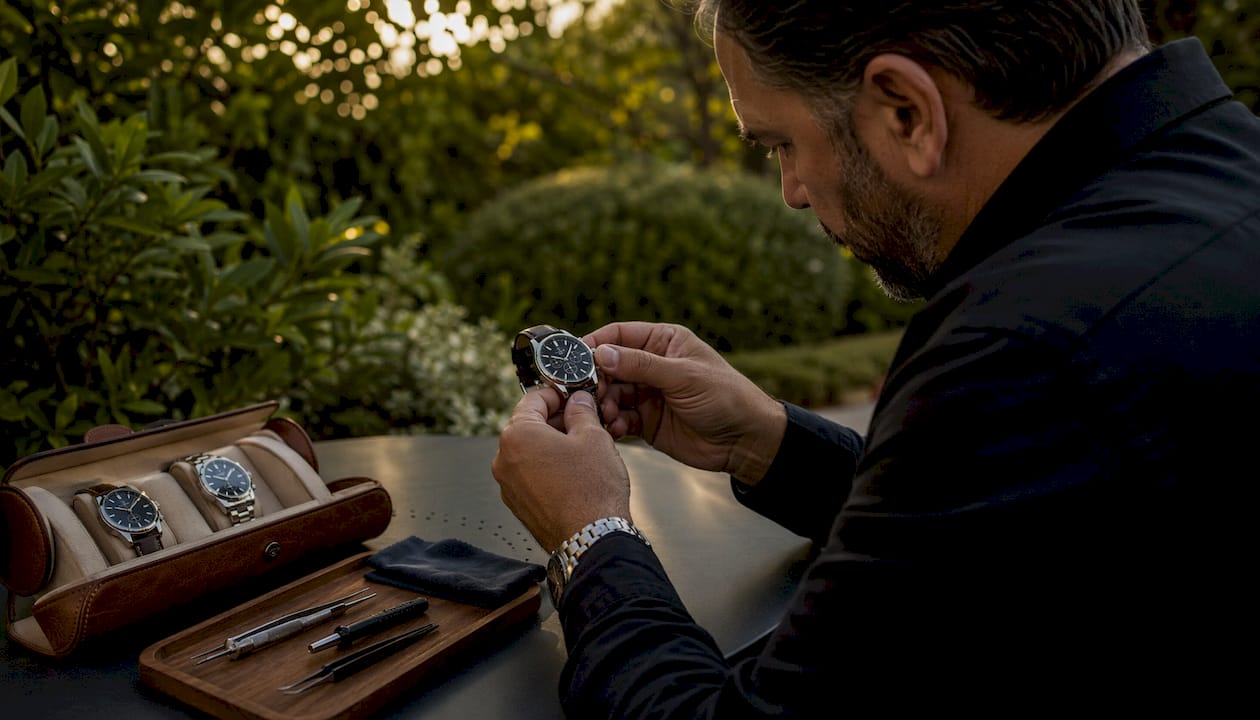
Precision maintenance tools — spring bar removers and screwdrivers with replaceable tips for safe in-house strap changes
Padded storage solutions — watch boxes, rolls, and travel cases with microfibre linings that prevent abrasion
Deployant buckles with micro-adjustment — protect original clasps and allow on-the-wrist resizing
Each of these plays a distinct role. Together, they form a complete ownership system.
Table of Contents
1. Watch winders keep your automatic movements healthy
An automatic watch that sits unworn for more than a day or two will stop. When it restarts, the lubricants inside the movement have settled, and the watch must be manually wound and reset. For a collector rotating between several pieces, that becomes a genuine inconvenience and, over time, a source of unnecessary wear.
A quality winder simulates wrist movement, keeping the rotor turning and lubricants distributed evenly. The best models offer adjustable turns-per-day (TPD) settings and clockwise, counter-clockwise, or bidirectional rotation, because different calibres from Rolex, Patek Philippe, and Audemars Piguet have different winding requirements. A silent motor matters too: a winder that hums in a bedroom or display cabinet undermines the experience.
Choose a winder with at least two programmable rotation modes
Match TPD settings to the manufacturer’s specification for each calibre
Opt for a model with a display function so the watch remains visible and accessible
Pro Tip: Never over-wind an automatic movement. Quality winders include a rest cycle that pauses rotation once the mainspring is fully tensioned, preventing unnecessary stress on the mechanism.
2. A proper care kit protects your investment’s appearance
Skin oils, salts, and environmental grime accumulate on a watch case and bracelet faster than most collectors expect. Left untreated, they degrade finishes, work into gaskets, and dull the lustre of polished surfaces. A luxury watch cleaning kit built for fine timepieces addresses this without risk.
The best kits include pH-balanced, water-based cleaning foam, soft horsehair and nylon brushes, and ultra-fine microfibre cloths. These are safe across the full range of premium materials: 316L and 904L steel, gold, platinum, titanium, sapphire, and acrylic crystals. WristClean, whose formula is used by watch manufacturers and service centres across more than 70 countries, developed their pH-balanced cleaner specifically to emulsify body oils and salts without disturbing factory finishes or waterproof gaskets.
Use a horsehair brush for case and bracelet links; switch to a softer nylon brush around crystal edges
Apply cleaning solution sparingly and always dry with a microfibre cloth, never paper or cotton
Clean after beach, pool, or gym exposure, not just when the watch looks dirty
3. Replacement straps give your collection new versatility
Swapping a strap is one of the most effective ways to extend a watch’s range without buying another piece. A Rolex Submariner on its Oyster bracelet reads one way; the same watch on a vulcanised rubber strap reads entirely differently. Beyond aesthetics, keeping the original bracelet off the wrist during casual or active wear preserves it and protects resale value.
Material choice matters significantly. The main options:
Vulcanised rubber — Rubber B pioneered precision-fit vulcanised rubber straps for Rolex, Patek Philippe, Audemars Piguet, and others. Non-toxic, hypoallergenic, and resistant to oil, sweat, and UV exposure, vulcanised rubber outperforms silicone in durability and suppleness over time
Nylon — strong, lightweight, and comfortable; suited to sport and field configurations
Leather — classic choice for dress watches; Saffiano and Epsom textures age well and complement formal attire
Hybrid straps — rubber linings bonded to leather or fabric exteriors balance traditional aesthetics with sweat and salt resistance, a practical solution for dress watches worn in active conditions
For collectors, watch strap alternatives in vulcanised rubber are worth prioritising. The material retains its shape and smell over years of use, cleans with soap and water, and integrates precisely with luxury cases when made to specification.
4. Precision tools make strap changes safe and straightforward
Changing a strap without the right tools risks scratching a case, tearing a strap, or damaging the lug area. On a Patek Philippe or Audemars Piguet, that damage is costly. Quality spring bar tools and screwdrivers remove that risk entirely.
Spring bar removal tool — finely tipped to access the lug area without contacting the case; look for a forked end and a pointed end for different strap types
Precision screwdriver set — replaceable tips that resist deformation are non-negotiable; a stripped screw on a bracelet link is an avoidable problem
Spare spring bars — treat these as consumables. They wear with repeated use, and a failed spring bar means a watch leaving your wrist unexpectedly. Keep a selection of correct sizes for each piece in your collection
Micro-adjustable deployant buckle — deployant buckles with micro-adjustment protect original clasps from impact and wear, and allow precise on-the-wrist sizing without removing the strap
Pro Tip: When using a spring bar tool, work over a soft cloth or watch cushion. If a spring bar slips, it will land on fabric rather than your case.
Proper tools also empower collectors to handle routine maintenance confidently, reducing unnecessary trips to a service centre for tasks that take minutes at home.
5. Storage solutions that protect when watches are off the wrist
A watch not being worn is still at risk. Dust, humidity, and contact with other objects cause scratches and accelerate degradation. Padded watch boxes with individual compartments and microfibre linings prevent abrasion far more effectively than stiff foam or loose storage. For travel, a leather watch roll or hard-shell case with a soft interior keeps pieces secure against the knocks of transit.
Microfibre-lined storage is the standard for serious collectors. A two-compartment leather case is sufficient for travel; at home, a lockable watch box with individual cushions is the preferred solution for a growing collection. Consider humidity control inserts if you store pieces in a safe or cabinet for extended periods.
6. How Horology-kings supports collectors beyond the purchase
Owning the right accessories is one part of the equation. Knowing your pieces are authentic and properly valued is the other. Horology-kings, based in Hertfordshire, works with collectors and investors across the UK to buy, sell, and source authenticated luxury watches from Rolex, Patek Philippe, Audemars Piguet, Omega, and Cartier.
Expert valuations carried out with full transparency, backed by watch authentication protocols that protect buyers and sellers alike
Watch repair and servicing advice and referrals, so collectors know when professional intervention is needed
Collection management guidance that helps investors track condition, provenance, and value across multiple pieces
Discreet sourcing for rare and sought-after references, using an established expert network
The confidence to wear, maintain, and invest in luxury watches comes from knowing every piece in your collection is genuine and properly cared for.
How often should you service a luxury watch?
Most Swiss manufacturers recommend a full service every several years for mechanical and automatic movements. Rolex, for instance, advises periodic servicing without specifying a fixed interval, acknowledging that usage and conditions vary. Patek Philippe and Audemars Piguet follow similar guidance.
In practice, a watch worn daily in varied conditions may need attention closer to the five-year mark. A piece rotated infrequently and stored correctly can comfortably reach seven years. The indicators to watch for: loss of power reserve, timekeeping deviation beyond the manufacturer’s specification, or any change in the crown or pushers’ feel. Do not wait for a watch to stop before booking a service. Preventive maintenance costs less than reactive repair, and on a piece worth five figures or more, that calculation is straightforward.
Avoiding common damage during everyday wear
Most damage to luxury watches is preventable. The scenarios that account for the majority of avoidable wear:
Magnetic exposure — modern movements are vulnerable to magnetic fields from phones, laptop speakers, and bag clasps. Keep watches away from these sources, and if you suspect magnetisation, a watchmaker can demagnetise a movement in minutes at no significant cost.
Water ingress — water resistance ratings degrade over time as gaskets age. A Rolex Submariner rated to 300 metres is not guaranteed to hold that rating after five years without a gasket check. Have water resistance tested during each service.
Impact on hard surfaces — the crystal and case are more resilient than the movement inside. A knock that leaves no visible mark can still disturb a delicate escapement. Avoid wearing high-value pieces during activities where impact is likely.
Strap neglect — a worn or cracked leather strap is a security risk. Inspect straps and spring bars regularly, and replace them before they fail rather than after.
For collectors who also hold pieces as investments, watch collector insurance is worth considering alongside physical protection measures.
Key takeaways
The most effective approach to protecting a luxury watch collection is combining the right accessories with a consistent maintenance routine and professional support.
Point | Details |
Watch winders prevent movement wear | Adjustable TPD settings keep automatic calibres running and lubricants evenly distributed. |
Care kits preserve finish and function | pH-balanced solutions safe on 316L/904L steel, gold, platinum, titanium, and sapphire protect appearance and gaskets. |
Vulcanised rubber straps outperform alternatives | Non-toxic, hypoallergenic, and resistant to oil and UV, they protect original bracelets and extend versatility. |
Precision tools enable safe in-house maintenance | Spring bar removers and replaceable-tip screwdrivers prevent costly case and strap damage during strap changes. |
Service every 5 years | Most Swiss manufacturers recommend periodic servicing to maintain accuracy and prevent costly mechanical failure. |
Recommended
Comments