.png)
Rolex selling guide for UK sellers: maximise your payout
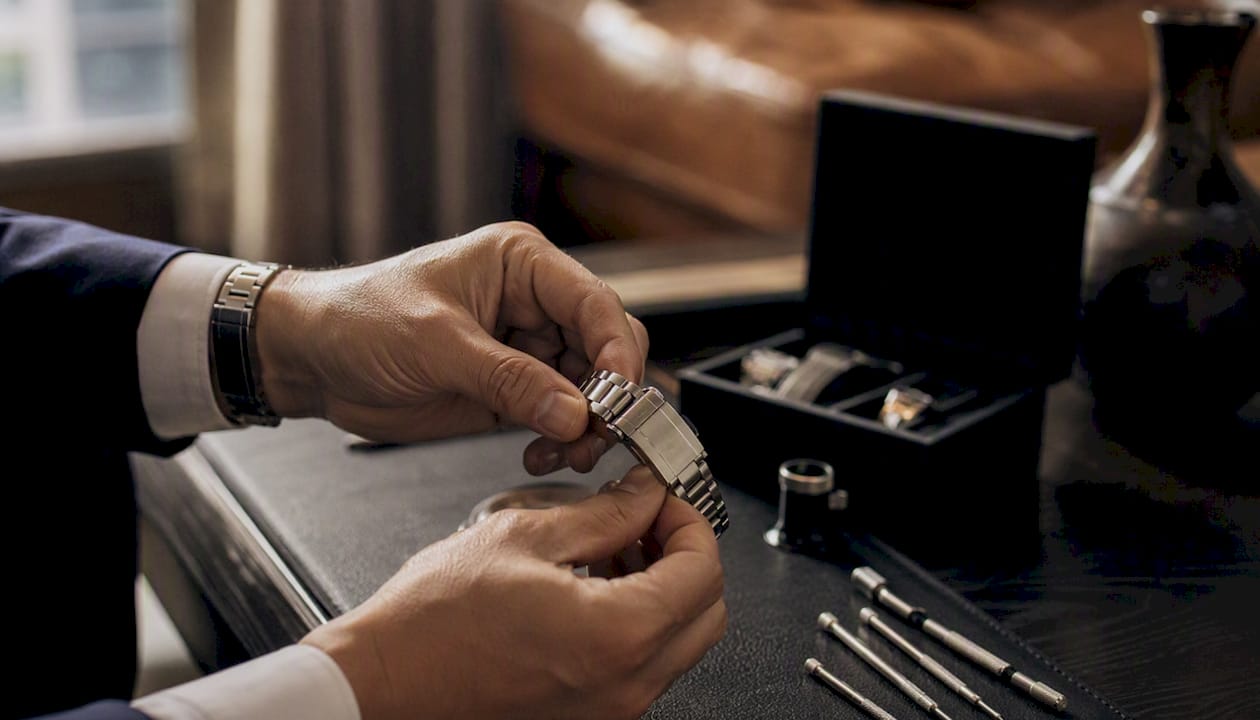
For most UK sellers, the best way to sell a Rolex is through a specialist dealer. You get a professional valuation, authenticated transaction, and cleared funds via secure bank transfer, without the fraud risk of a private sale or the long wait of an auction house.
Here is a quick overview of your main options and their primary trade-off:
Specialist dealer (e.g. Horology-kings): Secure, fast, and professionally authenticated. Net payout is slightly below private sale maximum, but the process is safe and straightforward.
Private sale (forums, social media, local meetup): Highest potential net, but carries the greatest risk of fraud, payment disputes, and wasted time.
Dedicated watch marketplace (listing with escrow): Good audience reach and some buyer protection, but platform fees and listing time reduce net proceeds.
General marketplace (eBay): Wide audience, but fees, disputes, and chargeback risk require careful management.
Auction house: Best suited to rare or historically significant pieces; commissions and timelines are the main trade-offs.
Pawnbroker or part-exchange: Fastest cash, lowest net. Suitable only when speed is the overriding priority.
As a reference point throughout this guide, HMRC governs the tax treatment of watch sales for UK residents, and authenticity-guarantee programmes offered by platforms and dealers provide a layer of verified provenance that protects both parties.
Key takeaways
Selling a Rolex in the UK for the best net payout requires matching your specific watch and priorities to the right channel, preparing documentation thoroughly, and completing the transaction via a secure, cleared payment method.
Point | Details |
Channel choice matters most | The selling channel is the single biggest determinant of net proceeds, more so than any individual preparation step. |
Full set commands a premium | The warranty card, original box, booklets, and extra links together meaningfully increase offers; the warranty card is the most valuable single document. |
Preparation reduces lowballing | Supplying the exact reference number, honest condition notes, and clear photos removes uncertainty and the discount dealers apply to it. |
Secure payment is non-negotiable | Always confirm cleared funds via bank transfer or escrow before releasing the watch; chargeback risk makes PayPal unsuitable for high-value sales. |
Horology-kings offers a structured UK route | Certified valuation, on-site authentication, and secure bank transfer payments make Horology-kings a reliable specialist option for UK sellers. |
Table of Contents
How is a Rolex’s value actually calculated?
Price is not set by model name alone. Two Rolex Submariner watches can differ by thousands of pounds depending on a handful of specific factors, and understanding them before you approach any buyer puts you in a far stronger negotiating position.
Reference number, not just model name. The reference number (found on the caseback or between the lugs at 12 o’clock) identifies the exact generation, dial configuration, and bracelet type. A Submariner 16610 and a 126610LN are both Submariners, but the market treats them very differently. Always supply the full reference, not just the name.
Condition across every component. Buyers assess the case, dial, bezel, and bracelet independently. Scratches on the case are expected and priced in; a faded or damaged dial is a more serious deduction. Critically, an original unpolished finish commands a premium over a watch that has been professionally polished. Polishing removes metal and softens the sharp edges that collectors prize. Never polish a Rolex before sale unless a professional horologist has assessed it and confirmed it adds value in your specific case.
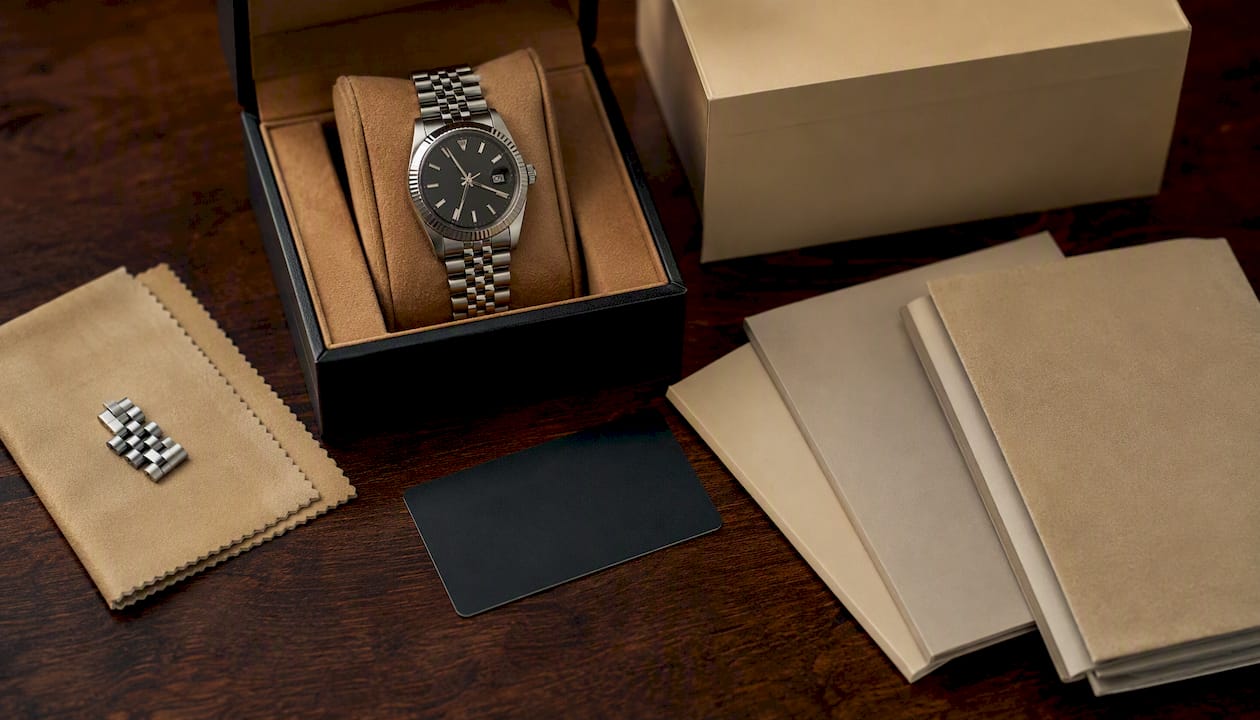
Completeness of the set. The original box, warranty card (sometimes called the guarantee card), booklets, hang tags, and any extra bracelet links together constitute a “full set.” The warranty card is typically the single most valuable document because it confirms authorised-dealer origin and the purchase date. A full-set watch routinely achieves a meaningfully higher offer than the same reference sold without papers.
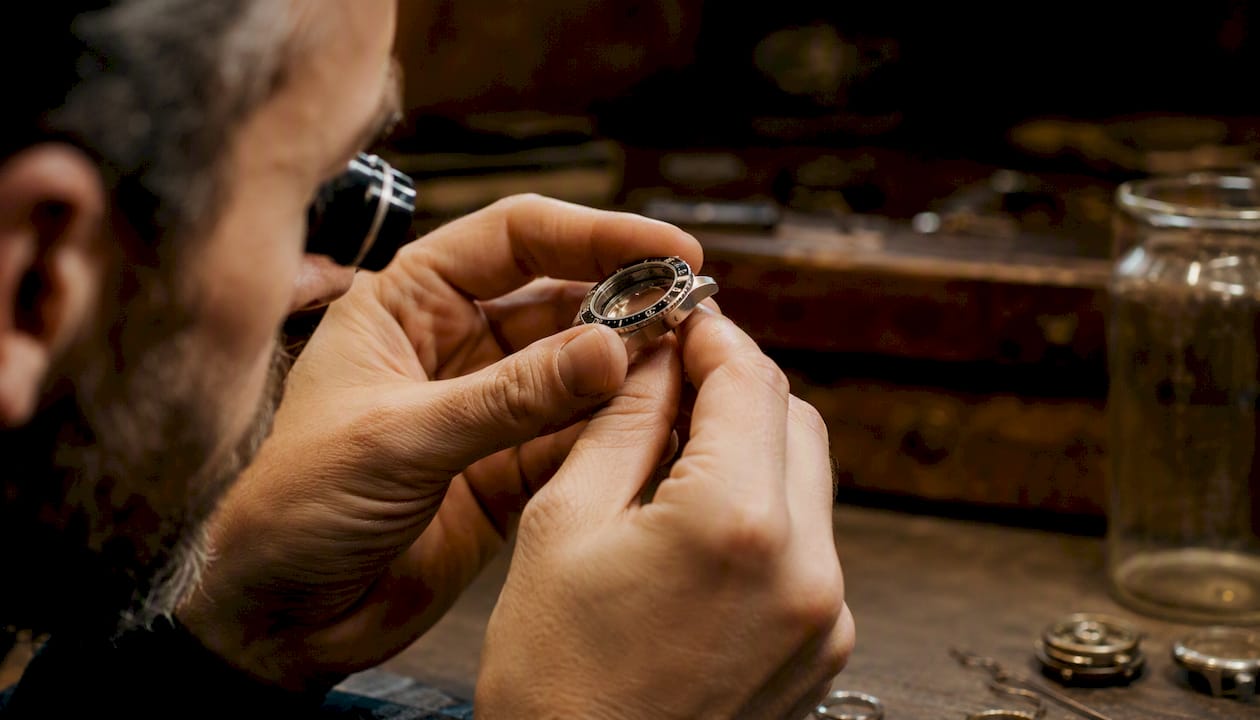
Provenance and service history. Buyers distinguish between servicing carried out by an authorised Rolex service centre and work done by an independent watchmaker. Authorised service records, with stamped paperwork, support a higher valuation. Independent service is not a disqualifier, but it carries less weight.
Rarity, dial variants, and market timing. Discontinued references, rare dial configurations (such as “tropical” dials or specific colour variants), and limited-production pieces attract collector premiums. Seasonal demand also plays a role: the September to December period tends to see stronger buyer activity, while January to March is typically quieter. Timing your sale to coincide with peak demand can influence the final figure.
Pro Tip: Before contacting any dealer or marketplace, locate the reference number and note the exact dial colour, bezel type, and bracelet code. Supplying this information upfront shortens valuation time and reduces the chance of a lowball offer based on assumed condition.
Statistic callout: According to Grailr’s guide to selling a Rolex, the choice of selling channel is the single biggest determinant of net proceeds — more so than any individual preparation step.
Which selling channel is right for you?
Channel selection determines more of your final net than almost any other decision. Each route involves a different balance of price, speed, effort, and safety.
Specialist dealer or broker
The dealer buys directly from you or sells on consignment. A direct buyout means cleared funds quickly, typically within a few days of authentication. Consignment takes longer but may achieve a higher price because the dealer sells to a vetted buyer at retail. Look for trust signals: professional authentication on-site, written valuations, secure bank transfer payments, and transparent fee disclosure. This route suits sellers who prioritise security and a clean process over squeezing the last percentage point.
Pros: Fast, authenticated, secure payment, no fraud risk, professional handling.
Cons: Net payout below private sale ceiling; dealer margin is built into the offer.
Private sale
Selling directly to another collector via forums, social media groups, or a local meetup offers the highest potential net. The risks are proportionally higher: fake payment confirmations, counterfeit currency, and “try before you buy” scams are all documented tactics. Escrow services and insured tracked shipping are non-negotiable for any private transaction above a few hundred pounds.
Pros: Maximum net proceeds; direct relationship with the buyer.
Cons: High fraud risk; significant time and effort; no professional authentication safety net.
Dedicated watch marketplaces
Specialist watch listing platforms attract a knowledgeable buyer base and typically offer escrow or payment protection. Fees vary by platform and listing tier. Timelines depend on demand for your specific reference, but a realistic window is one to six weeks for popular models.
Pros: Targeted audience; some buyer/seller protection; competitive pricing.
Cons: Platform fees reduce net; listing and communication effort required.
eBay
eBay’s Authenticity Guarantee programme requires eligible watches to pass a mandatory third-party inspection before the buyer receives them. This adds a layer of verified provenance for higher-value listings and can support buyer confidence. However, eBay’s fee structure, dispute process, and chargeback exposure via PayPal require careful management. Seller fees in the UK include a final value fee plus any promoted listing costs.
Pros: Massive audience; Authenticity Guarantee for qualifying watches; competitive bidding can push price up.
Cons: Fees, chargeback risk, and dispute resolution can be buyer-favourable.
Auction house
Christie’s selling guide for Rolex makes clear that auction is most appropriate for rare, historically significant, or provenance-rich pieces where competitive bidding among serious collectors is likely to exceed dealer offers. Typical timelines run from six to twelve weeks from consignment to cleared funds. Buyer’s and seller’s commissions combined can represent a substantial percentage of the hammer price.
Pros: Competitive bidding for rare pieces; prestigious provenance record.
Cons: Long timeline; combined commissions are significant; no guaranteed reserve outcome.
Pawnbroker or part-exchange
The fastest route to cash, but the lowest net. Pawnbrokers price in their own risk and liquidity requirements. Part-exchange against a new or pre-owned purchase can make sense if you are buying at the same time and the combined deal is favourable.
Pros: Immediate cash; no waiting.
Cons: Substantially below market value; no authentication process.
How to prepare your watch and paperwork before selling
Preparation directly affects the offers you receive. Buyers and dealers form an initial impression from your photos and the information you supply before they ever handle the watch.
Gather every physical item you have:
Original box (outer and inner)
Warranty or guarantee card
Instruction booklets and chronometer certificate
Hang tags and swing tags
Extra bracelet links
Original purchase receipt
Service records (authorised or independent, with dates)
Any correspondence from Rolex or an authorised dealer
Photography — the shots that matter:
Dial straight-on, well-lit, no flash glare
Case at 3 o’clock and 9 o’clock to show case condition
Caseback (closed; do not open the case)
Bracelet and clasp, showing any stretch or wear
Crown and crown tube area
Box and papers laid out together
Any service stamps or documentation
Cleaning and handling. Wipe the bracelet gently with a soft, lint-free cloth. Do not use ultrasonic cleaners, polishing cloths, or abrasive materials. If the watch has not been serviced in several years and is not running correctly, a professional service from a certified horologist may add value, but weigh the cost against the likely uplift. For watches in good running order, leave the finish as-is.
Documentation integrity. Never substitute aftermarket boxes or papers. Experienced buyers and dealers identify non-original items immediately, and presenting them as genuine is fraudulent. If you do not have the original box, say so clearly.
Pro Tip: Supply the exact reference number in your first message to any dealer or valuer. It takes thirty seconds to find (between the lugs at 12 o’clock, or on the caseback of newer references) and immediately signals that you are a prepared, credible seller.
What fees and taxes should you expect?
Understanding the cost structure of each channel prevents unpleasant surprises when the final figure lands. For a detailed breakdown of how watch selling fees are structured across different routes, Horology-kings’s fee guide covers the mechanics clearly.
Typical fee ranges by channel:
Specialist dealer (direct buyout): The dealer’s margin is built into the offer rather than charged as a separate fee. You receive a net figure; the dealer’s profit is the spread between their buy price and eventual sale price.
Consignment (dealer or marketplace): Commission typically ranges from around 10% to 20% of the sale price, deducted before you receive funds.
Auction house: Seller’s commission (sometimes called a “vendor’s commission”) varies by house and lot value. Combined with the buyer’s premium, total transaction costs can be substantial. Always request a written fee schedule before consigning.
eBay: Final value fees apply to the total transaction amount including postage. Promoted listing fees are additional. The Authenticity Guarantee inspection adds a processing step but does not typically carry a direct seller cost for qualifying listings.
Shipping and insurance. For private sales and marketplace listings, the seller usually arranges and pays for insured, tracked shipping. Specialist couriers with declared-value insurance are standard for watches above a few hundred pounds. For dealer sales, the dealer often arranges collection or provides a prepaid insured shipping label.
UK tax considerations. Capital gains tax (CGT) is not routinely triggered by a private individual selling a personal possession such as a watch. However, if you sell frequently, at scale, or as part of a business activity, HMRC may treat the proceeds differently. For high-value or repeated sales, seek guidance directly from HMRC or a qualified accountant. This article provides general information only and is not a substitute for professional tax advice.
Statistic callout: Grailr’s channel analysis notes that commission and timing differences between channels can materially affect the net amount a seller receives — reinforcing why fee comparison before committing to a route is worth the effort.
How do you authenticate a Rolex and complete the sale safely?
Authentication protects both parties. As a seller, being able to demonstrate your watch’s authenticity speeds up the transaction and supports your asking price. As a party handling a high-value asset, you also need to protect yourself from fraudulent buyers.
What buyers and dealers check:
Serial and reference numbers (confirm the watch is genuine Rolex production and match the papers)
Movement inspection (authorised service centres and specialist dealers open the caseback to verify the calibre)
Dial and hands (font, lume plots, printing quality, and cyclops lens magnification)
Crown and winding stem (genuine Rolex crowns have specific tolerances)
Weight and finishing (counterfeit watches rarely replicate the weight and brushed/polished finishing accurately)
For a thorough walkthrough of what professional authentication involves, Horology-kings’s complete authentication guide covers each check in detail. A practical authentication checklist is also available for sellers who want to prepare before a dealer inspection.
Safe payment methods:
Bank transfer (BACS/CHAPS): The standard for dealer transactions in the UK. Cleared funds are confirmed before the watch leaves your possession.
Escrow service: For private sales, a reputable escrow service holds funds until both parties confirm the transaction. This is the safest option for high-value private deals.
PayPal Goods & Services: Offers buyer protection, which means a buyer can raise a dispute after receiving the watch. For sellers, this carries chargeback risk. Use with caution for high-value pieces.
Cash: Acceptable for lower-value transactions in person, but carries its own risks. Never accept cash for a watch worth several thousand pounds without verifying notes.
Shipping safely:
Use a specialist courier with declared-value insurance covering the full sale price.
Require a signature on delivery.
Photograph the watch and packaging before sealing the parcel.
Never ship before cleared funds are confirmed.
Common fraud tactics to watch for: Overpayment scams (buyer “accidentally” sends too much and requests a refund before their payment clears); fake escrow sites (fraudsters create convincing escrow lookalikes); pressure to ship before funds clear; requests to use unusual payment methods (cryptocurrency, gift cards, wire transfers to overseas accounts). If anything feels rushed or irregular, stop the transaction.
For a broader guide to completing a safe luxury watch transaction, Horology-kings’s security guide covers the full process from offer acceptance to cleared funds.
How do you request a reliable valuation?
A well-prepared valuation request gets you a more accurate offer, faster. Dealers and valuers work from the information you supply; gaps in that information lead to conservative estimates.
Minimum information to include in your first contact:
Full reference number and serial number (supply the serial securely, not in public photos)
Exact dial description (colour, hour markers, any text variants)
Bezel type and condition
Bracelet type and approximate condition
List of included items (box, papers, booklets, links, receipts)
Date and location of last service, if known
Your asking price expectation or a request for an open valuation
Photo requirements:
Minimum six clear photos: dial, case sides (3 o’clock and 9 o’clock), caseback, bracelet/clasp, and papers laid flat
Natural light or a daylight lamp; avoid flash
No filters or heavy editing
What to expect from a professional valuation. A reputable dealer will provide either a written indicative offer or a firm offer subject to physical inspection. Indicative offers are typically valid for a short period (often 7–14 days) because the pre-owned market moves. A firm offer is made after the dealer has inspected the watch in person or received it for authentication.
Pro Tip: Never post the serial number in public forum threads or social media photos. The serial identifies your specific watch and can be used by fraudsters to create fake paperwork. Share it only directly with a verified dealer or valuer via private message or email.
What is the typical timeline from valuation to cleared funds?
Timelines vary significantly by channel, and setting realistic expectations prevents frustration.
Specialist dealer (direct buyout): Valuation within 24–48 hours of receiving photos and information. Physical inspection and authentication: typically same day or next day if you visit in person, or two to three days if posting the watch. Cleared funds: usually within one to two business days of authentication and offer acceptance.
Consignment (dealer or marketplace): Active listing period of one to six weeks for most popular references. Payment released after the buyer’s inspection window closes, typically within a few days of confirmed sale.
Dedicated watch marketplace (self-listing): Listing live within 24 hours; sale timeline depends on demand. Popular references in good condition with full papers can sell within days. Less common references may take several weeks.
eBay auction format: Seven to ten days for the listing to run. Payment typically clears within two to three business days of auction close, subject to the Authenticity Guarantee inspection window where applicable.
Auction house: Consignment to sale date is typically six to twelve weeks, depending on the auction calendar. Cleared funds follow the house’s payment terms, often 21–35 days after the sale.
Pawnbroker: Same-day cash or bank transfer.
After the sale is agreed:
Confirm cleared funds before releasing the watch or handing over paperwork.
Provide the buyer with all original documentation.
Retain copies of the sale agreement, your identification of the buyer (for private sales), and any correspondence.
Update your home contents insurance to remove the watch.
If the watch was insured separately, notify your insurer.
Keep records of the transaction for at least two years in case of any dispute or HMRC enquiry.
If a dispute arises: Most platforms have defined dispute windows (typically 30–180 days depending on the payment method). Keep all original packaging, photos taken before shipping, and the tracking confirmation until this window has closed.
Why Horology-kings is a trusted specialist route for UK sellers
Horology-kings, based in Hertfordshire, offers UK sellers a structured, secure process for valuing and selling Rolex watches and other Swiss luxury timepieces. The service covers direct purchase, consignment, and sourcing, with every transaction backed by professional authentication and secure UK bank transfer payments.
What the process looks like for sellers:
Step 1 — Submit your watch: Contact Horology-kings with photos, the reference number, and a condition note. The team provides an initial indicative valuation, typically within 24–48 hours.
Step 2 — Authentication: Once you accept the indicative offer, the watch is inspected by certified horologists. Serial checks, movement inspection, and condition verification are carried out on-site.
Step 3 — Firm offer: Following authentication, a firm offer is made. You are under no obligation to accept.
Step 4 — Cleared funds: On acceptance, payment is made via secure UK bank transfer. Funds are cleared before the watch is retained.
Trust signals sellers should look for (and that Horology-kings provides):
Written valuations from credentialed valuers
On-site authentication including serial and movement checks
Insured shipping arrangements
Secure bank transfer (not cash or unverified payment methods)
Transparent fee or margin disclosure
No-pressure selling environment
Horology-kings’s discreet sale process is particularly relevant for sellers who value confidentiality, whether selling a single piece or a collection. The reasons to choose a specialist dealer over an anonymous marketplace are well-documented: a curated buyer base, professional handling, and a clear chain of custody from seller to buyer.
[Editorial note: credentials, case studies, and proprietary transaction figures for Horology-kings are to be inserted here by the editorial team before publication.]
What most sellers get wrong about selling a Rolex
The conventional advice is to “get multiple valuations and pick the highest.” That is not wrong, but it misses the more important question: which channel is right for your specific watch and your specific priorities?
A seller with a full-set Submariner in excellent condition, no urgency, and comfort with online transactions will get a better net from a specialist marketplace or consignment arrangement than from an instant dealer buyout. A seller with a rare discontinued reference and strong provenance should at least explore auction, where competitive bidding among serious collectors can push the price well above any dealer’s offer.
The mistake most sellers make is treating all Rolex watches as interchangeable. A common reference in average condition with no papers is a commodity; price it accordingly and prioritise speed and safety. A rare dial variant with full documentation is a collector’s piece; it deserves a channel that reaches collectors, not just the fastest buyer.
The other underrated factor is preparation. Sellers who supply a clear reference number, honest condition notes, and good photos consistently receive higher initial offers than those who send a single blurry photo and a model name. Dealers price in uncertainty; remove the uncertainty and you remove the discount.
Finally, do not let urgency push you into an unsafe payment method. The difference between a cleared bank transfer and a PayPal payment that is later disputed can be the entire sale price. Speed is worth sacrificing for security.
Sell your Rolex securely with Horology-kings
If you want a secure, professionally authenticated sale without the complexity of managing a private listing, Horology-kings offers UK sellers a clear alternative. You receive a written valuation from certified horologists, on-site authentication, and cleared funds via secure UK bank transfer, with no hidden fees and no pressure to accept any offer.
Whether you prefer a direct purchase, a consignment arrangement, or simply want an expert valuation before deciding, the process starts with a single submission. Visit Horology-kings to submit your watch details and receive an initial valuation, or use the source a watch page to begin the process today.
Sources
The following resources were used in researching this guide and are worth bookmarking for price research, platform rules, and authentication guidance.
Market price and channel research:
Platform rules and fees:
Authentication guidance:
Tax and regulatory:
Recommended
Comments