.png)
Safe luxury watch packaging for collectors & sellers
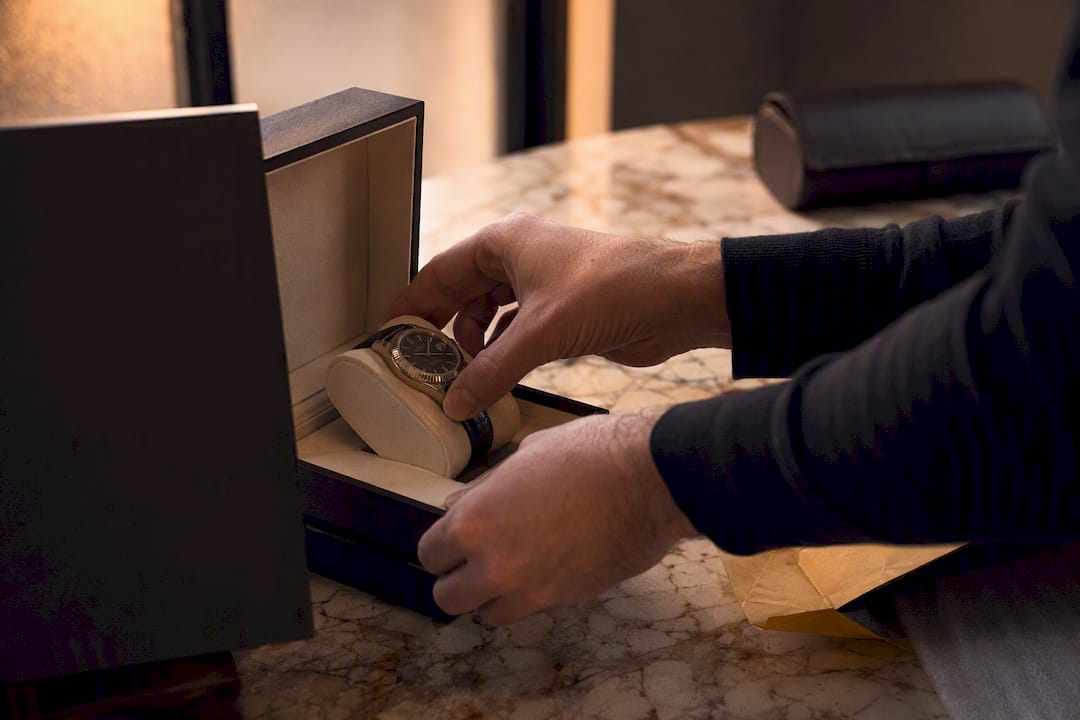
Safe luxury watch packaging comes down to three commands executed in order: immobilise the watch, seal it against moisture, and disguise the parcel so nobody can guess what’s inside. Get those three right and everything else, the box choice, the tape, the courier, simply supports them.
Before anything else touches your watch, run through this:
Rigid inner box with the original cushion, or a firm foam cradle if the manufacturer box is gone
Zip‑lock barrier over the watch itself, before any bubble wrap goes near it
Two layers of bubble wrap, snug but never compressed against the crown or crystal
Plain outer box with 5–7 cm of crash zone on every side, never an envelope or padded mailer
Tamper‑evident tape across every seam, signed if you can manage it
Signature‑required, fully insured, tracked delivery, booked through a specialist option such as Royal Mail Special Delivery domestically or a specialist international courier for higher values
Two things drive every decision here: shock protection, because a dropped parcel transfers force straight into a fragile movement, and discretion, because a branded box screams “steal me” to anyone handling it along the route.
Pro Tip: Photograph the watch and every packing stage as you go. A time‑stamped record costs you nothing and can be the difference between a paid‑out insurance claim and a dispute.
Key Takeaways
Safe luxury watch packaging works because immobilising the watch, sealing it against moisture, and disguising the parcel together cut both transit damage and theft risk to their lowest achievable point.
Point | Details |
Double‑box with a crash zone | Leave 5–7 cm of cushioning around the inner box on every side to absorb shock. |
Zip‑lock before bubble wrap | Prevents cutting damage when buyers unwrap the parcel with a blade. |
Stay plain and unbranded | Use generic outer boxes and labels; never advertise the contents or brand. |
Insure for full market value | Courier liability limits are usually far below a watch’s real worth. |
Consider a managed alternative | Horology Kings offers insured collection and secure transfer as an alternative to DIY shipping. |
Table of Contents
Why the double‑box method matters for safe luxury watch packaging
A single box, however well padded, gives an impact nowhere to go. The box‑in‑box method creates a buffer zone that absorbs energy before it reaches the watch, and it’s the technique most industry packing guides converge on for genuinely luxury watch protection.
Here’s the sequence that works:
Immobilise the watch inside its original box or a rigid travel case, secured on its cushion so nothing shifts.
Slide the whole inner package into a zip‑lock bag for a moisture and cut barrier.
Wrap the sealed inner box in at least two layers of bubble wrap.
Place that bundle into a small, snug inner box, taped shut.
Centre the inner box inside a new, double‑walled outer carton.
Fill every gap until you have 5 to 7 centimetres of cushioning on all sides, a margin that industry guidance from DHL specifically recommends for protecting valuables in transit.
That 5 to 7 cm figure isn’t arbitrary. A drop or a rough handling knock generates kinetic energy that has to dissipate somewhere before it reaches the watch. Thin padding compresses instantly and passes the shock straight through; a proper crash zone gives the impact somewhere to spend itself.
Pro Tip: Slip a printed copy of the shipping label and order paperwork inside the inner box. If the outer label is damaged or removed in transit, the parcel can still be identified and reunited with its owner.
How do you protect the watch inside the inner box?
The outer box stops crushing damage. What happens directly against the case is a separate problem, and it’s the one most sellers get wrong.
Use the original presentation box and factory cushion wherever you still have them. Without one, a small rigid box lined with a soft, lint‑free wrap and a firm foam cradle does the job. The watch should sit still, not rattle, but never be gripped so tightly that the case, crown or crystal takes pressure.
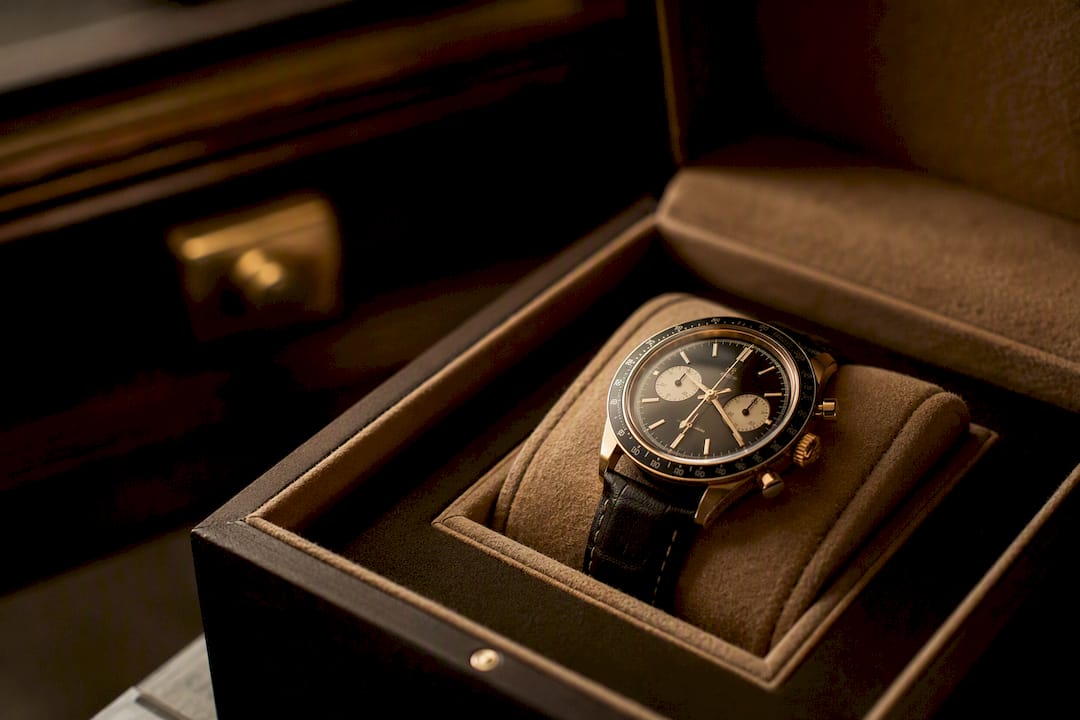
Before any bubble wrap goes anywhere near the piece, place it inside a transparent zip‑lock bag. This single step solves a genuinely common problem: buyers unwrapping parcels with scissors or a box cutter, and the blade catching the case underneath layers of bubble wrap. The bag stops the blade before it reaches metal.
A few more details separate careful packing from careless packing:
Wrap in two layers of bubble wrap, secured but never over‑tight against moving parts.
If the bracelet has removable links taken out for sizing, bag them separately rather than loose in the box, where they’ll rattle and scratch the case.
On quartz watches making a long international journey, consider removing the battery; on mechanicals, let the movement run down naturally rather than shipping it fully wound or resting on a winder.
Keep the crown pushed fully in throughout, and keep the parcel away from magnetic closures or devices, since mechanical movements can pick up magnetism in transit and need professional demagnetising afterwards.
Choosing the outer box, filler and edge protection
The outer carton has one job: absorb everything before it reaches the inner box. A single‑walled box bought years ago in the loft won’t do it. Use a new, double‑walled corrugated carton, sized so you get that 5 to 7 cm buffer around the inner box on every axis, not just the top and bottom.

Fillers matter more than people expect. Loose paper leaflets shift and settle within hours of being sealed, leaving gaps exactly where you need them least. High‑density foam inserts, air‑pillow cushions, or shaped foam blocks hold their position for the whole journey. Standard packing peanuts are the weakest option; they compress and migrate unless they’re the high‑rebound type.
For long‑haul routes or parcels passing through busy sorting corridors, foam corner clamshells or dedicated corner protectors give an extra margin against the drop‑and‑stack handling most parcels endure at some point.
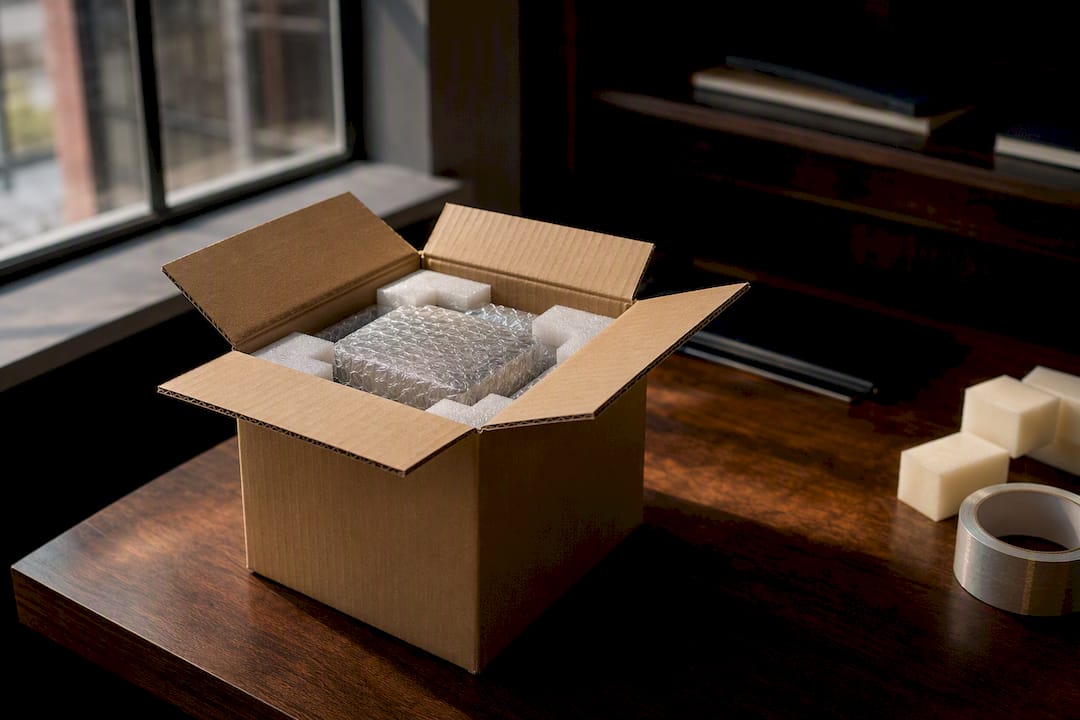
Seal every seam properly. An H‑taping method, reinforced tape run in an H shape across the main seam and both flaps, holds under stress far better than a couple of strips of household tape. Fix your shipping label to a flat panel of the box, never a flap that could tear loose, and print it rather than handwrite it.
Pro Tip: Coloured, reinforced adhesive tape and a properly printed label look deliberate and professional. A scruffy, handwritten parcel with sellotape peeling at the corners invites exactly the kind of curiosity you don’t want.
How do you keep a watch parcel discreet and tamper‑evident?
Discretion is a security measure, not an aesthetic preference. A branded manufacturer box on the outside of a parcel tells everyone who handles it, sorting staff, couriers, anyone glancing at a doorstep delivery, that there’s real value inside.
Use a plain, unbranded outer box; the manufacturer’s presentation box stays inside, never on the exterior.
Apply tamper‑evident tape, serialised security tape or a signature written across the seam, and photograph every sealed face before handover.
Label the contents generically, something like “precision instrument”, and never print the brand name anywhere on the exterior.
Require an adult signature on delivery, and where the courier offers it, choose scanned chain‑of‑custody handover over an unattended drop‑off.
Never under‑declare the value on a customs form unless the buyer has explicitly agreed to accept that risk. Doing so can void your insurance entirely if the parcel is lost or damaged, leaving you with no recourse at all.
What shipping and insurance options actually cover a watch’s full value?
Most couriers cap their default liability at a fraction of what a genuine luxury watch is worth. That gap is the single most overlooked risk in the whole process, and it’s the one sellers discover only after something goes wrong.
For domestic parcels, a tracked, signature‑required service is the baseline; for anything crossing a border, a specialist international courier with declared‑value cover makes more sense than a standard economy option. Either way, arrange third‑party specialist insurance or declared‑value coverage that matches the watch’s actual market price, not the courier’s automatic liability limit. Specialist cover for high‑value shipments commonly runs in the region of 1 to 2% of the declared value, a modest cost against a five or six‑figure watch.
Keep documentation tight:
Proof of sale and the buyer’s identity details.
Photographs of the case back, dial and any serial or reference numbers.
Pre‑transit condition photos from multiple angles.
A continuous, time‑stamped packing video if the platform allows it.
A copy of the invoice tucked inside the inner box.
For international sales, declare the true value on customs paperwork. Understating it to save on duty is a false economy that can invalidate cover entirely, and if you’re importing rather than exporting, it’s worth understanding the customs duties that apply to watches entering the UK before you commit to a price.
What should you check before handing the parcel to the courier?
Run this final pass before the parcel leaves your hands:
Photograph the watch’s serial and reference numbers, plus multiple angles of the packed inner box and the sealed outer box.
Confirm the insurance certificate is issued and note the policy number somewhere safe.
Double‑check the courier booking has tracking and signature‑on‑delivery selected.
Slip a spare copy of the shipping label and invoice inside the inner box.
Weigh and measure the finished parcel against your courier booking to avoid delays or extra charges.
Hand the parcel to an agent in person and collect a scan or receipt as proof of handover.
Before any of that, verify the buyer’s payment has actually cleared, and confirm customs instructions directly with them if the shipment is crossing a border. A perfectly packed watch sent before funds settle solves nothing.
A dealer’s note on the mistakes that actually happen
Most damage isn’t from a genuinely violent drop. It’s a buyer with a kitchen knife slicing through bubble wrap and catching the case underneath. That zip‑lock bag before wrapping isn’t a nicety, it’s the single cheapest fix for the most common claim I’ve seen.
For rare pieces worth genuine money, keep a foam‑lined watch sleeve on hand. It speeds up appraisal and claims handling if an insurer ever needs to inspect the piece against a pre‑loss condition record.
A managed alternative to packing and shipping it yourself
Packing a watch to this standard takes real care, and even then you’re the one holding the risk until it reaches the buyer. Horology-kings offers a managed route instead: our team handles expert packing, arranges insured courier collection, carries out a professional appraisal, and settles payment by secure UK bank transfer once everything is confirmed at the other end.

That means no chasing insurance certificates, no weighing boxes on your own kitchen scales, and no waiting to see whether a buyer’s payment has actually cleared before you commit the parcel to a courier. If you’d rather hand a high‑value piece to specialists who do this daily, start with a free valuation from Horology Kings or explore our sourcing and secure transfer service for your next acquisition.
Sources
Recommended
Comments