.png)

£60–£500 UK Sapphire Crystal Costs 2026, Factory or Independent?
- lewisvrichards3
- 2 hours ago
- 7 min read
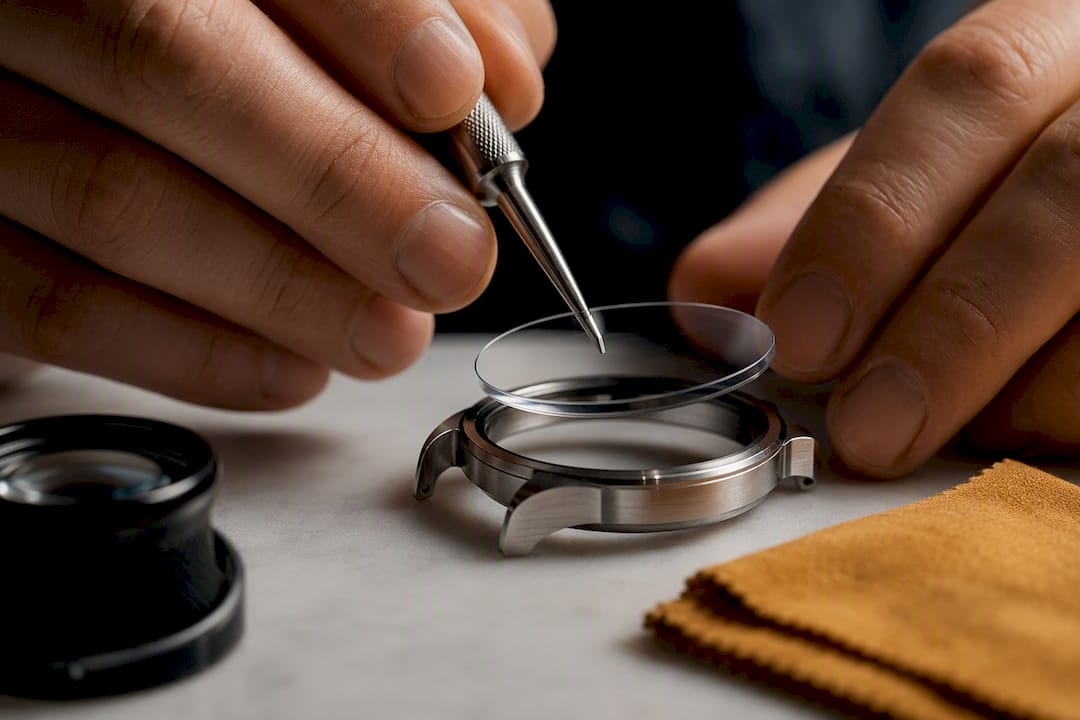
Sapphire crystal replacement typically costs between £60 and £180 through an independent workshop for a generic disc, rising to £150–£500 or more once you introduce model-specific shapes, cyclops lenses, or brand-authorised parts. The single biggest swing factor is whether your watch needs a genuine OEM crystal or accepts a high-quality compatible one, closely followed by whether the quote already includes VAT, a fresh gasket, and pressure testing.
TL;DR:
Replacing a sapphire crystal generally costs between £60 and £180 for a generic disc, but can rise to £150–£500 or more for shaped, coated, or OEM parts.
The total price heavily depends on whether the watch uses genuine OEM parts, the crystal’s shape or coating, and if pressure testing and gasket replacements are included.
Quotes can vary widely based on brand, model, and the need for additional services like case refinishing or movement inspection, especially for luxury watches.
DIY replacement is risky, often leading to cracks, leaks, or voided warranties, and is only advisable on inexpensive, non-waterproof watches.
Always request a detailed, written estimate covering parts, labor, VAT, and testing, and consider using a specialist for luxury or provenance-sensitive timepieces.
Table of Contents
Sapphire crystal replacement cost: realistic price ranges
Most independent repairers price crystal work in three tiers, and knowing which tier your watch sits in saves you from either overpaying or underestimating the job.
At the entry level, a flat, uncoated sapphire disc fitted to a straightforward case sits at the low end of the market. Independent-shop starting prices commonly range from about £30 to £150 for crystal work generally, with sapphire specifically often quoted between £60 and £180 once you account for the harder material and the diamond tooling needed to cut it. Some workshops advertise sapphire replacement from £60, with pressure testing bundled in as standard on waterproof cases.
The middle tier covers shaped, domed, or coated sapphire, the kind fitted to mid-range Swiss and Japanese watches with anti-reflective coatings or a slight curve to match the bezel. Expect this work to land in the mid-hundreds once labour and coating costs are added, particularly if the crystal needs edge polishing to seat correctly.
The top tier is factory or OEM service through the watch brand itself, or a specialist using brand-signed parts. A 2026 UK price guide notes that factory service packages often bundle in additional mandatory work, such as a full movement service or case refinishing, which is why a single cracked crystal on a luxury watch can return a quote running into the hundreds even when the crystal itself is a small part of that total.
What a quote usually includes and excludes tends to follow a pattern:
Included as standard: the crystal itself, fitting labour, and basic quality checks.
Often added separately: a new gasket, since removing the old crystal usually disturbs the seal.
Sometimes optional: pressure testing, though most reputable workshops include it for water-resistant cases.
Frequently excluded from headline prices: VAT and courier shipping, both of which can add a noticeable amount to the final invoice.
Always ask whether the figure you have been quoted is the full amount payable or a before-tax estimate.
What changes the price: the factors that most affect a quote
Two watches with an identical crack can generate wildly different quotes, and the reason almost always comes down to five variables a workshop will list when pricing the job.
Brand and model matter more than most owners expect. A crystal that integrates a cyclops magnifier, sits under an anti-reflective coating, or has a brand-specific curvature costs more to source and fit than a flat disc. Sapphire’s own hardness is part of the story here. Its scratch resistance comes from a Mohs rating of roughly 9, but that same hardness demands precise machining and fitting to avoid chipping during the cutting process, which pushes up both material and labour costs compared with acrylic.
Geometry is the second lever. A flat crystal is the cheapest shape to source and fit. A domed or double-domed crystal needs custom grinding, and synthetic sapphire’s growth and optical finishing process already adds cost before a workshop even touches the shaping.
OEM versus compatible parts is the factor with the longest tail. A genuine brand-signed crystal, sourced through the manufacturer, costs considerably more than a high-quality aftermarket equivalent, and it can also matter for resale value on collector-grade pieces where provenance and originality carry a premium.
Labour steps add up quietly: crystal removal, protecting the movement during the work, fitting a new gasket, resealing the case, and pressure testing afterwards. Each step is usually billed as part of a single labour charge, but it explains why “just swapping the glass” is rarely a five-minute job.
Fragment ingress into the movement during a crystal failure.
Case or crown damage discovered once the old crystal is removed.
A movement that needs cleaning or oiling anyway, spotted during inspection.
Pro Tip: Ask your repairer to photograph the movement before and after the crystal swap. It gives you proof of condition and stops any dispute over whether damage existed beforehand.
Cost scenarios by watch type
Seeing the factors applied to real examples makes budgeting far easier than reading ranges in isolation.
Everyday fashion or entry-level watch with a flat sapphire crystal. Parts typically run towards the lower end of the market, with labour added on top, landing the total repair somewhere in the £60–£150 band for most straightforward cases. This is the job most independent workshops handle in a single visit.
Premium mid-range watch with a coated or shaped sapphire crystal. A curved or anti-reflective crystal pushes the parts cost up, and fitting takes longer because the shape has to seat precisely against the bezel. Total costs in this bracket commonly sit in the low hundreds once gasket replacement and pressure testing are included.
Luxury brand requiring an OEM crystal or subject to factory policy. Here the maths changes completely. Model-fit OEM crystals can cost several times more than a generic equivalent, and factory channels frequently insist on a broader service rather than a single-part repair, which is why quotes in this category can run from £150 to £500 or beyond. Independent specialists using high-quality compatible crystals can offer meaningful savings against factory pricing, though the trade-off is accepting a non-brand-signed part.
The shattered crystal scenario. When sapphire cracks or shatters, fragments can fall directly into the movement. Workshop practice is to inspect the movement thoroughly and often service it before refitting a new crystal, which turns what should have been a simple job into a full movement clean and a considerably higher bill. If your watch has taken a hard knock and the crystal is cracked rather than merely scratched, budget for this possibility before you get the quote back.
DIY and parts-only purchases: the real costs and risks
Buying a sapphire disc and fitting it yourself looks like an obvious saving, but the numbers rarely work out that way once you account for tooling and mistakes.
Generic sapphire discs are significantly cheaper than model-fit OEM crystals when bought as parts only, and professional labour then adds a further £30–£100 depending on how complex the fitting is. On paper, sourcing the part yourself and skipping the labour charge sounds attractive.
In practice, sapphire’s hardness that makes it so scratch-resistant on your wrist is the same property that makes it brittle and unforgiving under a press tool. Fitting requires the correct die set for your case diameter, and a tolerance mismatch of even a fraction of a millimetre can crack the crystal or leave a seal that fails a pressure test.
Cracked crystals from incorrect die sizing, wasting the part entirely.
Damaged gaskets that leak water into the movement weeks later.
Voided servicing history, which some workshops factor into future repair quotes.
No pressure testing afterwards, leaving water resistance unverified.
The rule of thumb worth keeping: attempt DIY only on a cheap, non-waterproof fashion watch where a failed attempt costs you a spare part, never a repair bill. For anything with genuine value, Hodinkee’s material comparisons make the point well: sapphire “wears and forgets” precisely because it is fitted correctly the first time, and a botched DIY job undoes that advantage entirely.
How to choose a repairer and what to ask before approving a quote
A written estimate that lists parts, labour, and testing separately is the single best protection you have. A clear breakdown prevents surprise charges appearing after the work is already done.
Before you approve any quote, ask:
Is the replacement crystal OEM or a compatible part, and which one is being charged for?
Does the price include gasket replacement, resealing, and pressure testing, or are these extra?
Is VAT included in the figure you have been given, and does it cover shipping if the watch is being posted?
What is the realistic turnaround time, particularly if a specific part needs to be sourced?
Trust signals worth looking for include photographic evidence of the movement before and after work, a documented inspection noting any pre-existing damage, and a written guarantee on the crystal and reseal. A workshop that cannot confirm where its sapphire comes from, or waves away pressure testing on a water-resistant watch, is a red flag worth walking away from.
Pro Tip: Get the part source and warranty terms confirmed in writing before you say yes to the quote, not after the watch has already been opened.
Why specialist handling matters for luxury watches
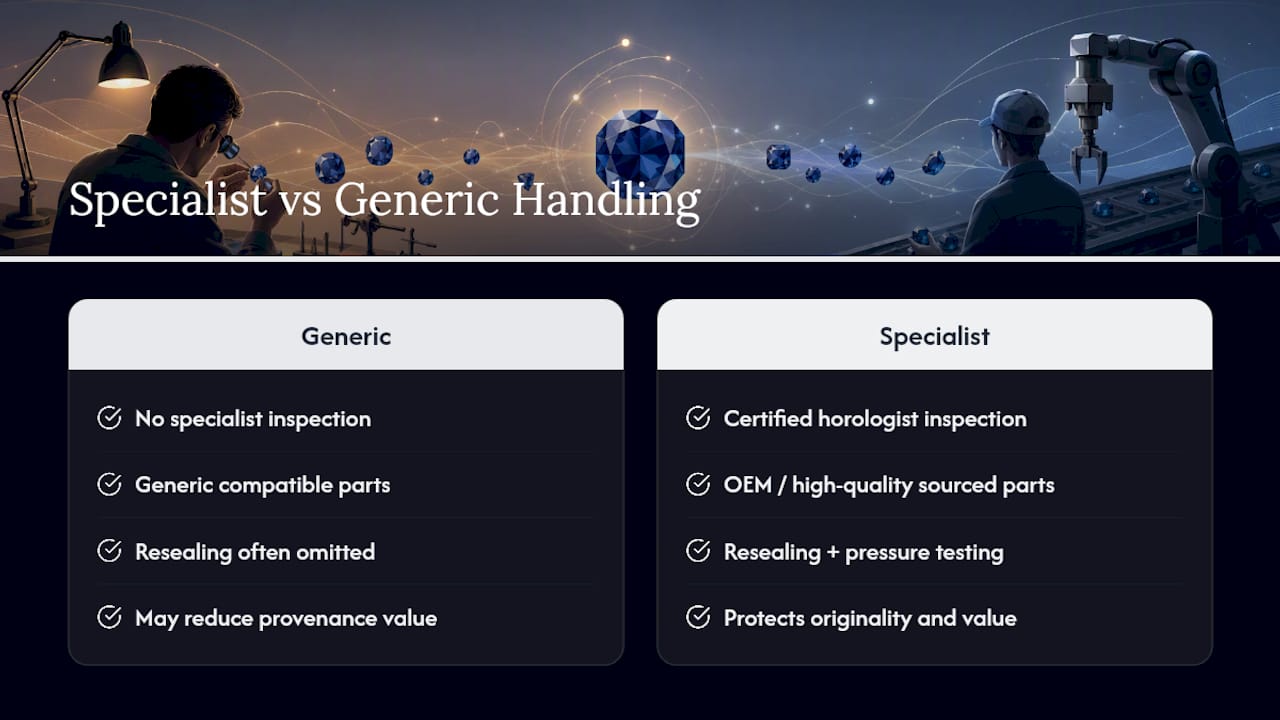
Generic sapphire replacement is a commodity job. Servicing a rare or provenance-sensitive luxury watch is not, and treating the two the same is where owners lose value.
Some specialist workshops work with certified horologists who inspect the movement, source OEM or high-quality compatible parts appropriately, and carry out resealing and pressure testing as part of the same job. That matters most on watches where resale value depends partly on originality and correct parts, or where sourcing a specific brand-signed crystal needs the kind of network access that specialist sourcing services can offer but a generic repair counter usually cannot.
— Lewis
Get a repair quote from Horology-kings
Some specialist providers give collectors an alternative to guesswork pricing: a documented inspection, a choice between OEM and high-quality compatible sapphire, and reseal-and-pressure-test work carried out under one roof rather than farmed out piecemeal. That combination matters most on watches where the wrong part or a skipped pressure test could dent resale value later.

If your watch has a cracked or scratched crystal, our watch repair and servicing team can inspect it, confirm whether OEM or compatible parts suit your model, and provide a written estimate that separates parts, labour, and testing clearly. For rarer models needing a specific brand-signed crystal, our sourcing service can track down the exact part through our network. Get in touch through Horology-kings to request a quote and find out what your repair will actually cost.
Sources
Recommended
Comments