.png)
Prove a Tropical Dial Is Genuine: 1950s–1970s Origins
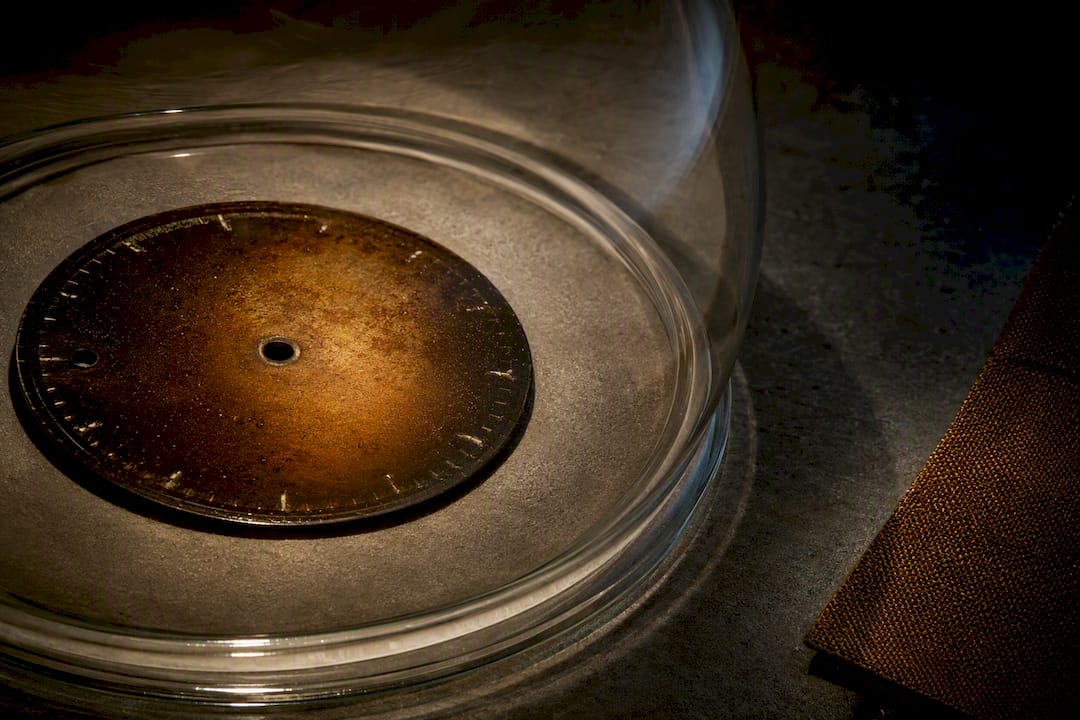
A tropical dial is a watch dial whose original black lacquer has oxidised into shades of brown, chocolate or honey after decades of UV exposure and chemical breakdown in the paint itself. Genuine examples are scarce because only certain production batches from the 1950s to 1970s were affected, and that scarcity means authenticated tropical dials often sell for substantial premiums over standard black-dial equivalents. Careful authentication is essential before you trust the label.
TL;DR:
Genuine tropical dials emerged from specific paint batches from the 1950s to 1970s that chemically aged into brown, tan, or amber shades due to prolonged UV exposure.
Authentic tropicalisation results in uneven, natural gradients with consistent fading expected near the edges, while uniform browning signals possible artificial aging or falsification.
The premium for tropical dials mainly stems from rarity and proven provenance, with premiums often exceeding several hundred percent over standard black dials in the auction market.
Authentication requires examining lacquer integrity, matching aging of lume and hands, and verifying provenance with photographs or lab analysis to avoid fakes or refinished dials.
Provenance and detailed history notably outweigh color depth in value, emphasizing the importance of documentation over purely aesthetic appeal in valuing tropical-dial watches.
Table of Contents
Tropical dial meaning: origin, history and the chemistry behind it
Tropicalisation happens when a black dial’s original pigment and lacquer break down chemically, turning brown, tan or amber over years of exposure. The transformation is most common on watches made between the 1950s and 1970s, when manufacturers used paint and lacquer formulations that proved unstable under prolonged sunlight, heat cycling and humidity, according to a restoration expert writing for aBlogtoWatch.
The name itself is a slight misnomer. Early tropical examples were often watches that had spent time in hot, humid regions, which is how the term stuck, but climate alone does not explain the effect. A dial can tropicalise sitting in a drawer in a temperate country if the original pigment batch was unstable and it caught enough UV light over the decades, as WristBuzz’s compendium on the phenomenon points out.
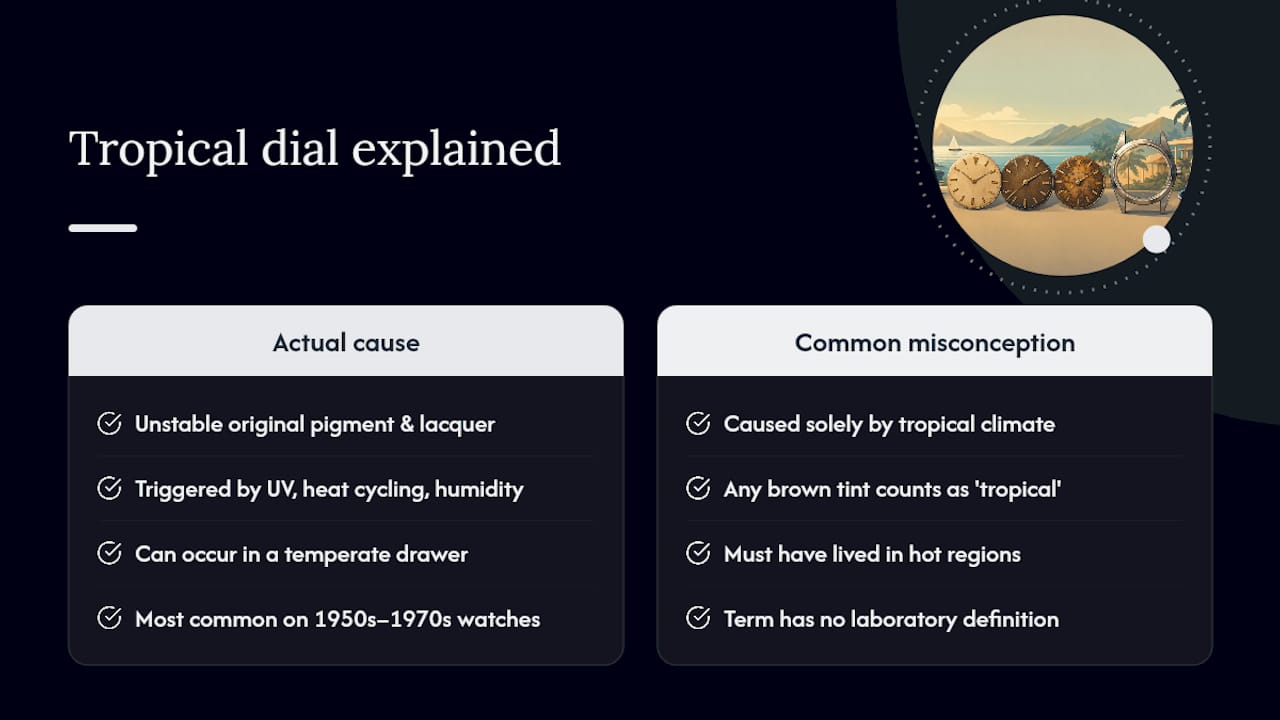
There is no laboratory definition of “tropical.” It is a collector’s shorthand, not a scientific classification, and that looseness is exactly why the term gets misapplied. Some sellers stretch it to cover any dial with a hint of brown, whether the discolouration came from genuine ageing, sun damage, or a refinisher’s oven.
What colours and patterns collectors actually want
Tropical dials don’t age into a single uniform shade. Colour outcomes vary depending on the original pigment, the lacquer thickness, and how much sunlight the watch absorbed over its lifetime.
Common palette descriptions include:
Chocolate brown, the deep, even tone most associated with the term.
Tobacco, slightly lighter and more olive in undertone.
Honey and amber, warmer and more golden, often on dials that saw heavier sun exposure.
Coffee, a muted brown that can look almost grey in certain light.
Occasional orange or burnt amber tones on dials with particular pigment chemistry.
What separates a desirable tropical dial from a mediocre one comes down to consistency. Collectors favour natural gradients that fade logically from the centre outward, with lume, hands and sub-dials ageing in step with the main dial surface. A dial that looks patchy, shows flaking lacquer, or carries stains consistent with moisture ingress is a different story entirely. That kind of damage lowers value rather than adding to it, no matter how brown the dial has turned.
Why tropical dials command such steep market premiums
Rarity is the foundation of the premium. Only specific paint and lacquer batches reacted this way, and once manufacturers identified the instability, they corrected their formulations. That leaves a narrow production window where tropicalisation could even occur, which is one reason so few genuine examples exist relative to the total output of any given reference.
Beyond scarcity, there’s a storytelling dimension collectors respond to. A tropical dial is visible, undeniable evidence that a watch has lived a real life somewhere, under someone’s ownership, for fifty or sixty years. That kind of provenance can’t be manufactured convincingly, at least not without leaving traces an expert can spot.
Market snapshot: specialists tracking auction results note that tropical examples can sell for premiums running into several hundred per cent over comparable black-dial pieces in headline cases, according to InsideHook’s reporting on the phenomenon.
Auction houses have repeatedly demonstrated this gap in practice, with well-documented tropical examples selling for multiples of their non-tropical siblings, as GQ’s coverage of the trend illustrates. The premium isn’t guaranteed, though. It depends entirely on whether the dial’s ageing can be proven genuine.
How to tell a genuine tropical dial from a faked one
Because the premiums are so large, tropical dials attract fakers, and the checklist below reflects what restoration specialists and auction consignors actually look for before they’ll put their name behind a claim.
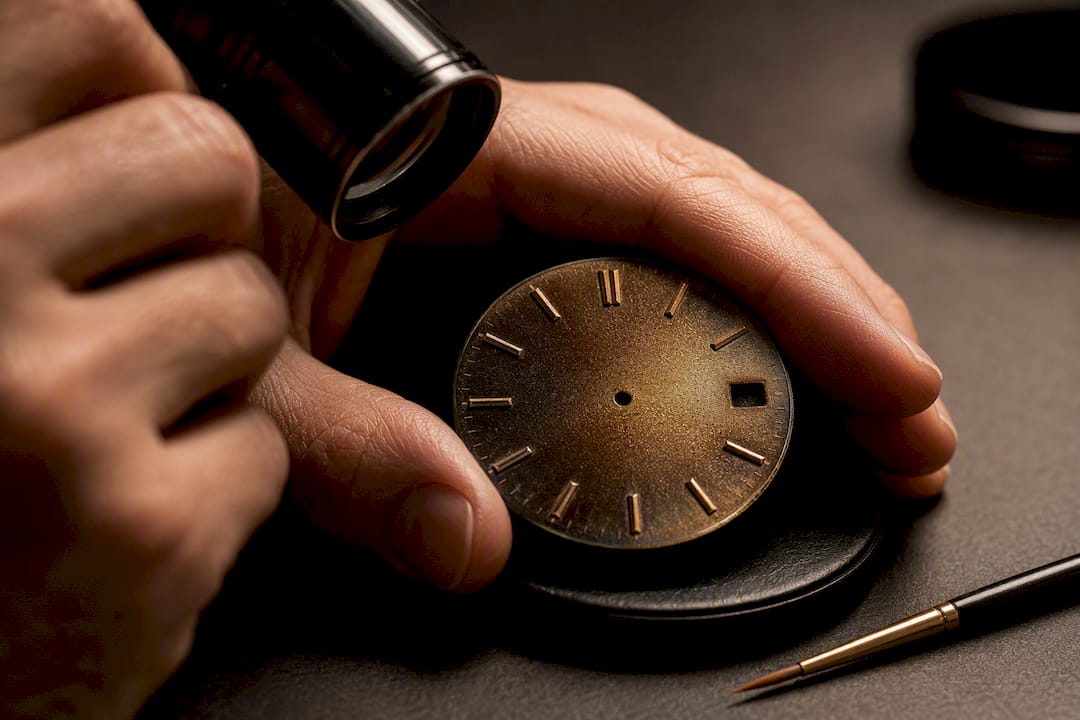
Check the lacquer film first. Genuine tropical colouring develops underneath an intact, glossy lacquer layer. If the surface is flaking, bubbling, or shows visible cracking, that’s inconsistent with natural ageing and points instead toward heat or chemical treatment, a distinction WristBuzz’s guide to authentication treats as the single most reliable visual test.
Compare lume, hands and sub-dials. On a genuine piece, the luminous material and the dial furniture age together. A chronograph’s sub-dials should show proportional fading relative to the main dial, not a jarring mismatch that suggests one part was swapped or refinished.
Look for a gradient, not a blanket. Real tropicalisation fades unevenly, often heavier near the edges or wherever the dial caught the most light. Uniform, all-over browning is one of the clearest signs of an artificially aged dial.
Demand provenance. Old photographs, service records, or an appearance in a prior auction catalogue showing the patina years ago is close to definitive proof. Without it, you’re relying on someone’s word.
Escalate to lab analysis when the stakes justify it. Spectroscopy and pigment analysis can settle disputes that eyeballing cannot, particularly on five and six-figure references where a wrong call is expensive.
As one WatchProSite compendium on the subject puts it, the term itself should function as a warning light rather than an automatic mark of authenticity, precisely because it’s so easily abused. Common fake treatments include oven-baking dials to accelerate browning, chemical immersion, and outright repainting to mimic a gradient. None of these hold up to close inspection of the lacquer film.
Pro Tip: Ask any seller claiming “tropical” for a full-resolution macro photo of the dial under raking light. Genuine gradients and lacquer texture show up clearly this way, while oven-baked fakes often reveal an unnaturally flat, matte surface.
Buying or selling a tropical dial: what to check first
Before you commit to a purchase, or price a watch for sale, get the paperwork sorted. Ask sellers for:
Older photographs of the watch, ideally spanning several years, showing the patina developing gradually.
Service invoices or warranty cards that place the watch’s history on record.
Original sales paperwork, boxes, or receipts, where they still exist.
On pricing, treat dramatic claims sceptically unless they come with proof. A genuine, well-documented tropical dial can justify a strong premium, but an unverified one should be priced closer to a standard example. Watch for red flags including freshly refinished dials sold as “tropical,” lume or hands that clearly don’t match the dial’s apparent age, and uniform browning with no gradient at all.
Pro Tip: If a seller can’t produce a single photo of the watch older than a year or two, treat any tropical claim as unverified until you or an expert can inspect it in person.
When to bring in a specialist for authentication
Lewis here. The pattern I see most often is buyers falling for a convincing photo without asking where the patina came from. Lacquer integrity and matching wear across lume, hands and sub-dials tell you far more than colour alone. When the numbers involved are significant, Horology-kings offers professional valuation and secure sourcing to verify a tropical claim before money changes hands.
The conventional wisdom on tropical dials gets one thing badly wrong
Most guides treat “tropical” as a badge that automatically means valuable. It doesn’t. The colour is a symptom of chemistry, not a guarantee of desirability, and the market has plenty of examples where a genuinely aged dial sold for less than expected because the gradient was uneven or the lume didn’t match.
What actually drives the premium is documentation, not depth of colour. A modestly browned dial with photographs spanning twenty years will usually outsell a dramatic chocolate dial with no history attached, because buyers at this level are paying for certainty as much as aesthetics. That’s the opposite of how most casual buyers approach it. They chase the deepest brown they can find and worry about proof afterwards, when it should be the other way round.
If you take one thing from this, prioritise provenance over colour intensity every time. A watch with weaker patina but a documented history is a safer, and often smarter, purchase than a spectacular dial with nothing behind it.
— Lewis
Get a professional opinion before you buy or sell a tropical dial
A convincing photograph is not the same as a verified dial, and that gap is exactly where Horology-kings adds the most value. Our specialists carry out hands-on watch valuation that checks lacquer condition, lume consistency and provenance before any figure gets quoted, rather than taking a seller’s description at face value.

If you’re chasing a specific tropical reference, our sourcing service uses an established network to track down verified examples rather than leaving you to gamble on an unproven listing. Already own a piece with early signs of patina and want a professional read on its condition and worth? Start with a valuation through Horology-kings before you list it or accept an offer.
Sources
Certain references turn up in tropical-dial discussions more often than others, largely because their original black dials were produced during the vulnerable window and enough examples survive to compare.
None of this means every browned dial from these references is automatically valuable. Context is everything: a Submariner with a patchy, undocumented brown dial is worth considerably less than one with a clean gradient and a paper trail. If you’re chasing a specific reference, our guide to sourcing a vintage Rolex Daytona covers similar provenance questions in more depth.
FAQ
What is the most sought-after tropical dial colour?
Deep, even chocolate brown is generally the most prized, particularly when it fades in a natural gradient rather than a flat, uniform tone. Honey and amber shades also attract strong interest, but consistency across the dial matters more than the exact shade.
Is a tropical dial considered a defect?
No. It’s a chemical ageing effect from unstable pigment and lacquer, not a manufacturing fault or damage in the conventional sense. Collectors treat it as desirable patina rather than a flaw, provided it can be shown to be genuine.
What is the rarest Rolex dial?
Rarity varies by reference, but certain tropical examples from vintage Submariner references are among the most discussed because so few survive with well-documented, consistent patina. Genuine, provenance-backed pieces are considerably rarer than the number of watches marketed as “tropical” would suggest.
What does “tropical” mean in watches?
It describes a black dial that has oxidised into brown, chocolate or amber tones over decades of UV exposure and chemical breakdown in the original paint. The term originated from watches that had spent time in hot climates, though climate isn’t the only cause, according to WristBuzz’s explanation of the phenomenon.
Recommended
Comments