.png)
UK hallmarking gold watches: what buyers and sellers need to know

Yes: if your gold watch case weighs more than 1 gram, UK law requires it to carry a valid hallmark before it can be sold, and trading it without one is a criminal offence under the Hallmarking Act 1973. Most watch cases in solid gold clear that threshold easily, which means the hallmark isn’t a nice extra on a vintage timepiece. It’s the legal proof of what the case is actually made from.
Before you buy or sell a gold watch, do three things:
Locate the marks first. Check the case back, the rim, and the inside of the caseback lip with a loupe before agreeing a price.
Ask the seller directly whether the case has a full UK hallmark or an import mark, and request close-up photographs if you’re buying remotely.
Have recourse ready. If a hallmark is missing or looks wrong, you can request an independent assay, involve Trading Standards, or walk away from the deal entirely.
Everything below explains how to do each of these properly, and what the marks actually mean once you find them.
Key Takeaways
UK law requires a valid hallmark on any gold watch case over 1 gram, and verifying the sponsor’s mark, fineness number, assay office symbol, and date letter together is the only reliable way to confirm authenticity.
Point | Details |
Legal threshold is low | Any gold watch case over 1 gram must carry a valid hallmark before sale under the Hallmarking Act 1973. |
Four marks make a full hallmark | Sponsor’s mark, millesimal fineness number, assay office symbol, and an optional date letter together confirm authenticity. |
Foreign marks aren’t automatically suspicious | Many pre-1970s Swiss watches carry Swiss poinçons instead of UK hallmarks due to historical import rules. |
Mismatched marks are the real red flag | Inconsistent punch depth, wrong-era millesimal numbers, or absent fineness marks warrant independent assay before you buy. |
Get expert verification before you transact | Horology-kings checks hallmark consistency, sponsor’s marks, and provenance as standard during every valuation and sourcing enquiry. |
Table of Contents
What does a UK hallmark actually look like on a gold watch?
A hallmark is an independent, third-party guarantee, struck by an assay office rather than the manufacturer, confirming the precious metal content of the item you’re holding. The Goldsmiths’ Company describes it as exactly that: a mark applied by someone with no financial stake in the sale, which is precisely why it carries legal weight that a manufacturer’s own claim never could. On a watch, this matters more than on almost any other jewellery item, because the case is often the single biggest driver of value on a vintage or pre-owned piece.
You won’t find the hallmark on the dial or the movement. It sits on the case itself, and usually in one of these spots:
Inside the case back, often visible only once the back is removed or under strong light at an angle
On the case back’s outer rim, sometimes worn smooth on older pieces from decades of handling
Underneath the lugs, particularly on cases from the 1920s to 1950s
On the inner cap, if the watch has a separate dust cover beneath the main case back
At a glance, a full mark is a cluster of tiny punched symbols, easily mistaken for scratches unless you know what you’re looking for. There are four components you’re hunting for: a sponsor’s mark identifying who submitted the item, a fineness mark stating the gold purity, an assay office mark showing where it was tested, and often a date letter.
Pro Tip: Angle a torch across the surface rather than straight down. Hallmarks are struck, not printed, so raking light catches the recessed edges of worn marks that look invisible under a flat ceiling light.
How do you read the four parts of a full hallmark?
Each symbol in a hallmark cluster does a specific job, and once you can separate them, decoding any watch case becomes far quicker.
The sponsor’s mark identifies the person or company legally responsible for submitting the item for testing, usually shown as initials in a distinctive shield or surround. This isn’t necessarily the watch brand. It’s whoever registered the case with the assay office, which for vintage pieces might be a case-maker rather than the watch company itself.

The fineness mark states gold purity using the millesimal system, a number representing parts per thousand of pure gold. Since 1999, this numerical mark (375, 750, 916, and so on) has been the legally required standard, replacing the older crown-and-carat symbols on newer items, though the Assay Office London notes the traditional fineness symbol can still be struck alongside it voluntarily.
The assay office mark shows which of the UK’s testing centres examined the piece:
Assay office | Symbol |
London | Leopard’s head |
Birmingham | Anchor |
Sheffield | Rose |
Edinburgh | Castle |
The date letter is a single letter in a defined typeface and surround, cycling through the alphabet on a set schedule. It became voluntary in 1999, but most offices still apply it, and for collectors trying to date a case precisely, it’s often the most useful mark on the whole watch.
A full traditional hallmark from London, as the Assay Office London confirms, can carry all five elements at once: sponsor’s mark, traditional fineness symbol, millesimal number, assay office mark and date letter.
What does UK law actually require of sellers?
The legal position is straightforward, even if the marks themselves take practice to read. Under the Hallmarking Act 1973, any gold item weighing more than 1 gram must carry a valid hallmark before it’s sold or even offered for sale, and this threshold catches almost every gold watch case in existence. A typical 34mm to 40mm solid gold case, once you include the back, bezel, and lugs, usually weighs more than the minimum threshold for hallmarking.
Responsibility for hallmarking sits with the sponsor, meaning the manufacturer, importer, or dealer who submits the item, not the eventual retail buyer. That said, GOV.UK guidance is explicit that any business supplying an unhallmarked precious metal item above the weight threshold is committing an offence, and dealers are required to display a notice explaining approved hallmarks at the point of sale.
Selling or describing a gold item above the weight threshold as gold without a legally recognised hallmark is a criminal offence in the UK, not a matter of trading standards best practice. The law treats it the same way it treats any other false description of goods sold to the public.
For private individuals selling a single watch, the criminal offence framing applies mainly to businesses and traders acting “in the course of business.” That distinction matters practically: a private seller offloading a family watch on a classifieds site sits in different legal territory to a dealer stocking the same piece. Either way, a missing hallmark should make any buyer pause and ask why.
Which gold items are exempt from UK hallmarking?
Not everything gold escapes the rule, and not everything without a hallmark is illegal. A handful of standard exemptions cover cases you’ll genuinely encounter in the watch market.
Items below the 1 gram threshold for gold don’t need hallmarking at all, though this is rare for a complete watch case. Plated items, where a base metal carries a thin layer of gold, are exempt because the gold content itself never reaches solid-metal status. Filled or gilt components, such as a gilt dial or a gold-plated case back paired with a steel case body, fall outside the requirement for the same reason.
Descriptive language matters here too. The Assay Office London’s guidance leaflet makes clear that “gold” can only describe colour, not composition, when the item genuinely contains no legally significant precious metal. Calling a gold-plated case simply “gold” in a listing, without qualifying it as plated, risks misleading a buyer even where no hallmarking offence has technically occurred.
Watches you’ll see this apply to most often:
Gold-plated or gold-tone steel case backs on mid-market watches
Gilt dials on cases that are otherwise stainless steel
Rolled-gold cases from the mid-20th century, common on dress watches
Why do many imported Swiss watches carry no UK hallmark?
If you own or are buying a vintage Swiss watch, you may find no UK hallmark on the case at all, and that isn’t automatically a red flag. Historical import rules explain most of it.
The Assay of Imported Watch-Cases Act 1907 required, from 1 June 1907 onwards, that watch cases imported into the UK be assayed and hallmarked by a British assay office before sale, carrying distinguishing import marks alongside the standard components, as detailed by Vintage Watchstraps’ research into import marking practice. Before that date, and for pieces that entered the UK outside formal retail channels afterwards, many Swiss cases simply never went through a British assay office.
That’s why a genuine 1930s Omega or Longines gold case might carry Swiss poinçons (small national purity marks) instead of, or alongside, a British hallmark. Swiss marks look visually distinct: typically smaller, differently shaped punches than the British leopard’s head or anchor, often including a helmet or head-profile symbol rather than an animal or building.
When you encounter foreign marks on a watch case:
Accept clear, legible Swiss or continental fineness marks as legitimate evidence of gold content, even without a UK hallmark
Question a watch sold as new or recently imported through UK retail channels that has no hallmark at all
Be wary of cases where the “foreign mark” is blurred, inconsistent in style with the watch’s stated period, or simply invented
How should you check a gold watch case for hallmarks step by step?
A methodical inspection takes minutes and saves you from an expensive mistake. Follow this sequence whether you’re buying, selling, or simply cataloguing a watch you already own.
Start with strong, angled lighting. A raking torch beam and a 10x jeweller’s loupe reveal punched detail that flat light hides completely.
Check the obvious surfaces first. Inspect the case back exterior and rim before anything else, since these carry marks on the majority of cases.
Open the case back only if you’re confident, or ask a professional. Marks inside the back or on the movement side are common, but forcing an unfamiliar case risks damaging the seal or the movement.
Photograph every mark you find, with a scale reference nearby. A ruler or coin in shot lets you or a specialist measure the punch size accurately later.
Cross-check the fineness number against the case’s likely period. A millesimal number (750, for instance) on a case claimed to be pre-1970s should prompt a second look, since numerical marks only became compulsory after 1999.
Match the assay office symbol to the town claimed in any provenance documents. A leopard’s head on a watch supposedly hallmarked in Birmingham doesn’t add up.
Use the date letter, if present, to narrow the manufacturing window. Letter shapes and surrounds cycle on defined schedules, and collector references can pin a case to within a year or two.
Pro Tip: If a mark looks shallow or worn to the point of ambiguity, don’t guess. A specialist can take a light rubbing or high-resolution macro photograph that resolves detail your eye simply can’t catch under a loupe.
The verification flow worth memorising is short: identify every mark present, match the millesimal number to a plausible fineness, confirm the assay office symbol, then corroborate everything against the sponsor’s mark and date letter together. Vintage Watchstraps’ collector notes on mark placement and date-letter cycles are a genuinely useful second opinion once you’ve done the first pass yourself.
What do the common gold fineness numbers mean on a watch case?
Millesimal fineness tells you exactly how many parts per thousand of the metal are pure gold, and five numbers cover almost everything you’ll see on a UK watch case.
Older British cases sometimes carry a crown alongside a carat figure rather than the millesimal number, a legacy of the pre-1999 marking convention that the Assay Office London still permits as a voluntary addition. Imported pieces occasionally show decimal equivalents rather than a UK-style millesimal figure, reflecting the exporting country’s own convention rather than any UK requirement. Platinum and palladium cases, less common but not unheard of on high-end watches, use their own fineness scale entirely, typically 950 for platinum.
How do you get a gold watch case hallmarked in the UK?
If you’re a maker, restorer, or private seller with an unmarked case that genuinely needs assaying, the process runs through a sponsor registration first.
Register as a sponsor with one of the four UK assay offices, or arrange for an existing sponsor, such as a workshop or dealer, to submit the item on your behalf. This step is what GOV.UK’s guidance for businesses covers in detail, including how a sponsor’s mark gets registered and recorded.
Submit the item to the assay office, where it’s tested for precious metal content, either by traditional assay or modern non-destructive methods, and then struck with the appropriate marks once it passes.
Expect a turnaround measured in days to a couple of weeks depending on the office’s workload and whether standard or expedited processing applies, along with paperwork confirming the result.
For a private seller with a single vintage case rather than a manufacturing operation, going direct to an assay office isn’t usually practical. Working through an established dealer or a specialist watch repairs and servicing provider who already holds sponsor status, or who can arrange submission on your behalf, is the realistic route.
How can you tell if a hallmark has been faked or altered?
Genuine hallmarks share consistent characteristics, and fakes tend to slip up on the details forgers rarely think to check.
Watch for these warning signs:
Inconsistent punch depth across marks that should have been struck in the same session, suggesting different tools or different times
A millesimal number in a case whose surrounds or wear pattern suggest a pre-1999 date, when numerical marks weren’t yet compulsory
Duplicated or slightly misaligned sponsor’s marks, sometimes a sign of a case back swapped from a donor watch
Patina inconsistency, where the metal around the hallmark looks noticeably fresher or older than the rest of the case
A hallmark present but no fineness mark at all, which shouldn’t happen on a genuinely UK-assayed piece
If something doesn’t sit right, the next move is an independent assay or a specialist dealer authentication rather than a guess. Trading Standards can get involved where a business has clearly misdescribed an item, and documenting everything, photographs, measurements, correspondence with the seller, protects you if you need to pursue a refund or an insurance claim later. Horology-kings’ guide to authenticating a luxury watch before you buy walks through the broader authentication process this sits inside.
Where can you verify a hallmark yourself?
A handful of resources cover almost every verification need, and it’s worth knowing which ones carry legal weight versus which are simply useful references.
GOV.UK’s hallmarking guidance is the authoritative source for the legal requirements and business obligations themselves.
The Goldsmiths’ Company offers background on the hallmarking system’s history and its consumer-protection purpose.
The four assay office websites (London, Birmingham, Sheffield, Edinburgh) publish their own symbol charts and, in London’s case, detailed leaflets on fineness and descriptive rules.
Online hallmark finder tools, widely used by collectors, help decode unfamiliar symbol combinations quickly, though they’re a starting point rather than a legal authority.
Collector reference sites focused on watch cases specifically add detail on date-letter cycles and mark placement that general jewellery guides don’t cover.
For anything with legal or financial weight riding on it, GOV.UK and the assay offices themselves are the sources to trust first.
What should you check before buying or selling a hallmarked watch?
Assessing a gold watch case properly means looking at more than the hallmark in isolation. Horology-kings works through a consistent set of checks before valuing or listing any gold-cased piece.
Photograph every mark clearly, under raking light, before any price discussion begins.
Cross-reference the sponsor’s mark and date letter against known registration records where the case’s age and origin allow it.
Corroborate provenance documents, if any exist, against what the physical marks actually show, rather than taking paperwork at face value.
Where a mark is ambiguous or absent, recommend independent assay or non-destructive testing before agreeing terms.
A reputable dealer will ask specific questions: where the marks sit on the case, whether they’re legible, and whether any service history mentions the case being replaced or reworked. A listing that can’t answer those questions clearly deserves more scrutiny, not less.
Pro Tip: A case that’s been serviced and re-cased at some point in its life can carry marks that don’t match the movement’s date. That’s not automatically fraud, but it’s exactly the kind of detail a proper valuation should flag rather than gloss over.
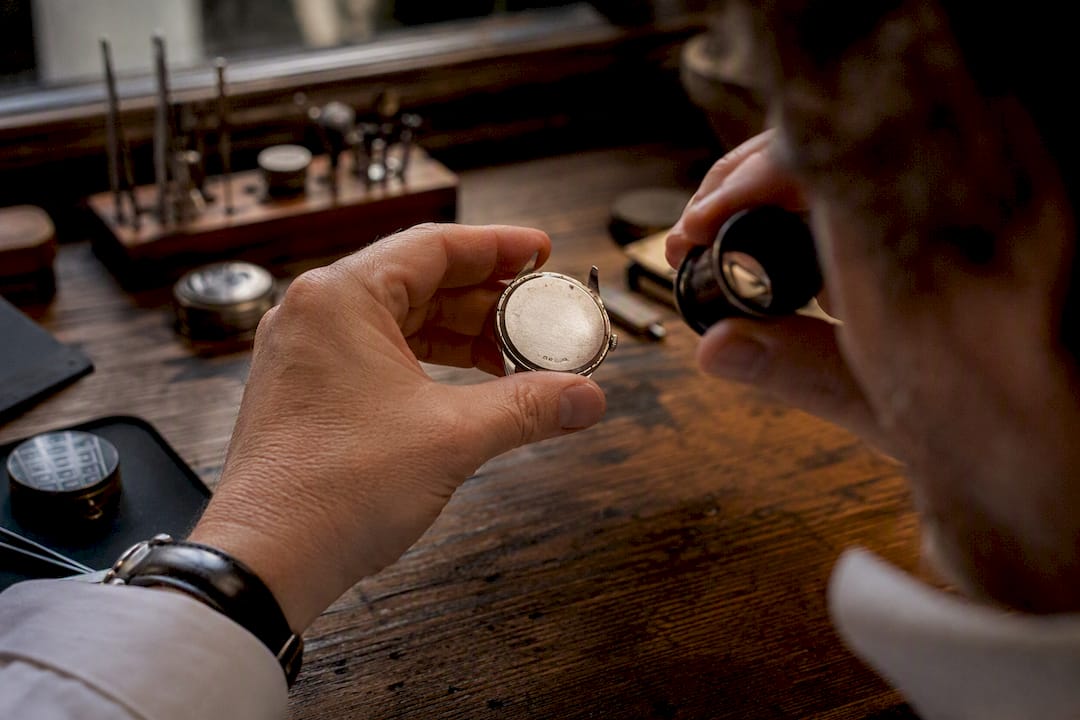
Where marks are worn, disputed, or simply absent, Horology-kings will recommend independent assay or testing rather than proceed on assumption, and documents that decision as part of the valuation record.
Why hallmarks are the quiet backbone of watch collecting
Hallmarks rarely get the attention that movement calibres or dial variants attract among collectors, yet they’re often the detail that decides whether a case is what it claims to be. A worn leopard’s head or a clean millesimal number tells you something a certificate never fully can: that an independent party, with no stake in the sale, tested the metal itself.
For long-term value, hallmarks sit alongside service history and provenance as part of the same trust package. A case with clear, consistent, correctly dated marks supports everything else in a listing. One with marks that don’t add up should make you question everything else too, not just the metal content.
Let Horology-kings handle the authentication for you
Reading hallmarks yourself is a genuinely useful skill, but when real money is on the line, a second, expert opinion changes the outcome. Horology-kings authenticates gold watch cases as standard practice, checking hallmark consistency, sponsor’s marks, and fineness against provenance before any valuation is finalised.

If you’re selling, Horology-kings will document the hallmark evidence properly as part of a free valuation, giving you a clear, verified basis for the price you’re offered. If you’re trying to track down a specific hallmarked model, the sourcing service uses an established dealer network to find authenticated pieces rather than leaving you to gamble on unverified listings. And where a case needs professional opening to check marks safely, or needs a proper assay referral, the watch repair and servicing team can handle that without risking damage to the case or movement. Every transaction runs through secure UK bank transfers with full documented provenance. Get in touch with Horology-kings today to start a valuation or sourcing enquiry.
Where to verify hallmarking facts and rules
Gov is the primary source for the legal requirement itself and the weight thresholds that trigger it.
Gov covers sponsor registration, dealer notice requirements, and exemptions in practical detail.
The Goldsmiths’ Company explains the purpose and history of the hallmarking system as an independent guarantee.
Assay Office London publishes symbol charts and fineness standards for the full traditional hallmark.
Vintage Watchstraps offers detailed collector research specifically on watch-case marks and historical import hallmarking.
Providence Wholesale Silver’s hallmarking guidance adds a trade perspective on retail responsibilities around descriptions and exemptions.
Frequently asked questions about UK hallmarking gold watches
Does every gold watch need a hallmark to be sold legally in the UK? Any gold watch case weighing more than 1 gram needs a valid hallmark before sale, and almost every solid gold case exceeds that weight comfortably.
What’s the difference between a hallmarked and an unhallmarked watch? A hallmarked watch has had its case independently tested and marked by a UK assay office confirming exact gold purity; an unhallmarked watch relies purely on the seller’s description, with no third-party verification behind it.
Can a genuine vintage Swiss watch have no UK hallmark? Yes. Watches imported before 1907, or through channels outside formal UK retail, often carry only Swiss or continental purity marks instead of a British hallmark, which doesn’t necessarily indicate a problem.
What should you do if a gold watch has no hallmark at all? Ask the seller directly why, request an independent assay if you’re serious about buying, and treat the absence of any mark, UK or foreign, as grounds for caution rather than an automatic dealbreaker.
Is it illegal to own an unhallmarked gold watch? No. The offence applies to selling or offering an item for sale without a valid hallmark above the weight threshold, not to simply owning one, so an unmarked family heirloom carries no legal risk until you try to trade it.
This article is general information, not a substitute for advice from a qualified lawyer. Consult a qualified legal professional about your own circumstances before acting on anything here.
Sources
Recommended
Comments