.png)

Why choose a luxury watch dealer for authentic timepieces
- lewisvrichards3
- Mar 23
- 9 min read
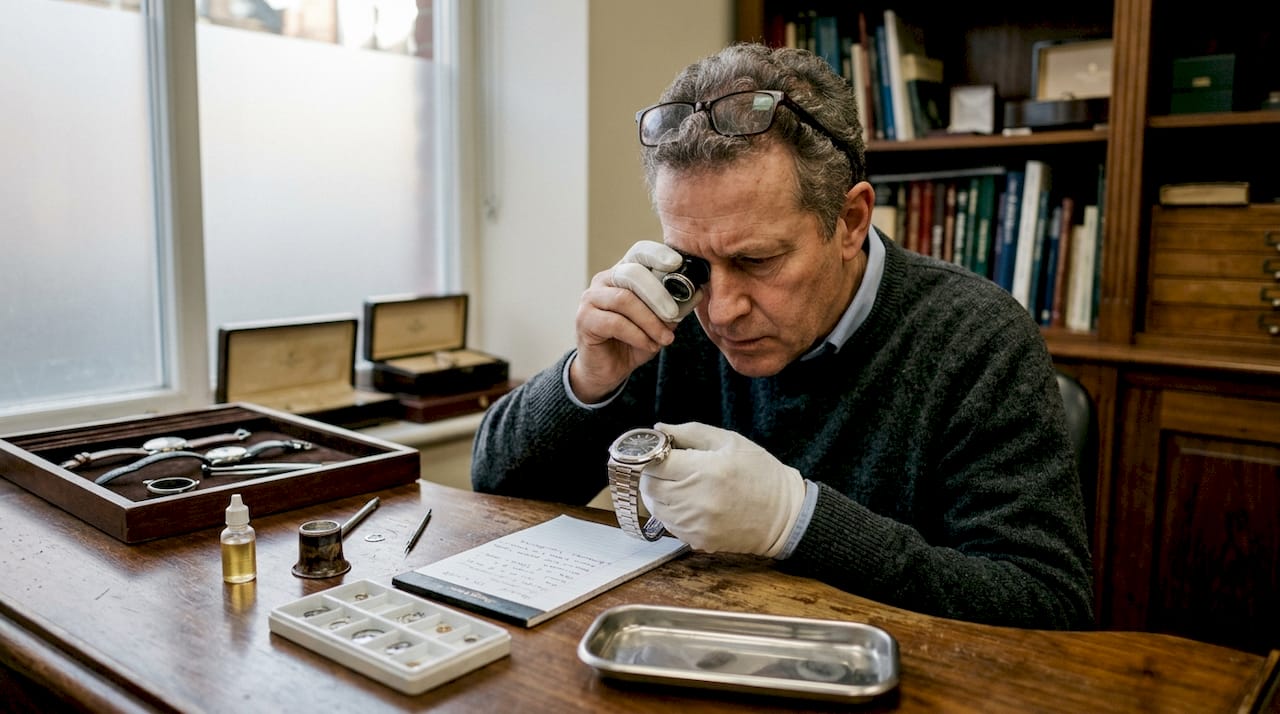
Owning a luxury watch represents a significant investment, yet 8% of Brits own counterfeit luxury watches without realising it. Visual inspection fails to detect fakes 80% of the time, even for experienced collectors. This alarming reality makes purchasing from unauthorised sellers or private transactions exceptionally risky. Choosing a reputable luxury watch dealer provides essential protection through rigorous authentication, verified provenance, and comprehensive warranties that safeguard both your investment and peace of mind.
Table of Contents
Key Takeaways
Point | Details |
Rigorous dealer authentication | Professional authentication by dealers employs serial number checks, movement examination, and case and bracelet scrutiny to prevent counterfeits that pass visual inspection, which fails about eighty percent of the time. |
Provenance protects value | Verified provenance and comprehensive warranties safeguard the investment and help maintain resale value. |
Warranty advantages of authorised dealers | Manufacturer warranties from authorised dealers provide long term security and transfer with proper documentation, unlike the limited protection offered by grey market sales. |
Grey market risks | Private sellers and grey market channels lack the accountability of authorised dealers, increasing the risk of authentic looking yet counterfeit pieces. |
Understanding the authentication challenge in the UK luxury watch market
The counterfeit watch industry produces staggering volumes annually. Experts estimate 30 to 50 million fake Rolexes are manufactured each year, flooding markets worldwide including the UK. Modern counterfeits have reached unprecedented sophistication levels. Superfakes replicate weight, finishing, and movement details so convincingly that casual examination proves useless.
Visual inspection limitations create genuine danger for buyers. Even collectors with decades of experience struggle to identify advanced counterfeits without specialised equipment. Counterfeiters now replicate serial numbers, engravings, and even movement decorations with alarming accuracy. The 80% failure rate for visual authentication underscores why professional verification matters critically.
Luxury watch dealers employ multi-layered authentication processes that private buyers cannot replicate. Professional authentication begins with serial number verification against manufacturer databases. Dealers then examine movement finishing under magnification, checking for telltale signs of mass production versus hand-finishing. Case construction, bracelet articulation, and dial printing all undergo scrutiny using calibrated instruments.
Pro Tip: Sophisticated counterfeits often fail on weight distribution and bracelet feel rather than visual appearance. Genuine luxury watches have distinctive heft patterns and bracelet movement that fakes struggle to replicate perfectly.
Private sellers and grey market sources present significant authentication risks. These channels lack accountability structures that authorised dealers maintain. A private seller may genuinely believe their watch is authentic whilst unknowingly possessing a superfake. Grey market dealers prioritise volume over verification, sometimes accepting watches without thorough authentication.
The authentication challenge extends beyond simple fake detection. Frankenwatches combine genuine and counterfeit components, creating hybrid pieces that deceive even experienced eyes. Dealers use comprehensive authentication protocols including movement photography, pressure testing, and historical records verification to catch these sophisticated frauds.
“The counterfeit watch industry has evolved from obvious fakes to pieces requiring laboratory-grade equipment to authenticate. Professional dealer verification is no longer optional, it’s essential for protecting your investment.”
Manufacturers continuously update security features, but counterfeiters adapt quickly. Rolex introduced microetched crystals, yet high-end fakes now replicate these markings. Patek Philippe’s Nautilus clasp mechanisms get copied within months of release. Only dealers with direct manufacturer relationships stay current on the latest authentication markers and security features.
The value of dealer warranties, provenance, and after-sales support
Manufacturer warranties provide crucial long-term security that grey market purchases cannot match. Authorised dealers offer full manufacturer warranties, such as Rolex’s five-year guarantee covering manufacturing defects and movement performance. These warranties transfer with proper documentation, protecting subsequent owners and maintaining resale value.
Grey market sellers demand substantial premiums yet offer limited warranty protection. Some grey market watches command prices up to 50% above authorised dealer rates during supply shortages. Despite higher costs, these pieces typically include only short seller warranties rather than manufacturer coverage. This warranty gap creates significant risk if complications arise years after purchase.
After-sales servicing maintains watch condition and preserves long-term value. Authorised dealers provide access to manufacturer-approved service centres staffed by factory-trained technicians. These specialists use genuine replacement parts and follow strict servicing protocols that maintain authenticity and warranty coverage. Independent watchmakers, whilst skilled, cannot always source authentic components or provide warranty-compliant service.
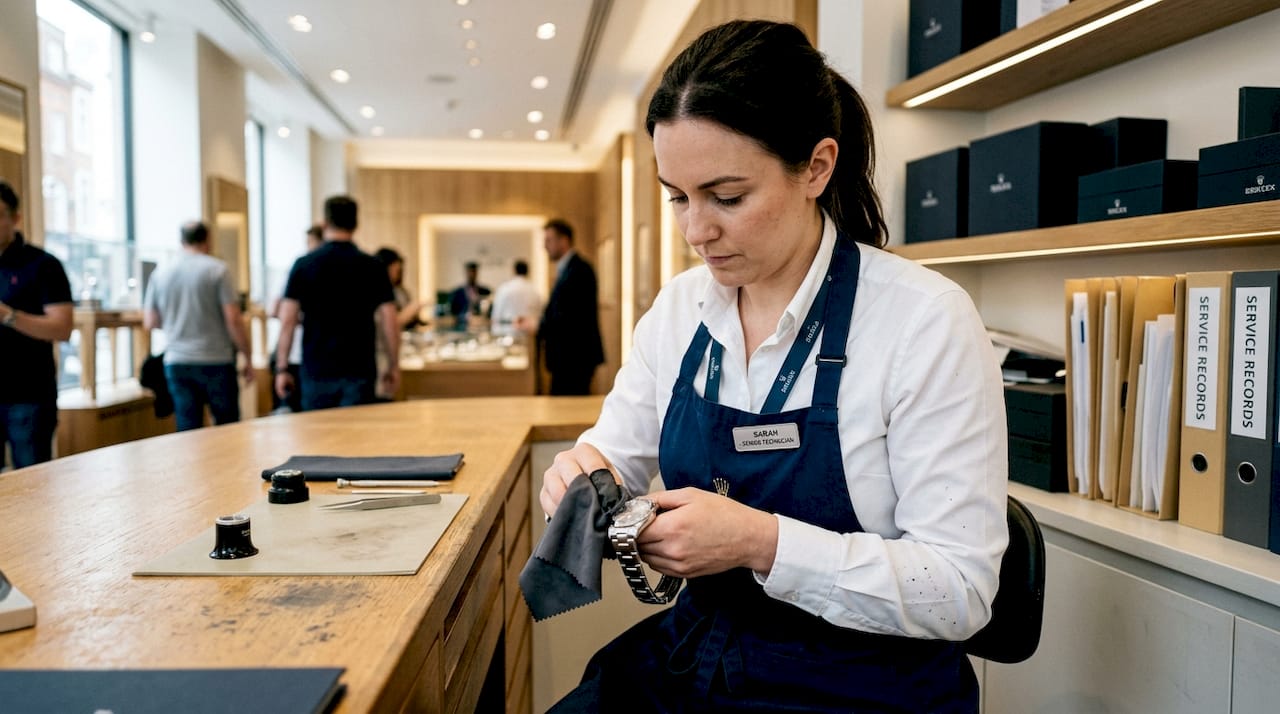
Provenance documentation proves essential for authenticity verification and resale transactions. Complete provenance includes original purchase receipts, warranty cards, service records, and ownership history. Dealers maintain meticulous records that establish clear chain of custody. This documentation becomes invaluable when selling, as buyers pay premium prices for watches with verified histories.
Pro Tip: When buying pre-owned, insist on complete service history documentation. Gaps in servicing records may indicate problematic ownership periods or suggest the watch requires immediate expensive maintenance.
Comprehensive warranty coverage distinguishes reputable dealers from alternative sources. The table below compares warranty terms across different purchase channels:
Purchase channel | Manufacturer warranty | Typical warranty period | Service network access | Provenance documentation |
Authorised dealer | Full coverage | 5 years (Rolex, Omega) | Complete access | Comprehensive |
Certified pre-owned dealer | Dealer-backed | 2-3 years typical | Authorised centres | Verified complete |
Grey market | None or limited | 1 year seller warranty | Restricted | Variable quality |
Private seller | None | No warranty | None | Often incomplete |
Dealer relationships with manufacturers enable warranty claim processing that grey market buyers cannot access. If complications arise, authorised dealers facilitate direct communication with brand service departments. Grey market watches often get refused for warranty service even when issues clearly stem from manufacturing defects rather than user damage.
Service history impacts resale value as significantly as physical condition. Buyers scrutinise service records and maintenance documentation when evaluating pre-owned watches. Regular servicing by authorised centres demonstrates proper care and maintains manufacturer specifications. Watches lacking service documentation typically sell at 15-20% discounts compared to fully documented examples.
Certified pre-owned programmes and resale value benefits
Certified Pre-Owned programmes represent the luxury watch industry’s response to grey market proliferation. CPO watches undergo comprehensive authentication, refurbishment, and certification by authorised dealers or manufacturers. These programmes provide buyers with dealer-backed warranties whilst offering more accessible pricing than new pieces. Rolex, Patek Philippe, and Audemars Piguet have all launched CPO initiatives recognising pre-owned market importance.
Dealer CPO programmes stabilise and enhance watch values through verified authenticity and professional servicing. Each CPO watch receives complete mechanical overhaul, case refinishing when appropriate, and replacement of worn components with genuine parts. This refurbishment ensures the watch meets manufacturer specifications whilst preserving original character. CPO certification includes detailed condition reports and comprehensive warranty coverage.
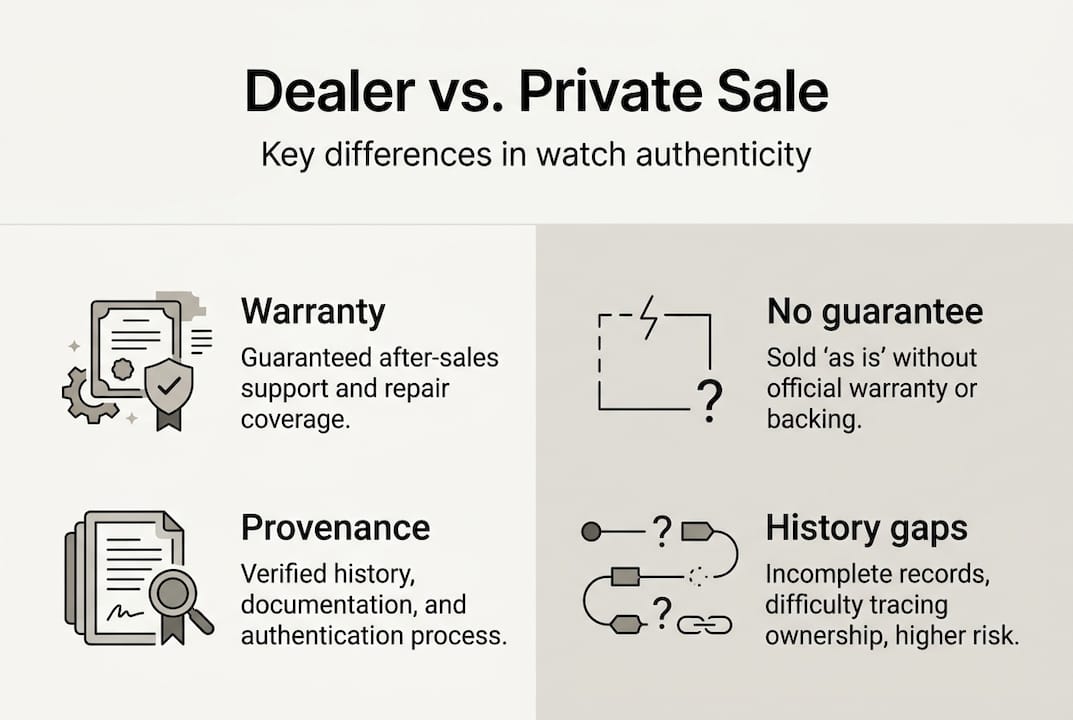
Resale premiums for CPO watches significantly exceed non-certified alternatives. Research shows CPO Rolex watches command 28% higher resale premiums compared to equivalent grey market or private sale pieces. Buyers willingly pay these premiums for guaranteed authenticity, professional servicing, and warranty protection. The CPO designation effectively bridges the gap between new and pre-owned market segments.
The comparison below illustrates value differences across purchase channels:
Purchase type | Average price vs retail | Authenticity guarantee | Warranty coverage | Resale premium | Risk level |
CPO from dealer | 70-85% of retail | Comprehensive certification | 2-3 year dealer warranty | 28% higher than non-CPO | Very low |
Grey market | 50-150% of retail (variable) | Seller claims only | Limited or none | 15-20% discount typical | Medium to high |
Private sale | 60-75% of retail | No verification | None | 20-25% discount typical | High |
Non-certified pre-owned | 65-80% of retail | Variable | None or short seller warranty | Baseline comparison | Medium |
Dealer involvement in CPO programmes maintains value through ongoing servicing relationships and provenance verification. CPO buyers gain access to authorised service networks and manufacturer support that private purchases cannot provide. This ongoing relationship preserves watch condition and maintains complete documentation that future buyers demand.
“Certified Pre-Owned programmes have fundamentally changed luxury watch investment dynamics. The 28% resale premium reflects buyer willingness to pay for verified authenticity and professional dealer backing rather than gambling on private market purchases.”
CPO designation protects against the most common pre-owned purchase risks. Authentication eliminates counterfeit concerns whilst comprehensive servicing addresses mechanical issues before sale. Warranty coverage provides recourse if problems emerge post-purchase. Complete provenance documentation establishes clear ownership history and verifies the watch never appeared on stolen goods databases.
Understanding dealer roles in the CPO market helps buyers make informed decisions. Reputable dealers invest significantly in authentication infrastructure, training, and manufacturer relationships. These investments translate into buyer protection that justifies CPO premiums over alternative purchase channels.
Avoiding stolen goods: provenance and security in dealer purchases
Luxury watch theft reached unprecedented levels in recent years. Global luxury watch theft totalled £1.7 billion in 2025, with the UK accounting for £60 million of stolen timepieces. Organised crime groups specifically target high-value watches due to their portability, liquidity, and international resale potential. Rolex Daytonas, Patek Philippe Nautilus models, and Audemars Piguet Royal Oaks top theft target lists.
Buying stolen watches through private or unauthorised sales creates severe legal and financial consequences. UK law allows rightful owners to reclaim stolen property regardless of subsequent good-faith purchases. Buyers who unknowingly purchase stolen watches lose both the timepiece and their investment with no legal recourse against the seller. Insurance companies and police maintain active stolen watch databases that can flag pieces years after theft.
Reputable dealers verify clean provenance through multiple security measures. Professional authentication includes checking serial numbers against international stolen goods databases like the Watch Register and Interpol systems. Dealers require sellers to provide purchase documentation and identification, creating accountability trails that deter criminals from attempting to fence stolen goods through legitimate channels.
Buyers should expect thorough legitimacy verification from professional dealers. The following steps indicate proper due diligence:
Serial number verification against multiple stolen goods databases
Request for original purchase documentation from the seller
Photographic identification requirements for all sellers
Detailed provenance research including service history verification
Written guarantees of clean title and theft-free status
Registration of the sale with relevant industry databases
Private sales and online marketplaces lack these verification structures. Criminals exploit anonymous selling platforms to quickly dispose of stolen watches before victims report thefts. By the time databases update with stolen serial numbers, the watch may have changed hands multiple times through untraceable private transactions.
Provenance gaps should raise immediate red flags for potential buyers. Watches lacking original boxes, papers, or purchase receipts warrant extra scrutiny. Sellers unable or unwilling to provide identification or purchase history may be attempting to fence stolen goods. Prices significantly below market value often indicate problematic provenance or authenticity concerns.
Pro Tip: Always insist on seeing original purchase documentation and require the seller to sign a written declaration of legitimate ownership. Reputable sellers understand these requests and cooperate willingly, whilst criminals typically refuse or disappear when asked for proper documentation.
Dealer verification protects buyers from inadvertently becoming involved in criminal activity. Selling through secure channels ensures legitimate transactions whilst protecting all parties. Professional dealers maintain insurance coverage and legal protections that private transactions cannot provide.
The stolen goods market damages the entire luxury watch industry. Theft drives insurance premiums higher, makes collectors reluctant to wear valuable pieces publicly, and creates market uncertainty about provenance authenticity. Supporting legitimate dealer channels rather than anonymous private sales helps combat this criminal ecosystem whilst protecting individual buyers from costly mistakes.
Find authentic luxury watches with Horology Kings
Navigating the luxury watch market requires expertise, verification infrastructure, and manufacturer relationships that only established dealers provide. Horology Kings combines rigorous authentication protocols with comprehensive provenance verification to ensure every timepiece meets the highest authenticity standards. Our Hertfordshire-based team specialises in Rolex, Patek Philippe, Audemars Piguet, Omega, and Cartier, offering curated selections backed by detailed documentation and dealer warranties.
Whether you’re purchasing your first luxury timepiece or expanding an established collection, our authentication expertise protects your investment. We source rare and sought-after models through our extensive network whilst maintaining complete transparency throughout the acquisition process. Our watch repair and servicing capabilities ensure your timepiece maintains peak performance and value for decades to come. Secure UK bank transfers and discreet service provide the confidence and security that luxury watch collectors demand.
Frequently asked questions
How can I verify a luxury watch dealer’s reputation before purchasing?
Check for established physical premises, verified customer reviews on independent platforms, and membership in industry organisations like the British Horological Institute. Reputable dealers provide transparent authentication processes, detailed provenance documentation, and written warranties. Request references from previous clients and verify the dealer’s history through online research and collector forums.
What distinguishes authorised dealers from grey market sellers?
Authorised dealers maintain direct relationships with manufacturers, offering full warranty coverage and access to official service networks. Grey market sellers source watches through unofficial channels, often lacking manufacturer warranties despite charging premium prices. Authorised dealers provide comprehensive after-sales support and maintain detailed provenance records that grey market sources cannot match.
Why does warranty coverage matter for luxury watch purchases?
Manufacturer warranties protect against mechanical defects and movement failures that can cost thousands to repair. Warranty coverage maintains resale value, as buyers pay significant premiums for watches with remaining manufacturer guarantees. Watches purchased without proper warranties often require immediate expensive servicing and sell at 15-20% discounts compared to warranty-backed alternatives.
How do dealers verify watches against theft databases?
Professional dealers check serial numbers against international databases including the Watch Register, Interpol stolen goods systems, and manufacturer records. This verification process identifies stolen watches before purchase, protecting buyers from legal complications and financial loss. Dealers require seller identification and purchase documentation, creating accountability trails that deter criminals from attempting to sell stolen goods.
What should I do if a luxury watch deal seems too good to be true?
Prices significantly below market value typically indicate counterfeit watches, stolen goods, or pieces requiring expensive repairs. Request complete authentication, provenance documentation, and written guarantees before proceeding. Consult with established dealers for independent valuations and authentication services. Walking away from suspicious deals protects you from costly mistakes that cannot be reversed after purchase.
Recommended
Comments