.png)

Why military specification watches are rare: a collector's guide
- lewisvrichards3
- 1 day ago
- 10 min read
TL;DR:
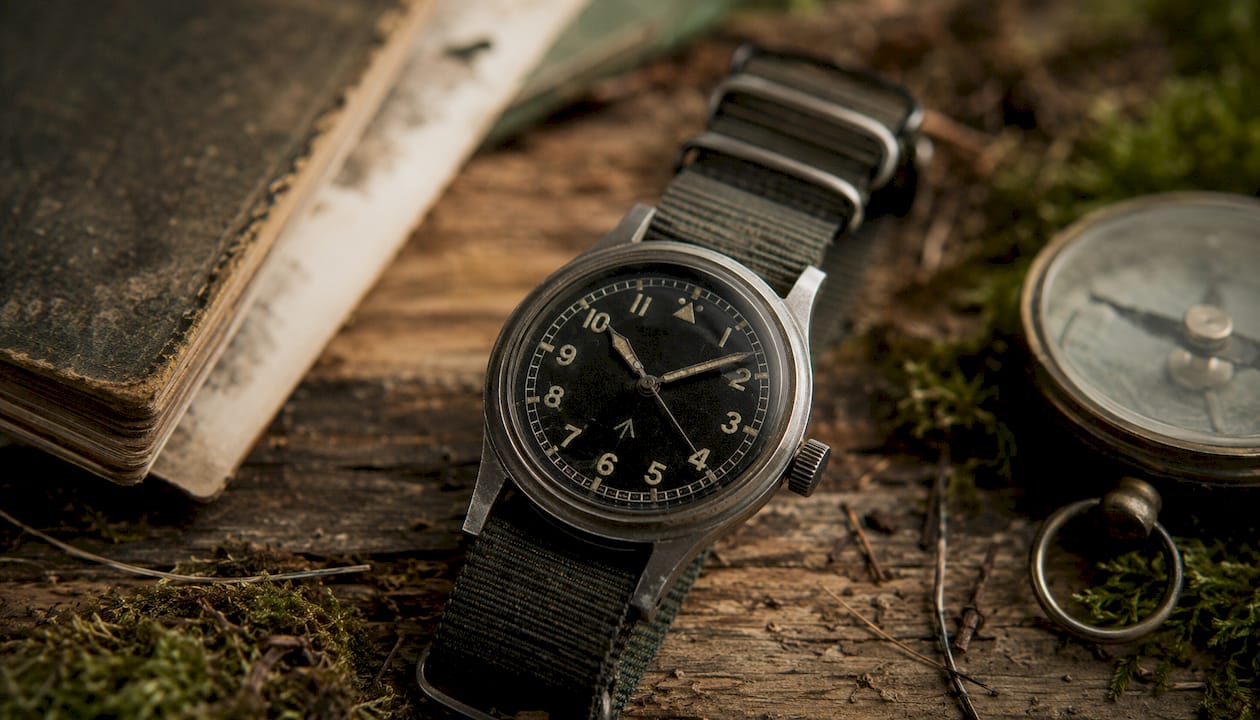
Military-spec watches are extremely rare due to limited manufacturing, high attrition, and modern procurement practices. Provenance verification through markings and archival records is essential for authenticating and valuing these historically significant timepieces. Surviving populations are shrinking, making well-documented examples highly sought after and often commanding premium prices.
Military-specification watches are rare because procurement practices, technical disposability, and high attrition mean very few issued examples survive today with verifiable provenance. The end of mass issuance after Vietnam, combined with MIL-PRF-46374-grade construction that prioritised function over longevity, and decades of combat loss and scrapping, have reduced genuine issued populations to a fraction of what was originally produced.
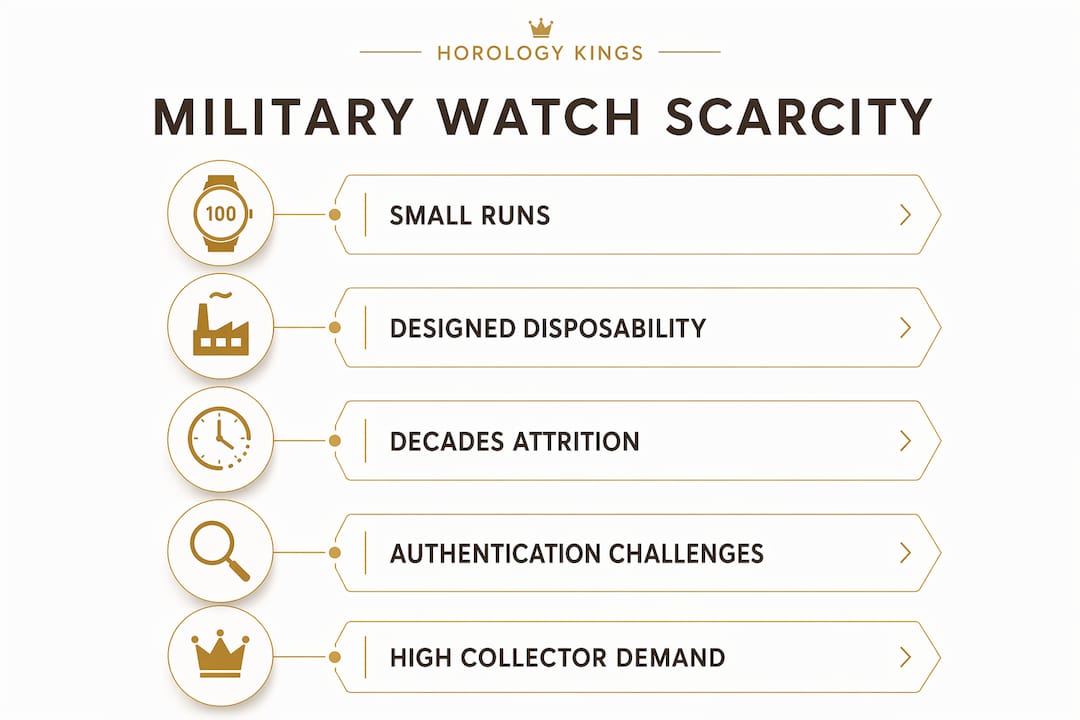
The four pillars of military watch rarity:
Procurement shift: large-scale standard issue ended after Vietnam; modern personnel buy personal kit
Technical disposability: MIL-SPEC construction favoured cheap, non-serviceable materials over durability
Manufacturing limits: small contract runs, stripped branding, and single-bid procurement kept volumes low
Attrition: combat loss, cannibalisation, and post-service scrapping destroyed the majority of issued pieces
Provenance verification is the fifth and perhaps most consequential factor. Without caseback markings, contract numbers, and archival corroboration, even a genuine issued watch cannot command a premium.
Table of Contents
How did military watch issuance decline over the decades?
The history of military-issued watches is, in essence, a story of shrinking populations.
Era | Key development | Surviving population impact |
WWII | British W.W.W. programme | Large initial issue; heavy combat attrition |
Post-war 1940s | MIL-W-3818 revisions; multi-brand procurement | Moderate survival; surplus disposal reduced stock |
1950s | Dive watch adoption; Tornek-Rayville TR-900 | Very small batches; high operational loss |
Vietnam era | Last consistent U.S. standard-issue field watches | Final large-scale issue; many scrapped post-service |
Post-Vietnam | Individual purchase replaced issue; mission-specific procurement | No new issued populations created |
The British “Dirty Dozen” — twelve manufacturers including Omega, IWC, Jaeger-LeCoultre, and Longines who supplied the MOD with W.W.W. timepieces in the mid-1940s — represents one of the most documented issued populations. Yet even here, survival is patchy. Post-war surplus disposal, redistribution, and simple neglect eliminated thousands of pieces that were never considered collectible at the time.
The policy turning point came after Vietnam. Standard-issue field watches gave way to personal purchase, with operators selecting tools suited to their specific mission. No new large issued cohort was created, which means the surviving pool from earlier eras is finite and shrinking.
What did MIL-SPEC actually require, and why does it matter for collectors?
MIL-PRF-46374 and its predecessor specifications set demanding, testable performance criteria. The core requirements were:
Luminescence: hour markers filled with luminescent compounds (historically radium, later tritium); legibility in total darkness was mandatory
Anti-magnetism: movements had to resist magnetic fields that would affect accuracy in the field
Shock resistance: cases and movements tested against physical impact consistent with combat conditions
Water resistance: from basic splash protection up to 400 ft submersion for dive-spec pieces
Hacking seconds: the seconds hand stops when the crown is pulled, allowing time synchronisation
Accuracy: typically a 30-second daily rate tolerance, tighter than most civilian standards of the era
Attribute | MIL-SPEC requirement | Typical civilian luxury standard |
Case finish | Matte, unpolished, often unbranded | Polished or brushed with prominent branding |
Movement | Functional, replaceable | High-grade finishing, exhibition caseback |
Luminescence | Mandatory, tested compound | Decorative, variable |
Serviceability | Often non-serviceable by design | Full service access expected |
Materials | Cost-controlled, functional | Precious metals, sapphire, ceramic |
The tension for collectors is clear. MIL-SPEC watches were built to perform, not to survive decades in a drawer. Matte cases scratch easily. Unbranded dials complicate attribution. Non-serviceable sealed units cannot be restored without compromising provenance. These are not flaws in the design; they are features of a tool built for a specific, finite purpose.
How did procurement policy create scarcity?
Single-contract procurement is the structural engine of military watch rarity. A specification like MIL-W-3818B would go to competitive bid, often with only one manufacturer qualifying. The Marine Corps’ 1964 purchase of 10,849 MIL-W-3818B watches from Benrus at $28.28 per unit is a precise illustration: one contract, one supplier, one defined quantity. No reorder, no retail overspill.
Contract runs were short by design; procurement officers prioritised supply chain reliability and unit cost over volume
Watches were issued as personal kit in many cases, meaning they left with the serviceman and entered private hands with no tracking
End-of-service disposal instructions frequently mandated scrapping rather than redistribution
Modern deployed personnel favour personal purchases such as G-Shock or Suunto, confirming that no new issued cohort is being created
The disposability mindset is critical to understand. Procurement officers were not thinking about collector markets fifty years hence. They were thinking about cost per unit, supply chain reliability, and whether the watch would function for the duration of a deployment. Longevity was irrelevant to the brief.
Why didn’t manufacturers produce large, collectible runs?
Manufacturers had no commercial incentive to do so. Military contracts were awarded on price and specification compliance, not brand prestige. The result was production stripped of everything that drives collector appeal.
Branding was suppressed on many issued pieces to avoid unit identification and operational exposure; a watch with no visible manufacturer name offers no intelligence value to an adversary
Cost control meant acrylic crystals, base-metal cases, and standardised movements rather than the finishing collectors associate with luxury Swiss production
Contract exclusivity meant a batch produced for one military buyer could not be sold commercially, limiting total production to the contracted quantity
Parts standardisation across contracts reduced the distinctiveness that makes individual references desirable
The Blancpain Fifty Fathoms Tornek-Rayville TR-900 is the counterpoint that proves the rule. Produced in tiny numbers for U.S. naval diving units, with caseback engravings and batch serials traceable to procurement records, it is now among the most sought-after issued watches in existence precisely because so few were made and fewer still survive.
Why do so few issued watches survive?
Attrition is relentless and cumulative. Combat loss, post-service disposal, and environmental wear have reduced genuine issued populations to a fraction of original production across every era.
Sources of loss include:
Combat destruction: watches lost with their wearers, or destroyed in the conditions of active service
Post-service scrapping: disposal instructions and a lack of perceived value meant many were destroyed rather than retained
Cannibalisation: movements and parts stripped from damaged examples to repair others, leaving neither piece intact or attributable
Environmental wear: field conditions — salt water, sand, extreme temperature — accelerate case and movement degradation
“A Tornek-Rayville dive watch in beautiful condition… I wrote back and told my friend’s son what he had and that the watch was likely worth $5,000–$10,000. After a bit of research I wrote him again and upped that amount quite a bit. I just wrote him again to report one just sold for $123,000.” — Collector account, NAWCC Forums
That trajectory from overlooked to six figures illustrates exactly what survival rarity does to value. The TR-900 was not considered remarkable by people who handled it daily. Scarcity, confirmed provenance, and time transformed it.
How do you verify a genuine military-issued watch?
Authentication is where collectors lose money. Many watches marketed as military-issued are civilian models with period-correct styling. Collectors must verify caseback markings against archival procurement records before paying any premium.
Authentication checklist:
Caseback engravings: look for contract numbers, NATO stock numbers (NSNs), broad arrow marks (British MOD), or “MIW” / “low mu” stamps
Batch and serial cross-reference: match the serial range to known procurement batches using published reference works or MOD archive records
Service stamps and unit logs: original paperwork, unit issue records, or supply ledgers corroborate the watch’s service history
MOD and National Archives corroboration: UK procurement records held at the National Archives in Kew can confirm contract details for British-issued pieces
Museum or specialist verification: established horological institutions and specialist dealers can provide written authentication opinions
Forensic markers to examine:
Caseback punch marks and their depth, font, and positioning relative to known genuine examples
Moisture indicators (small coloured dots inside the caseback) specified for certain dive-watch contracts
Original bezel type and locking mechanism consistent with the specification period
Dial printing style, lume compound colour, and hand type consistent with the contract date
Pro Tip: Be alert to era-inconsistent caseback dates. A caseback engraved with a date that post-dates the movement’s production is a clear sign of re-engraving. Swapped hands and replacement dials are equally common; always compare against documented reference examples before committing.
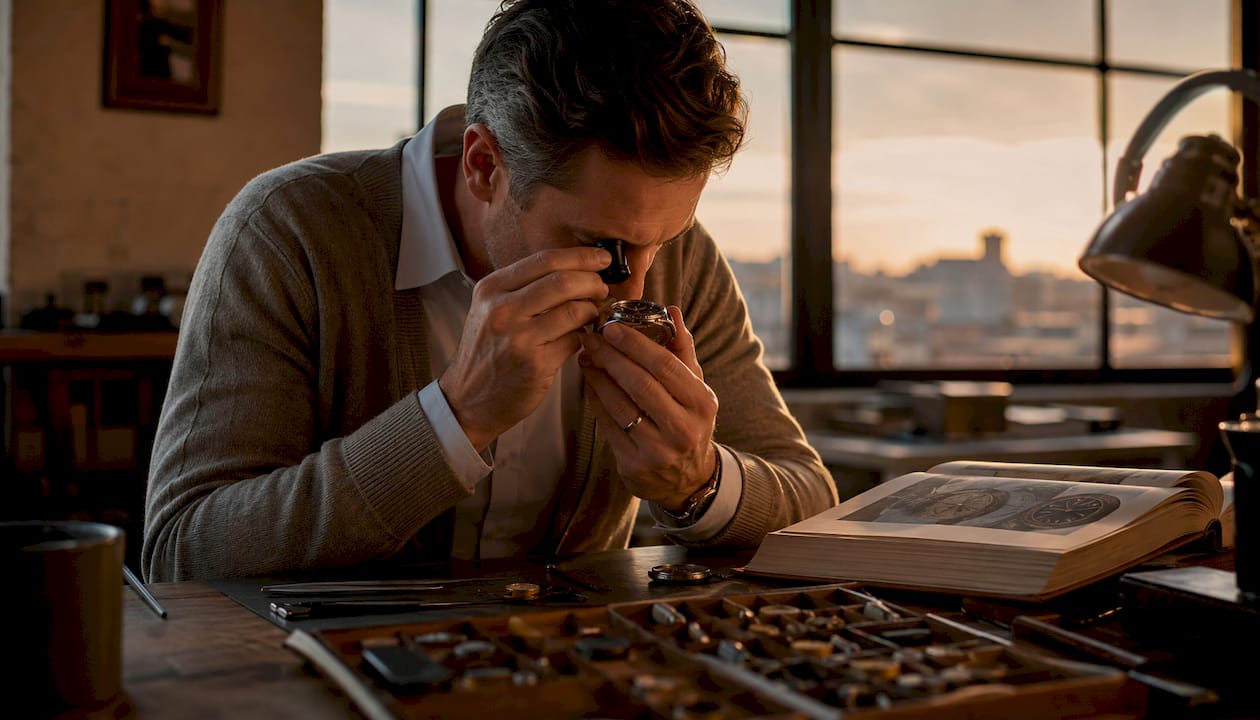
Collectors should also treat military styling as insufficient evidence. NATO straps, matte dials, and luminous hands are aesthetic choices available on any civilian watch. Only caseback marks and a documentary paper trail constitute genuine provenance. A thorough watch authentication checklist is non-negotiable before any significant purchase.
How does rarity affect market value for investors?
Verifiable provenance is the single most powerful value driver in the military watch market. An issued piece with matching contract paperwork, original service stamps, and a traceable ownership chain commands a premium that a visually identical civilian example cannot approach.
Premium drivers:
Documented issue history and matching accessories (original strap, tin, papers)
Single-owner lineage from service to present day
Traceable batch serial within a known small production run
Condition consistent with operational use rather than over-restoration
Investor caveats:
Authentication risk is high; the cost of professional verification should be factored into the acquisition price
Over-restoration destroys provenance; a watch that has been relumed, repolished, or had its dial refinished loses the operational patina that justifies its premium
Legal and ethical provenance questions can arise with pieces from active conflict zones or those removed from service without proper disposal documentation
Liquidity is narrower than for mainstream luxury Swiss references; the buyer pool for a genuine TR-900 is smaller than for a Rolex Submariner
For context on how scarcity shapes valuations across rare references, the same principles apply: survival rate, documentation, and condition determine the ceiling. At auction, a well-documented British-issued Rolex Submariner or Omega has sold for multiples of its civilian equivalent. Through a vetted dealer, you gain pre-sale authentication but typically pay a premium for that assurance.
Where can you find genuine military-issued watches in the UK?
The UK market has specific advantages for collectors. British MOD procurement records are held at the National Archives in Kew, making documentary verification more accessible here than in most other markets.
Where to look:
Specialist auction houses: Bonhams, Sotheby’s, and Christie’s UK all handle horological lots with military provenance; auction catalogues often include archival research
Vetted specialist dealers: dealers with demonstrable expertise in military horology, not generalist vintage watch traders
Veteran estate sales and probate auctions: genuine issued pieces surface through estate clearances; condition is often poor but provenance is frequently intact
MOD and National Archives: procurement records, contract ledgers, and supply logs for British-issued pieces
Due diligence questions to ask every seller:
Can you provide the original contract number or NSN reference?
Is there an archival record at the National Archives or MOD that corroborates this issue?
What is the full ownership history from service to present?
Has the watch been serviced, and if so, were original parts retained?
Will you provide a written authentication opinion from an independent specialist?
Practical buying tips:
Prefer documented lots over undocumented “military-style” pieces regardless of visual appeal
Insist on professional authentication before committing to any significant sum
Use insured bank transfer or escrow for high-value transactions; Horology-kings operates secure UK bank transfers as standard
Consult wristwatch provenance guidance before approaching any seller
If you are looking to commission a search for a specific issued reference, Horology-kings’ watch sourcing service draws on an established specialist network to locate genuine pieces with verified provenance.

Key takeaways
Genuine military-issued watches are rare because small contract runs, disposability by design, and decades of attrition have left surviving populations that are finite, shrinking, and heavily dependent on provenance for their value.
Point | Details |
Rarity is structural | Procurement policy, disposability, and attrition created small surviving populations from the outset. |
Provenance multiplies value | A documented issued piece commands premiums that a visually identical civilian example cannot match. |
Authentication is non-negotiable | Caseback marks, contract numbers, and archival corroboration are the only reliable proof of genuine issue. |
Investor caution on condition | Over-restoration destroys the operational patina that justifies a military premium; buy conserved, not polished. |
UK sourcing has advantages | National Archives procurement records make British-issued pieces among the most verifiable in the world. |
A dealer’s perspective on sourcing military-issued watches
The gap between what collectors expect and what the market actually delivers is wider in military horology than almost anywhere else in the watch world. Pieces arrive with compelling stories and period-correct aesthetics, and the temptation to accept the narrative without the documentation is real. The watches that genuinely reward patience are the ones where the paper trail is as solid as the caseback engraving.
What strikes me most, having handled a range of pieces with claimed military provenance, is how often the authentication challenge is not the watch itself but the gap in ownership history between service and the present day. A watch that left with a serviceman in 1968 and passed through three estate sales before reaching a dealer has a provenance chain that requires careful reconstruction. That reconstruction, done properly, is where genuine value is confirmed or lost.
The practical advice I would offer any collector approaching this category: treat the documentation budget as part of the acquisition cost. A professional authentication opinion from a recognised specialist is not optional at this price point. And if a seller cannot or will not provide contract references and archival corroboration, the premium is not justified regardless of how convincing the caseback looks.
Useful sources and further reading
The following primary sources and archives are the most reliable starting points for provenance research and technical verification of military-issued watches.
Archival and procurement records:
The National Archives, Kew: holds British MOD procurement ledgers, contract records, and supply logs for W.W.W. and subsequent issued programmes. Essential for verifying British-issued pieces.
MIL-PRF-46374G specification: the primary U.S. procurement standard defining testable performance criteria; the full document is publicly available and indispensable for technical cross-referencing.
Wikipedia: US military watches: a well-sourced reference compiling specification histories, contract details, and manufacturer lists for U.S.-issued pieces.
Auction house records (UK):
Bonhams: search past horological sale catalogues for military-provenance lots and realised prices.
Sotheby’s UK: specialist watch sales frequently include documented military examples with catalogue research.
Christie’s UK: horological department maintains records of significant military-issued pieces sold at auction.
Research and collector resources:
Hodinkee’s documented reporting on the Tornek-Rayville TR-900 and the Timex military watch history provides primary-source detail on U.S. procurement.
NAWCC Forums: collector discussions on military watch rarity, authentication, and valuation with contributions from specialist dealers.
DiveWatch.com: detailed coverage of military dive watch specifications and the instrument-grade design decisions behind issued pieces.
MrWatchMaster: contextual analysis of how operational pedigree translates to collector value.
Recommended
Comments