.png)
Why service high-end watches regularly for lasting value
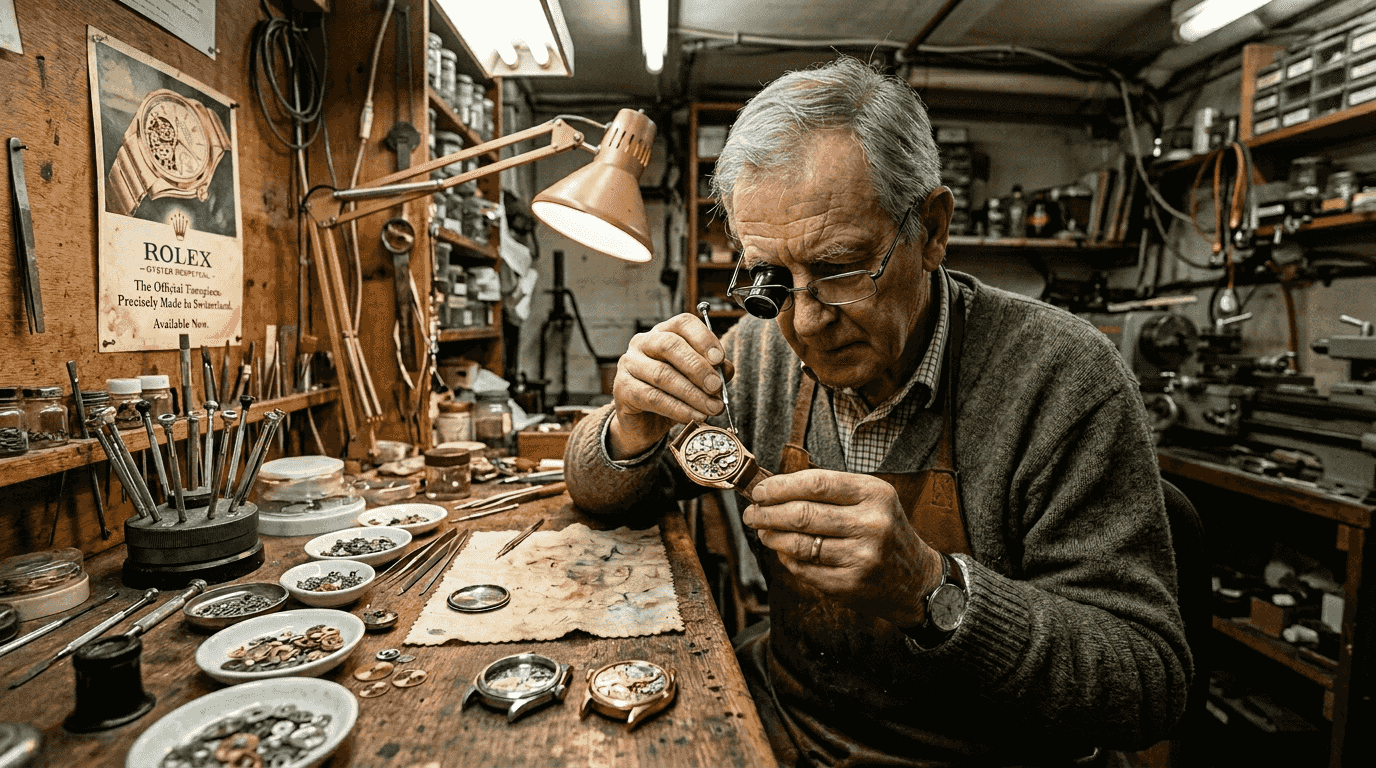
Owning a high-end mechanical watch brings pride and prestige, yet many collectors underestimate the ongoing commitment required to preserve their investment. Lifetime maintenance can cost 42-73% of the original purchase price over fifty years, a figure that surprises even seasoned enthusiasts. Regular servicing is not merely routine upkeep but a critical strategy to maintain accuracy, prevent irreversible damage, and protect resale value. Understanding why high-end watches demand this level of care empowers you to safeguard both the performance and financial worth of your collection.
Table of Contents
Key takeaways
Point | Details |
Service every 3-5 years | Regular intervals maintain lubrication and prevent accelerated wear on intricate components. |
Neglect increases repair costs | Dried oils cause friction damage, leading to expensive part replacements and diminished accuracy. |
Servicing preserves value | Proper maintenance protects both performance and resale potential over decades of ownership. |
Complex watches cost more | Chronographs and specialised movements require expert servicing at higher expense. |
Plan for lifetime expenses | Budgeting for ongoing maintenance ensures your investment remains protected long term. |
Understanding why high-end watches need regular servicing
Mechanical watches are marvels of precision engineering, yet their intricate movements depend on components working in perfect harmony. Over time, the lubricants that keep these parts moving smoothly degrade and thicken, typically after five to six years of use. Mechanical watches require servicing due to the degradation of lubricants, which leads to increased friction between gears, pivots, and jewels. This friction becomes the enemy of your watch’s performance, reducing the driving force that powers the movement and causing timing inaccuracies that compound over months.
When oils dry out completely, metal surfaces grind against each other, creating microscopic particles that act like sandpaper within the movement. These particles accelerate wear on delicate components, some measuring mere fractions of a millimetre. Friction reduces driving force and accuracy, transforming a once-reliable timepiece into an unpredictable accessory. The damage extends beyond simple timekeeping errors, potentially affecting the integrity of balance wheels, escapements, and gear trains that cost hundreds or thousands of pounds to replace.
Professional servicing addresses these issues through a systematic process that restores your watch to optimal condition. Watchmakers dismantle the entire movement, clean each component ultrasonically to remove old oil and debris, replace worn parts, apply fresh lubricants precisely where needed, and adjust the mechanism for accuracy. This thorough approach prevents minor issues from escalating into catastrophic failures. Following luxury watch maintenance tips ensures you understand when and why these interventions matter.
“The beauty of mechanical watches lies in their complexity, but this same complexity demands respect through regular professional care.”
Key reasons your watch needs regular servicing:
Lubricant degradation occurs naturally over time regardless of wear frequency
Friction between components accelerates exponentially as oils dry
Metal particles from wear contaminate the movement and cause cascading damage
Seals and gaskets deteriorate, compromising water resistance
Magnetisation from everyday electronics affects timekeeping accuracy
Understanding these mechanical realities helps you appreciate why servicing represents an investment in longevity rather than an optional expense. Your watch’s movement contains hundreds of precisely machined parts working together, and maintaining this harmony requires expert intervention at regular intervals.
How regular servicing protects value and performance of your collection
Beyond mechanical necessity, servicing directly impacts your watch’s financial value and collector appeal. Regular servicing every 3-5 years preserves condition and market value, a fact that serious collectors and investors recognise as fundamental to portfolio management. When you eventually sell or trade a timepiece, prospective buyers scrutinise service history as evidence of responsible ownership. Complete documentation showing consistent professional maintenance can add thousands of pounds to resale value, whilst gaps in service records raise red flags about potential hidden damage.

The relationship between servicing and accuracy becomes particularly important for collectors who rotate multiple watches. A well-maintained timepiece should gain or lose no more than a few seconds daily, whilst a neglected movement might drift by minutes weekly. This degradation happens gradually, so you may not notice the decline until the watch becomes unreliable. Ignoring service intervals leads to costly repairs because dried lubricants cause physical damage to components that could have been preserved with timely intervention. Replacing a damaged balance staff or escapement wheel costs significantly more than routine servicing.
Expert watchmakers emphasise that servicing frequency must account for how you use your timepieces. Chronographs experience additional stress when you activate their complications, requiring more frequent attention than simple three-hand movements. Similarly, watches worn during swimming or diving need annual pressure testing and gasket replacement to maintain water resistance, even if the movement itself doesn’t require full servicing. Understanding your watch valuation helps you appreciate how maintenance protects this financial asset.
“A service history is the passport that allows your watch to travel confidently through the secondary market.”
Servicing benefits for collectors:
Maintains accuracy within manufacturer specifications
Prevents accelerated wear that diminishes component lifespan
Preserves water resistance through seal and gasket replacement
Documents professional care for future buyers
Identifies potential issues before they cause irreversible damage
These advantages compound over decades of ownership, making the difference between a watch that appreciates as a collectible and one that becomes merely a worn object. Serious collectors view servicing as portfolio maintenance, comparable to property upkeep or vehicle servicing, recognising that neglect inevitably destroys value faster than time alone.
Tailoring service intervals and understanding servicing costs
Not all watches demand identical maintenance schedules, and understanding these nuances helps you budget appropriately for your collection. Manufacturers typically recommend servicing every three to five years, but this guidance assumes moderate wear under normal conditions. Complications add layers of complexity that require more frequent professional attention. A perpetual calendar or minute repeater contains additional components that multiply potential failure points, whilst a simple time-only movement operates with fewer variables. Complex movements like chronographs require specialised servicing that commands premium pricing due to the expertise and time involved.
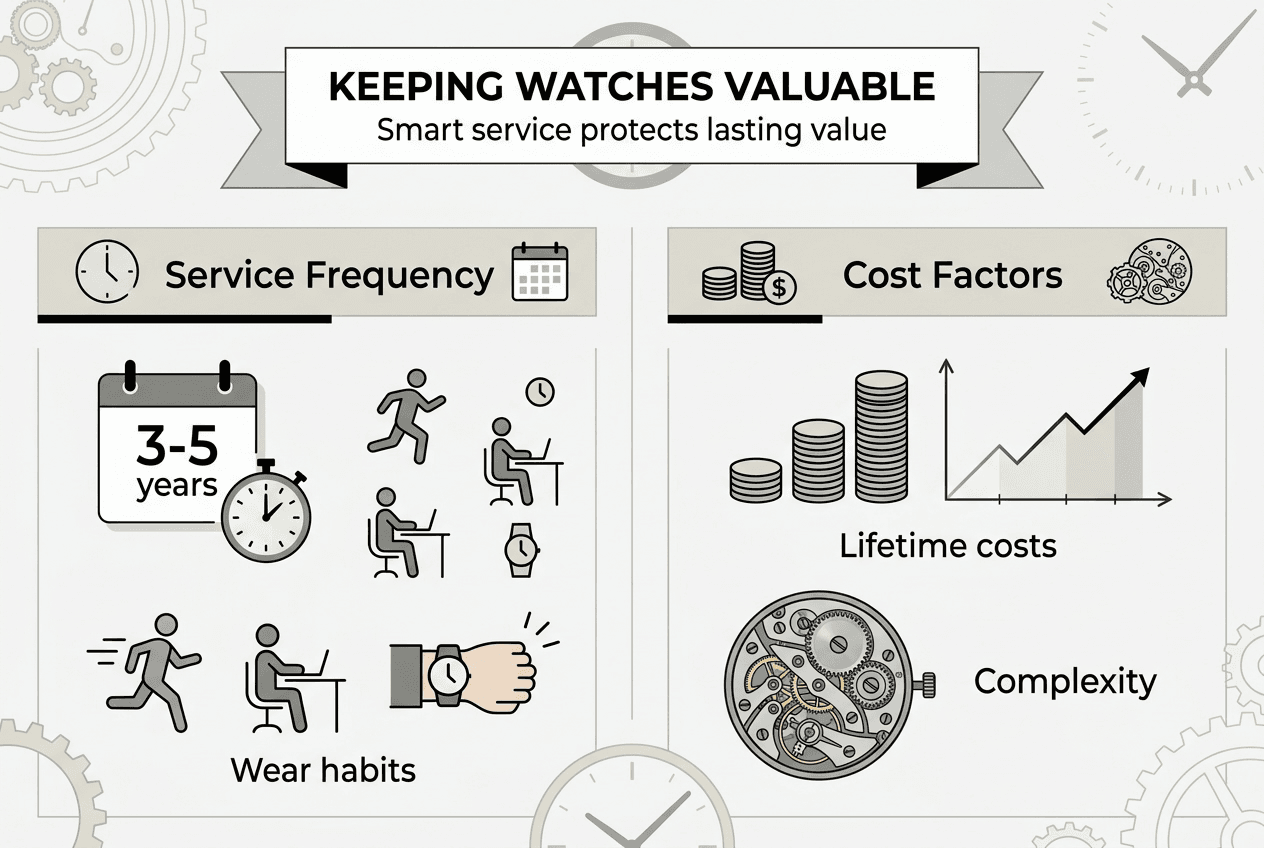
Your wearing habits and environment significantly influence servicing frequency. Watches exposed to extreme temperatures, magnetic fields, or physical shocks need more frequent inspection than those worn occasionally in controlled conditions. Professional divers should service their watches annually, whilst collectors who rotate pieces in climate-controlled settings might extend intervals slightly. However, extending service intervals beyond manufacturer recommendations risks voiding warranties and creates opportunities for undetected damage to accumulate.
The financial reality of lifetime ownership often surprises new collectors. Maintenance over 50 years costs 42-73% of the original price, depending on brand, model complexity, and servicing frequency. A watch purchased for £10,000 might require £4,200 to £7,300 in maintenance over five decades. This calculation assumes regular servicing prevents major repairs, as neglect can push costs even higher through component replacement. Planning for these expenses when acquiring high-end watches ensures you can maintain them properly throughout ownership.
| Watch type | Service interval | Typical cost | Complexity factors | | — | — | — | | Simple automatic | 4-5 years | £300-£600 | Basic movement, fewer components | | Chronograph | 3-4 years | £600-£1,200 | Additional complications, more wear points | | Perpetual calendar | 3-4 years | £1,200-£2,500 | Complex mechanics, specialised expertise | | Minute repeater | 3-4 years | £2,000-£5,000 | Extreme complexity, rare skills required |
Pro Tip: When purchasing a high-end watch, calculate the total cost of ownership by adding estimated lifetime servicing expenses to the purchase price, then compare this figure to projected appreciation to understand the true investment potential.
Understanding watch repair and servicing options helps you find qualified professionals who can maintain your collection appropriately. Authorised service centres offer manufacturer-backed work but often charge premium rates and require longer turnaround times. Independent watchmakers with proper training and genuine parts provide alternatives that balance quality with cost, though verifying credentials remains essential.
What to expect during a high-end watch service and why expertise matters
The servicing process reveals why only trained specialists should handle your valuable timepieces. Complete overhauls involve dismantling, cleaning, replacing worn parts, reassembling, lubricating, and adjusting in a sequence that demands precision and experience. An automatic chronograph contains over 200 individual components, many smaller than a grain of rice, each requiring careful handling and proper positioning. One misplaced jewel or incorrectly tensioned spring can render the entire movement inoperative, whilst contamination from a single fingerprint can cause corrosion that destroys components over time.
Professional watchmakers follow systematic procedures that ensure consistent results:
Initial inspection documents the watch’s condition and identifies obvious issues
Complete disassembly separates every component for individual cleaning
Ultrasonic cleaning removes old lubricants, dirt, and metal particles
Component inspection identifies wear patterns requiring part replacement
Reassembly follows precise sequences with appropriate lubricants applied at specific points
Timing adjustment calibrates the movement to manufacturer specifications
Case refinishing and gasket replacement restore appearance and water resistance
Final testing verifies accuracy, power reserve, and water resistance
This process typically requires one to three weeks, depending on movement complexity and parts availability. Rushing servicing compromises quality, as proper cleaning, adjustment, and testing cannot be abbreviated without risking substandard results. High-end watches require servicing by trained specialists because the stakes are too high for amateur attempts or shortcuts.
The materials used in luxury watches demand specialised knowledge and tools. Platinum cases require different handling than stainless steel, whilst exotic materials like ceramic or carbon composite need specific techniques to avoid damage during servicing. Similarly, movements incorporating silicon components or rare alloys require watchmakers familiar with these modern materials. Authorised training programmes teach these nuances, ensuring technicians understand how to work with cutting-edge horological technology whilst respecting traditional craftsmanship.
Pro Tip: Always request detailed documentation of work performed during servicing, including parts replaced, adjustments made, and final accuracy measurements, creating a comprehensive service history that enhances resale value.
Choosing qualified professionals protects your investment from well-meaning but inadequately trained technicians who might cause more harm than good. Verify that watchmakers have manufacturer certifications for your specific brands, access to genuine replacement parts, and appropriate insurance covering potential damage. The modest savings from using unqualified services pale compared to the cost of repairing botched work or explaining service gaps to future buyers. Understanding watch repair and servicing details helps you make informed decisions about who touches your valuable timepieces.
Discover expert watch servicing and sourcing at Horology Kings
Protecting your investment requires partnering with specialists who understand the unique demands of high-end horology. Horology Kings offers comprehensive professional watch repair and servicing delivered by trained technicians who treat each timepiece with the care it deserves. Our team combines traditional watchmaking skills with modern diagnostic equipment, ensuring your watches receive maintenance that preserves both performance and value. Whether you own a vintage Rolex requiring sympathetic restoration or a contemporary Patek Philippe needing routine servicing, we provide the expertise your collection demands.

Beyond maintenance, we assist collectors in sourcing luxury timepieces through our extensive network of trusted suppliers and private sellers. Finding that perfect addition to your collection becomes effortless when you work with specialists who understand your vision and budget. Visit Horology Kings to discover how our commitment to transparency, security, and expertise makes us the partner serious collectors trust for every aspect of luxury watch ownership.
Frequently asked questions
How often should I service my high-end mechanical watch?
Most specialists recommend servicing every three to five years depending on usage patterns and model complexity. Simple automatic movements typically handle five-year intervals comfortably, whilst chronographs and watches exposed to water or extreme conditions benefit from more frequent attention. Manufacturer guidelines provide baseline recommendations, but consulting with qualified watchmakers about your specific wearing habits helps establish optimal watch servicing intervals for your collection.
What are the risks of not servicing my watch regularly?
Dried lubricants create friction that accelerates wear on delicate components, potentially causing damage that requires expensive part replacement rather than simple maintenance. Neglected watches lose accuracy progressively, and internal wear generates metal particles that contaminate the movement like abrasive paste. The risks of skipping watch servicing extend beyond performance issues to diminished resale value, as buyers recognise service gaps as red flags indicating potential hidden damage.
How much can servicing cost over a watch’s lifetime?
Maintenance expenses over fifty years typically add 42 to 73 percent of the original purchase price, varying by brand, model complexity, and servicing frequency. A £15,000 watch might require £6,300 to £10,950 in lifetime servicing, assuming regular maintenance prevents major repairs. These watch maintenance cost estimates help collectors budget appropriately and understand the true cost of ownership. Complex complications and frequent servicing push expenses toward the higher end, whilst simple movements maintained at recommended intervals stay closer to minimum projections. Planning for luxury watch lifetime maintenance costs ensures you can properly care for your investment throughout decades of ownership.
Can I service my luxury watch myself?
The intricate mechanisms and specialised tools required make self-servicing impractical and risky for valuable timepieces. Attempting DIY maintenance without proper training risks irreversible damage to components worth thousands of pounds, whilst contamination from improper handling can cause long-term corrosion. Professional watch servicing by trained watchmakers protects both your watch’s functionality and its resale value, as buyers expect documented professional maintenance rather than amateur attempts.
Recommended
Comments