.png)

Wristwatch history milestones: the definitive timeline
- lewisvrichards3
- Jun 25
- 8 min read
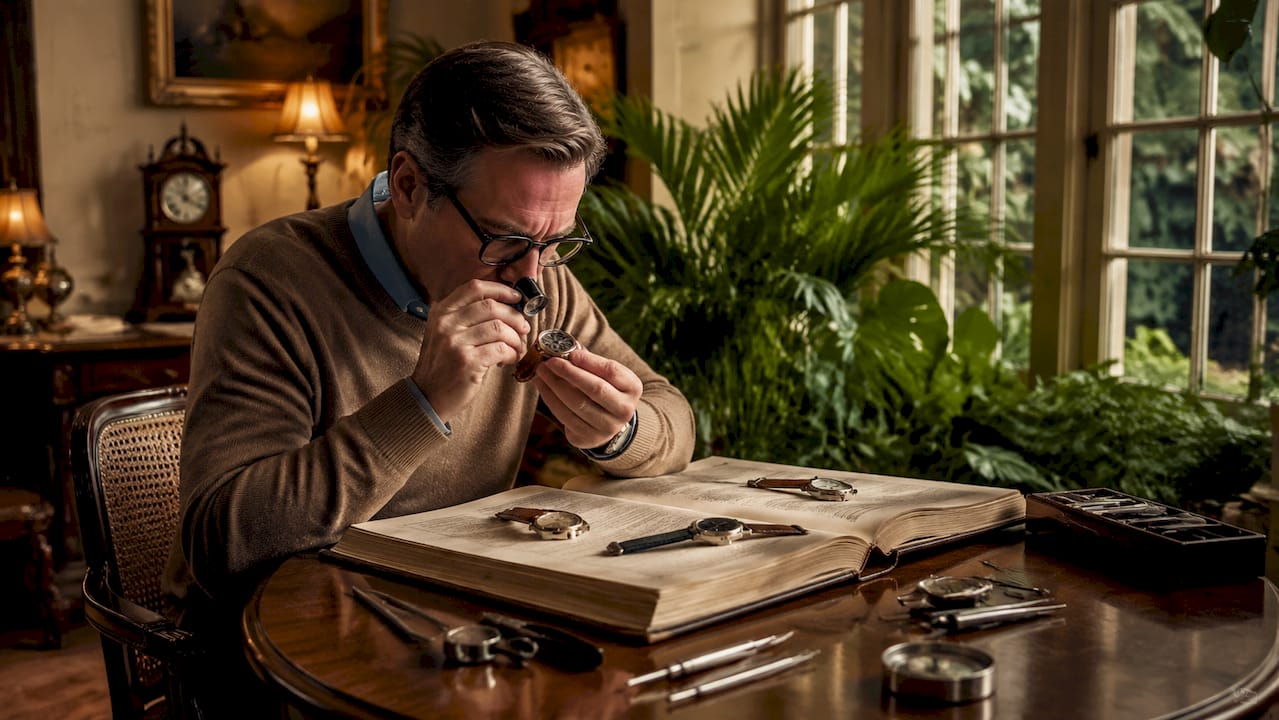
TL;DR:
Wristwatch milestones mark key technological, design, and cultural shifts that transformed timekeeping from jewelry into precision instruments.
Manufacturers like Breguet and Cartier introduced innovations that made wristwatches practical and popular, especially during wartime.
Wristwatch history milestones are the key technological, design, and cultural turning points that transformed timekeeping from ornamental jewellery into precision instruments worn by millions. The story runs from Abraham-Louis Breguet’s 1810 commission for the Queen of Naples through to silicon escapements and smartwatches. For collectors, these milestones are not merely historical footnotes. They directly shape provenance, valuation, and the stories behind every piece you buy or sell.
1. What are the earliest wristwatch inventions?
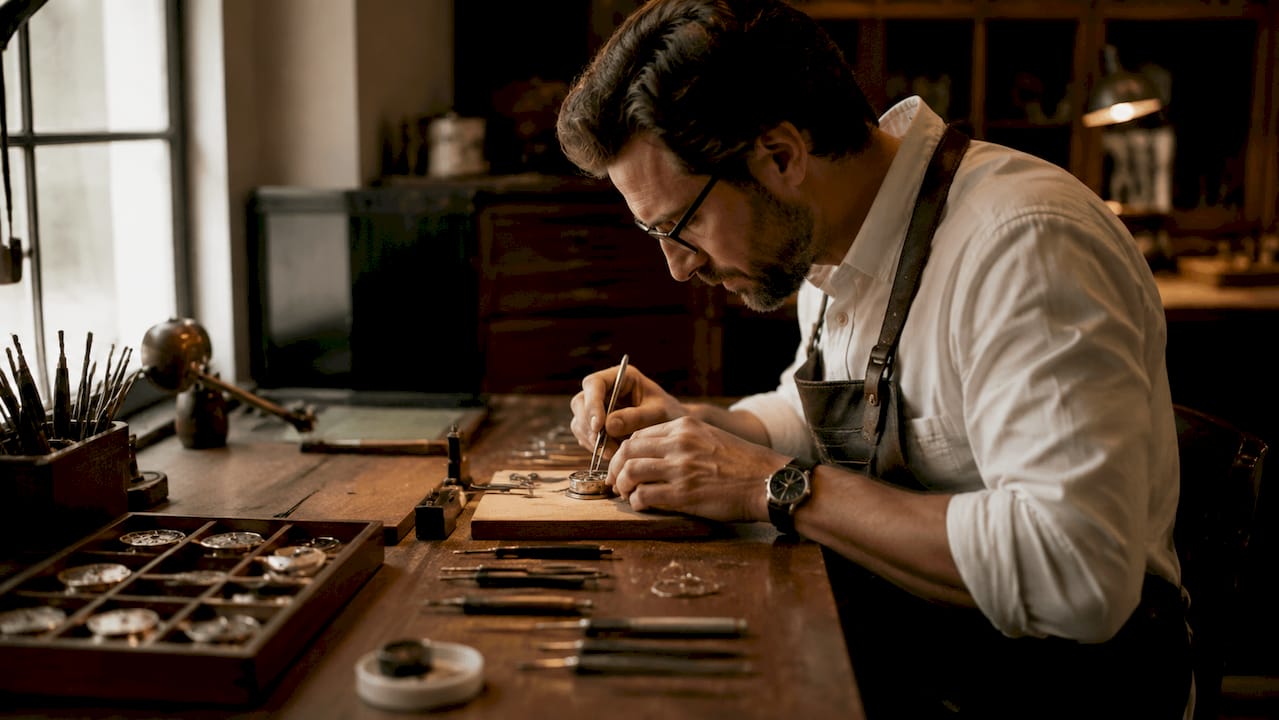
The earliest true wristwatch is credited to Abraham-Louis Breguet, who created a bracelet-style timekeeper for Caroline Murat, Queen of Naples, in 1810. It combined jewellery aesthetics with genuine timekeeping function. That distinction matters: earlier portable clock-watches from the 16th and 17th centuries were worn as ornaments, primarily by women, and offered limited accuracy.
The next landmark came in 1868, when Patek Philippe created a wristwatch for Countess Koscowicz of Hungary. This piece is widely recognised as the first Swiss wristwatch. It confirmed Switzerland’s early dominance in precision watchmaking, a position the country has never fully relinquished.
Collectors should understand the difference between invention and popularisation. Breguet’s 1810 piece was a prototype commission. It did not trigger mass adoption. The wristwatch remained a niche, largely female accessory for nearly a century before military necessity changed everything.
Abraham-Louis Breguet: 1810, Queen of Naples commission
Patek Philippe: 1868, first Swiss wristwatch for Countess Koscowicz
16th to 17th century: ornamental clock-watches, primarily worn by women
Wristwatches remained a female accessory until the early 20th century
Pro Tip: When assessing the provenance of a very early wristwatch, always verify whether the piece is a commission prototype or a production model. The distinction affects both historical significance and market value considerably.
2. How did military necessity make wristwatches mainstream?
The First World War is the single biggest reason men adopted wristwatches. Soldiers in the trenches could not safely reach into a pocket for a watch while holding a rifle or operating artillery. Hands-free timekeeping became a tactical requirement, not a preference.
The Cartier Santos (1904) predated the war but established the template. Louis Cartier designed it for Brazilian aviator Alberto Santos-Dumont, who needed to check the time without releasing his aircraft controls. The Santos combined functional design with luxury aesthetics, a philosophy that still defines the brand today.
“By 1934, Swiss wristwatch exports had nearly doubled those of pocket watches, confirming that the shift driven by WWI had permanently reshaped the market.”
Battlefield demands also pushed specific technical features into the mainstream. Luminous dials, using radium-based paint in the early years, allowed soldiers to read the time in darkness. Shatter-resistant glass and reinforced cases addressed the physical punishment of trench warfare. These features became standard across the industry long after the war ended.
Trench warfare created demand for hands-free timekeeping
Cartier Santos (1904) solved the aviator’s practical problem
Luminous dials enabled night-time reading in the field
Reinforced cases and toughened glass became standard features
Swiss export data confirmed wristwatches overtook pocket watches by 1934
3. What are the critical mechanical innovations in wristwatch movements?
The history of wristwatches is inseparable from the history of mechanical ingenuity. Christiaan Huygens introduced the balance spring in 1657, dramatically improving the accuracy of portable timepieces. Before this, watches could lose or gain hours per day. The balance spring reduced that error to minutes.
Thomas Mudge invented the lever escapement in 1754. This mechanism controls the release of energy from the mainspring in precise, regulated increments. The lever escapement remains the foundation of most mechanical watch movements produced today, more than 270 years after its invention.
John Harwood patented the first automatic self-winding wristwatch in 1923. His design used the natural motion of the wearer’s wrist to wind the mainspring, eliminating the need for manual winding. This was a genuine convenience breakthrough, and the rotor-based automatic movement it inspired is now the default format for mechanical watches worldwide.
Balance spring (Christiaan Huygens, 1657): reduced daily error from hours to minutes
Lever escapement (Thomas Mudge, 1754): still used in most mechanical movements today
Automatic winding (John Harwood, 1923): wrist motion replaces manual winding
Chronograph complications: refined through the 19th and 20th centuries for precision timing
Understanding these mechanical watch foundations helps collectors assess what they are actually buying when they examine a movement. A watch with a lever escapement and an automatic rotor carries centuries of engineering heritage in a case smaller than a coin.
4. How did the quartz revolution transform the industry?
The Seiko 35 SQ Astron, released in december 1969, was the first commercial quartz wristwatch. It operated at 8,192 Hz and achieved accuracy measured in seconds per month rather than seconds per day. That single product made every mechanical watch on the market look technically inferior overnight.
Quartz accuracy was not the only disruption. The miniaturisation of printed circuit boards and battery-powered oscillators made mass production feasible at low cost. A quartz watch could be manufactured for a fraction of the price of a mechanical equivalent and keep better time. Swiss manufacturers, who had built their industry on mechanical precision, faced an existential threat.
Feature | Mechanical watch | Quartz watch |
Accuracy | Seconds per day | Seconds per month |
Power source | Mainspring (manual or automatic) | Battery |
Production cost | High (skilled labour) | Low (mass production) |
Collector appeal | High (craftsmanship, heritage) | Moderate (design, history) |
The Quartz Crisis forced Swiss watchmakers to reposition mechanical watches as luxury objects rather than practical tools. Rolex, Patek Philippe, and Audemars Piguet survived by leaning into craftsmanship, heritage, and exclusivity. That repositioning is why a mechanical watch commands a premium today despite being less accurate than a £10 quartz movement.
Pro Tip: If you collect mechanical watches, the Quartz Crisis is the reason your pieces hold value. The crisis created the luxury tier that separates fine watchmaking from commodity timekeeping.
5. What are the notable design and cultural milestones?
The Hamilton Ventura (1957) was the first battery-operated wristwatch, predating the quartz era and introducing electronic timekeeping to the mainstream. Its asymmetric, shield-shaped case made it a design icon as much as a technical milestone. Elvis Presley wore one in the 1961 film Blue Hawaii, cementing its cultural status.
Digital electronic watches arrived in the early 1970s, with LED displays replacing analogue dials entirely. They were initially expensive and required pressing a button to illuminate the display. By the late 1970s, LCD technology made digital watches affordable and ubiquitous, briefly threatening the analogue format’s dominance.
The wristwatch’s role as a status symbol accelerated through the 1980s and 1990s. Brands like Rolex and Cartier became shorthand for wealth and taste. The watch was no longer just a tool. It was a statement about who you were and what you valued.
Contemporary horology now revisits historical escapements using modern materials like silicon, which reduces friction and improves longevity without lubrication. This blend of old mechanisms and new materials defines the current direction of high-end watchmaking. For collectors, it means that the vintage vs modern distinction is more nuanced than ever.
6. How do milestones affect what collectors should look for?
Collectors who understand the timeline of watchmaking make better buying decisions. Knowing that Breguet’s 1810 piece was a one-off commission, while the Cartier Santos was a production model that popularised wristwatches for men, changes how you assess rarity and significance.
Provenance knowledge also affects valuation directly. A watch from a maker who contributed a genuine technical advance, such as John Harwood’s automatic movement or Seiko’s quartz breakthrough, carries historical weight that influences price. Collectors who understand watch provenance consistently outperform those who focus only on aesthetics.
The factors driving luxury watch value in 2026 are directly tied to these milestones. Mechanical watches command premiums because the Quartz Crisis defined them as luxury objects. Cartier pieces carry design heritage because the Santos established a template in 1904. Every significant price point in the market traces back to a historical turning point.
Key takeaways
The most important lesson from the history of wristwatches is that every major price premium in today’s market traces directly to a specific historical milestone, from Breguet’s 1810 prototype to the Quartz Crisis repositioning of mechanical watches as luxury objects.
Point | Details |
Invention vs popularisation | Breguet’s 1810 watch was a prototype; the Cartier Santos (1904) popularised wristwatches for men. |
Military drove mainstream adoption | WWI trench warfare made hands-free timekeeping a necessity, not a preference. |
Mechanical foundations endure | The lever escapement (1754) and automatic winding (1923) remain standard in fine watches today. |
Quartz Crisis created the luxury tier | Swiss makers repositioned mechanical watches as luxury items after Seiko’s 1969 quartz breakthrough. |
Milestones drive collector value | Understanding provenance and historical context directly improves buying and valuation decisions. |
Why these milestones matter more than most collectors realise
The distinction between invention and popularisation is one I find most collectors overlook. Breguet made a wristwatch in 1810, but it changed nothing for a century. The Cartier Santos in 1904 changed everything, because it solved a real problem for a real person and went into production. That gap between prototype and product is where historical significance actually lives.
Military necessity shaped features that collectors now treat as desirable complications. Luminous dials, screw-down crowns, and reinforced cases were not design choices. They were engineering responses to battlefield conditions. When you see those features on a vintage piece, you are looking at the direct legacy of the First World War.
The Quartz Crisis is the event I think deserves the most attention from serious collectors. It did not kill mechanical watchmaking. It defined it. Every Rolex, Patek Philippe, and Audemars Piguet you buy today is valuable precisely because the quartz era forced Swiss houses to abandon the mass market and compete on craft. Without the crisis, mechanical watches would likely be curiosities rather than investments.
The future sits in the same tension. Smartwatches offer connectivity that no mechanical movement can match. Yet the market for fine mechanical pieces grows year on year. History suggests that the next disruption will not replace the wristwatch. It will redefine what the wristwatch means.
— Lewis
Horology-kings and the watches that made history
For collectors who take wristwatch history seriously, owning a piece connected to a genuine milestone is the point.

Horology-kings specialises in buying, selling, and sourcing luxury watches from the makers who shaped the timeline: Cartier, Rolex, Patek Philippe, Audemars Piguet, and Omega. Whether you are looking for a Santos with genuine provenance, a pre-quartz mechanical piece, or a modern reference with historical roots, the team at Horology-kings has the expertise to find it. Every transaction is handled with full transparency and secure UK bank transfer. Browse the current collection or enquire about watch servicing and restoration to keep your timepieces in the condition they deserve.
FAQ
Who made the first true wristwatch?
Abraham-Louis Breguet created the first true wristwatch in 1810 for Caroline Murat, Queen of Naples. It combined bracelet-style jewellery with a functioning timepiece.
What was the Cartier Santos and why does it matter?
The Cartier Santos (1904) was designed for aviator Alberto Santos-Dumont to allow hands-free timekeeping in flight. It is widely credited with popularising wristwatches among men.
What was the Quartz Crisis?
The Quartz Crisis followed Seiko’s launch of the first commercial quartz wristwatch in 1969. It forced Swiss mechanical watchmakers to reposition their products as luxury items rather than everyday tools.
When did wristwatches overtake pocket watches in popularity?
Swiss export data shows that by 1934, wristwatch exports had nearly doubled those of pocket watches, reflecting the shift driven by demand during and after the First World War.
Why do mechanical watches still command high prices despite being less accurate than quartz?
The Quartz Crisis redefined mechanical watches as luxury craft objects rather than mass-market tools. Their value now rests on heritage, craftsmanship, and the history of the makers behind them.
Recommended
Comments