.png)

Essential Patek Philippe collector tips: 369% ROI
- lewisvrichards3
- 5 hours ago
- 8 min read
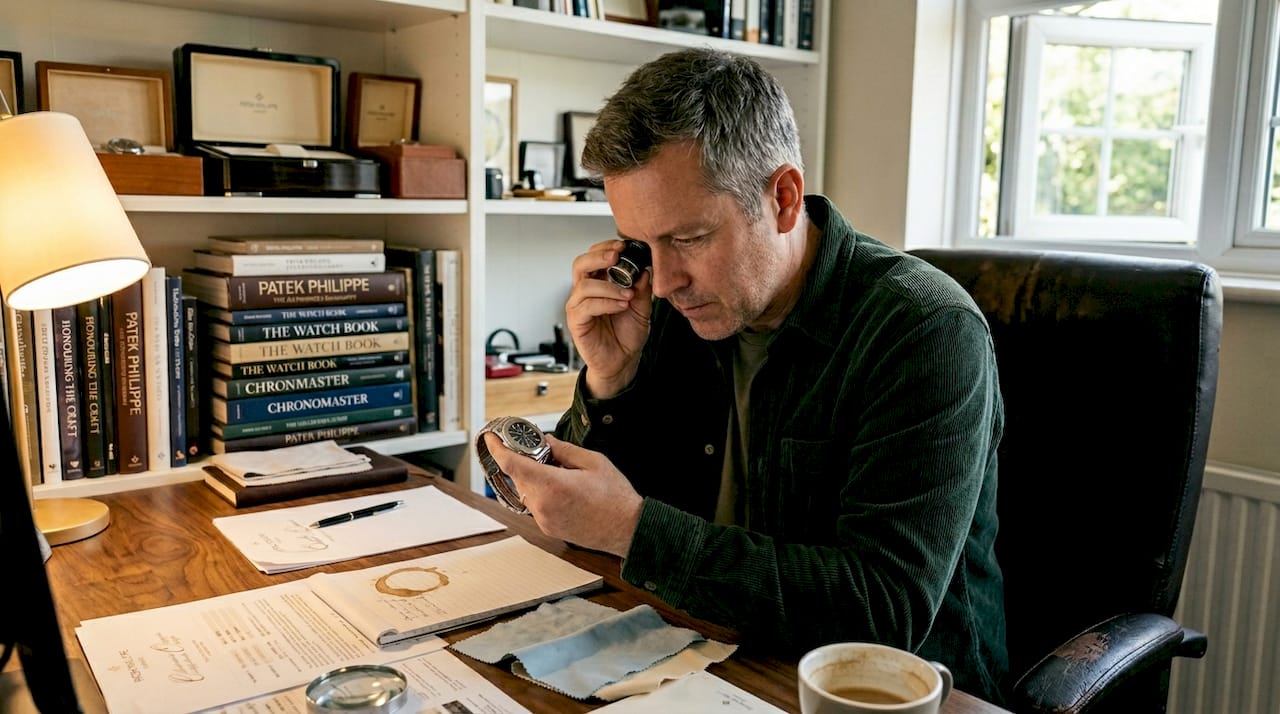
TL;DR:
The Nautilus and Aquanaut models are the most proven investment stars in Patek Philippe collecting.
Authenticity verification and thorough documentation are crucial when acquiring investment-grade watches.
Proper maintenance and selecting the right selling timing maximize long-term collection value.
Collecting Patek Philippe is one of the most rewarding pursuits in horology, but it is also one of the most unforgiving. Even seasoned collectors in the UK frequently misjudge which references will surge, which will plateau, and which condition factors separate a strong investment from a costly mistake. The difference between a collection that grows in value and one that merely sits in a safe often comes down to a handful of decisions made at the point of purchase, during ownership, and at the moment of sale. What follows is a distillation of expert-backed strategies to help you source, maintain, and sell Patek Philippe watches with genuine confidence.
Table of Contents
Key Takeaways
Point | Details |
Target best-performing models | References like Nautilus 5711 and Aquanaut deliver top returns for collectors. |
Authenticate every acquisition | Only buy from reputable sources and insist on full certification and paperwork. |
Prioritise careful maintenance | Servicing and correct storage are key to preserving value in your collection. |
Sell with timing and proof | Time your sale with market trends and present complete documented provenance for the best outcomes. |
Know the most investable Patek Philippe models
Once you’ve set your sights on Patek Philippe, the next challenge is identifying models with the strongest investment track record. Not every reference performs equally, and the gap between the best and worst performers can be staggering.
The Nautilus, particularly the Ref 5711 appreciated 369%, has become the benchmark for sports watch investment. The Aquanaut, especially the steel 5167A, has shown comparable momentum, and both have consistently outpaced many traditional asset classes. These are not flukes. They reflect sustained global demand against deliberately constrained supply, a combination that rarely reverses quickly.
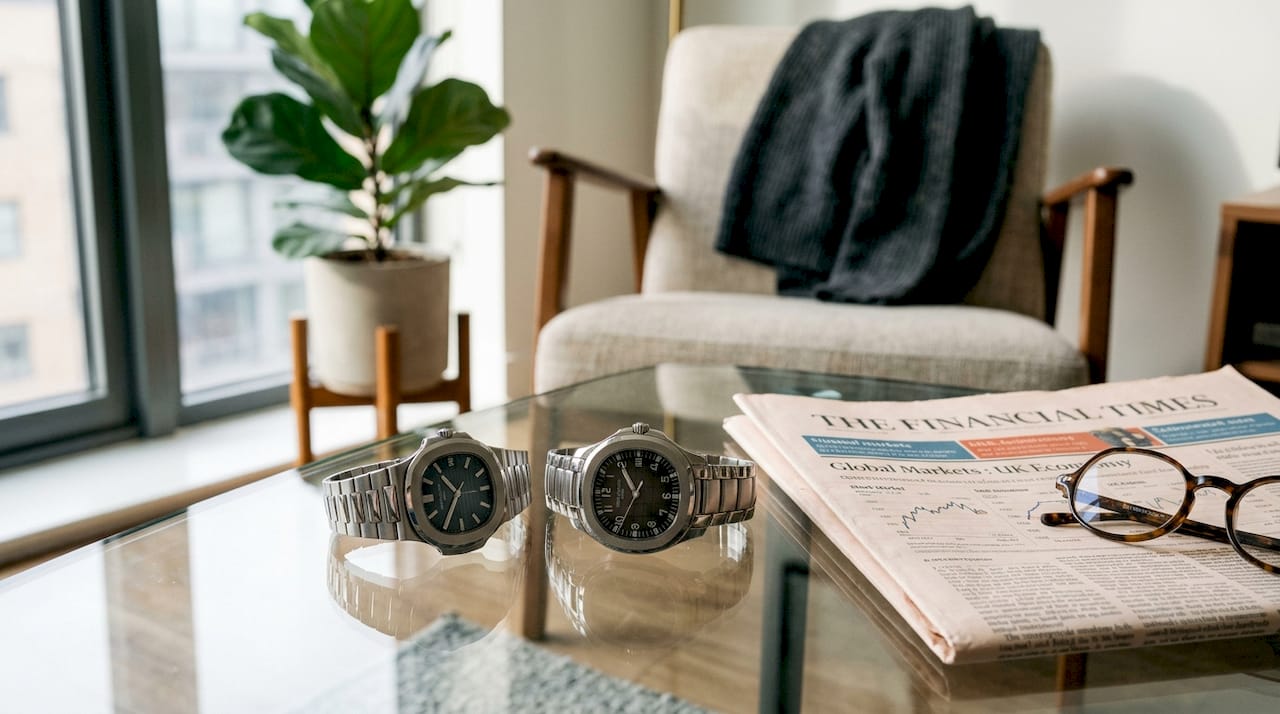
The Calatrava is a different proposition. It lacks the cult status of the Nautilus, but its understated elegance and long production history make it a staple for serious collectors. Certain Calatrava references, particularly those in white gold with original dials, have quietly appreciated in ways that catch casual observers off guard. Pairing Swiss watches value gain data with reference-specific research gives you a clearer picture of where the real momentum lies.
Reference | Approximate retail price | Current market value | Avg. appreciation |
Nautilus 5711/1A | £26,000 | £80,000+ | 200-369% |
Aquanaut 5167A | £22,000 | £55,000+ | 150-250% |
Calatrava 5196G | £18,000 | £28,000+ | 50-80% |
Annual Calendar 5396R | £35,000 | £55,000+ | 40-60% |
Quick identifiers for the most investable models:
Nautilus 5711: Integrated bracelet, octagonal bezel, blue or olive dial
Aquanaut 5167A: Tropical composite strap, rounded octagonal case, steel only
Calatrava 5196: Thin profile, stepped bezel, minimalist dial with applied indices
Grand Complications: Any perpetual calendar or minute repeater in precious metal
Pro Tip: Monitor new Patek Philippe releases and discontinuations closely. When the 5711 was discontinued in 2021, secondary market prices spiked almost immediately. Being positioned ahead of announcements gives you a meaningful edge.
How to acquire authentic, investment-grade pieces
Knowing which references to target is only part of the equation; acquiring genuine pieces requires equal diligence. The Patek Philippe market attracts sophisticated buyers and, unfortunately, sophisticated counterfeiters.
Ensuring authenticity and value is critical when purchasing from any channel, whether that is an authorised dealer, a grey market specialist, or a major auction house. Each route carries distinct advantages and risks.
Channel | Advantages | Risks |
Authorised dealer | Full warranty, guaranteed authenticity | Long waiting lists, no negotiation |
Grey market dealer | Wider availability, below-list pricing possible | Provenance gaps, no manufacturer warranty |
Auction house | Rare references, transparent bidding | Buyer’s premium adds 20-25%, condition varies |
Private sale | Potential value pricing | Highest fraud risk without expert verification |
Step-by-step process for verifying any Patek Philippe before purchase:
Request the extract from the Patek Philippe archives. This confirms production year, reference, and original configuration.
Examine the movement. A genuine Patek movement is finished to an extraordinary standard. Bridges are bevelled, surfaces are decorated with Côtes de Genève or perlage, and every component is signed.
Check the case and dial. Look for crisp engraving, correct font weights, and consistent lume application. Fakes frequently fail on dial printing.
Verify the papers and box. Original papers should match the case serial number precisely.
Consult an independent expert. For high-value acquisitions, always use a specialist in authenticating luxury watches before committing funds.
When negotiating watch purchases, condition documentation is your strongest lever. A complete set with original box, papers, and service records commands a premium, but it also protects you when it is time to sell.
Pro Tip: Seek out unpolished vintage pieces wherever possible. Originality is prized above almost everything else in the serious collector market, and an unpolished case can be worth significantly more than a polished equivalent.
Maintain your collection for optimal value retention
Once acquired, how you care for your Patek Philippe significantly impacts long-term returns. Neglect and improper handling are among the most common reasons a collection loses value unnecessarily.
Key maintenance essentials:
Service intervals: Follow the manufacturer’s guidance of every 3 to 5 years. Skipping services allows lubricants to degrade and components to wear unevenly.
Storage: Use a dedicated watch safe with stable temperature and low humidity. Avoid prolonged exposure to direct sunlight, which fades dials irreversibly.
Insurance documentation: Photograph your pieces regularly, retain all receipts, and update your insured values annually using a professional watch valuation guide.
Winding and wearing: Mechanical movements benefit from regular wear or a quality watch winder. Leaving a watch unwound for extended periods can cause lubricants to settle unevenly.
Pro Tip: Routine expert check-ups, even outside formal service intervals, can detect early signs of moisture ingress or mainspring fatigue. Catching problems early costs far less than addressing them after damage has occurred, and it protects resale value.
On the question of polishing, the collector community is unambiguous. As expert insights on vintage value consistently demonstrate:
“Unpolished vintage examples retain value best. Heavy wear on gold models and case polishing are among the most common reasons collectors see reduced returns at resale.”
Steel and gold models require different handling approaches. Steel sports watches are more forgiving of light daily wear, but scratches on the bezel and bracelet still affect value. Gold models, being softer, show wear patterns more readily. For gold pieces, consider limiting wear to occasions and storing them with particular care. A luxury watch appraisal before any significant event or sale will confirm current condition grading and market positioning.
The watch maintenance tips that matter most are the ones applied consistently over years, not just before a sale.
When (and how) to sell for maximum profit
A strategic approach to selling can make a massive difference in realised profits. Knowing when to hold and when to exit is a skill that separates serious collectors from those who leave money on the table.
Signals it may be time to sell:
Market cycle peaks: When auction results for your reference begin consistently exceeding pre-sale estimates by large margins, the market is telling you something.
Surge in demand signals: Increased media coverage, celebrity associations, or brand announcements often precede short-term price spikes.
Competitive auction activity: When multiple major houses schedule the same reference in the same season, buyer competition intensifies and prices follow.
Portfolio rebalancing: If one piece represents a disproportionate share of your collection’s total value, taking profit protects the overall portfolio.
Steel sports Patek Philippes have shown appreciation of 150 to 300% over retail in recent years, which means timing your exit correctly can represent a life-changing return on a single piece. Holding too long after a peak, however, can mean waiting years for values to recover.
Best resale channels:
Specialist dealers: Fast, discreet, and straightforward. You may accept a small discount versus private sale, but the process is reliable and secure.
Auction houses: Christie’s, Sotheby’s, and Phillips reach global buyers willing to pay premium prices for exceptional pieces. Factor in seller’s commission.
Private sales: The highest potential return, but requires a trusted network and careful vetting of buyers.
Documenting provenance thoroughly before any sale is non-negotiable. Gather your original box, papers, service records, and purchase receipts. If you have photographs of the watch being worn at notable events, include those too. Buyers at the top end of the market pay for stories as much as for specifications. Tracking rare Swiss watches resale trends in the months before listing gives you a realistic price anchor.
Why collecting for love often leads to the best investment outcomes
Selling strategies aside, there is a less talked-about reason the best collections thrive. The collectors who consistently achieve the strongest long-term returns are rarely those who approach Patek Philippe as a purely financial exercise.
Passion creates patience. When you genuinely love a piece, you are far less likely to panic-sell during a market dip or chase the wrong reference because a forum thread told you to. That patience, more than any spreadsheet, is what allows collectors to hold through volatility and exit at the right moment.
We have seen this pattern repeatedly. Collectors who buy with conviction, learn the nuances of their references, and engage with the broader horological community through spaces like our collector perspectives tend to make better decisions at every stage. They hold longer, research deeper, and sell smarter.
The uncomfortable truth is that speculative buyers often underperform passionate collectors, because knowledge and emotional investment create discipline. The joy of wearing, learning, and sharing a Patek Philippe is not separate from the investment case. It is the foundation of it.
Ready to source, maintain, or sell your Patek Philippe?
If you are serious about enhancing your collection or realising gains, expert support makes all the difference. At Horology Kings, we specialise in helping UK collectors locate specific references, verify authenticity, and complete discreet, secure transactions backed by UK bank transfers.

Whether you want to source a watch from our expert network or need professional watch repair and servicing to protect your investment, our Hertfordshire-based team is ready to assist. We combine genuine horological expertise with a transparent, collector-first approach that serious enthusiasts can rely on. Get in touch today to discuss your collection.
Frequently asked questions
Which Patek Philippe models are the safest investment in 2026?
The Nautilus (Ref 5711), Aquanaut, and Calatrava, especially steel sports models, have shown the most consistent appreciation, with historic increases of 180 to 369% recorded across recent years.
How can I spot a fake Patek Philippe?
Look for inconsistencies in weight, engraving quality, and movement finishing, and always request proof of origin. The 65-point certification criteria used by specialists provide a thorough framework for authentication.
How often should I service my Patek Philippe?
Every 3 to 5 years is standard, but vintage and frequently worn pieces may benefit from annual checks. Regular service is essential to preserve both functionality and resale value.
Does polishing a Patek Philippe reduce its value?
Yes. Unpolished vintage watches are consistently prized over polished equivalents, as polishing removes original case sharpness and diminishes collectability significantly.
Recommended
Comments