.png)
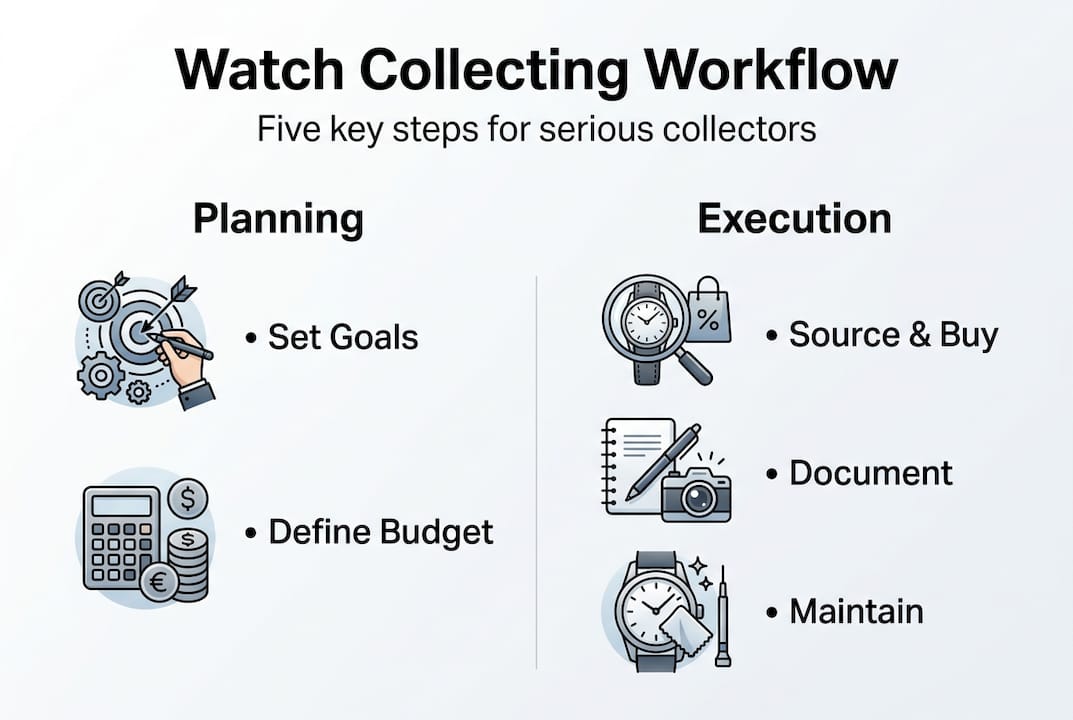
Streamline your watch collecting workflow: 5 key steps
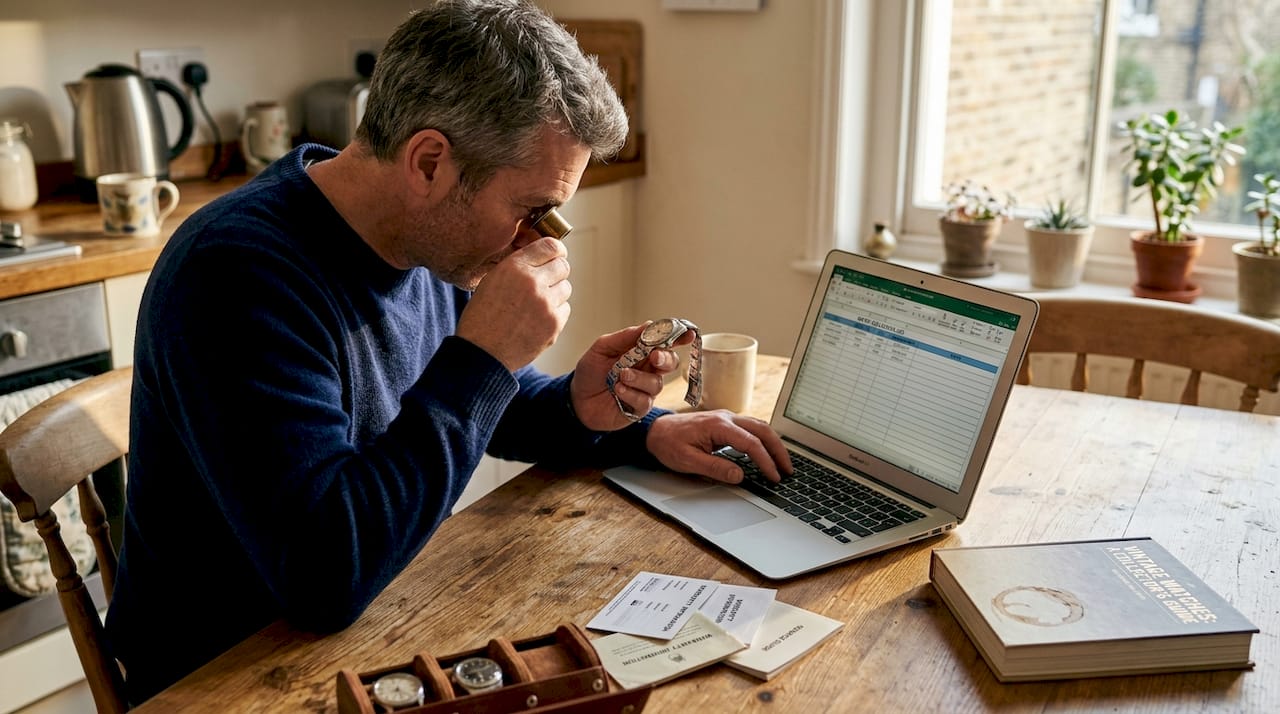
Growing a luxury watch collection is one of the most rewarding pursuits you can undertake. It is also one of the easiest to get wrong. Without a clear structure, collectors find themselves chasing hype, losing track of service histories, and selling at the wrong moment. The result is wasted money and missed opportunity. This guide lays out a proven, step-by-step workflow covering everything from setting goals and sourcing to maintenance and resale, with UK-specific advice throughout. Whether you own three watches or thirty, a disciplined approach protects your investment and makes the whole experience far more enjoyable.
Table of Contents
Key Takeaways
Point | Details |
Set clear objectives | Defining your purpose and budget guides every decision and helps avoid costly mistakes. |
Follow a structured workflow | A repeatable process for sourcing, buying, and documenting keeps your collection safe and valuable. |
Prioritise organisation and maintenance | Proper storage and scheduled servicing preserve value and the pleasure of ownership. |
Document everything | Full provenance and service records are essential for maximising resale value. |
Resist hype, trust process | Long-term success comes from discipline, not chasing trends or shortcuts. |
Setting your goals and establishing budget tiers
Every strong collection starts with a clear purpose. Are you building for investment, daily wear, or the sheer pleasure of mechanical complexity? The answer shapes every decision that follows. Defining your purpose early, whether investment, daily wear, or complications, is the single most important step before spending a penny.
Once you know your aim, structure your spending into tiers. This prevents impulsive purchases and keeps your portfolio coherent.
Budget tier | Price range | Typical examples |
Entry level | £2,000 to £5,000 | Omega Seamaster, Tudor Black Bay |
Mid range | £5,000 to £20,000 | Rolex Submariner, Cartier Santos |
High end | £20,000 and above | Patek Philippe Calatrava, Audemars Piguet Royal Oak |
Before committing to any purchase, ask yourself these essential questions:
Does this watch serve my stated collection purpose?
Is the brand reputation strong enough to support resale value?
Do I understand the movement type and its service requirements?
Is this model versatile enough for regular wear or display?
Have I considered budgeting for rare watches at the next tier up?
Key criteria to weigh include brand heritage, movement quality, and versatility. A watch that looks superb but requires specialist parts every two years is a liability, not an asset.
Pro Tip: Start with iconic models that have proven resale records. A Rolex Submariner or Omega Seamaster holds value far better than a limited edition from a lesser-known brand, regardless of how attractive the latter appears at purchase.
Acquisition workflow: sourcing, buying, and verifying authenticity
With a budget and focus in place, the acquisition process itself needs to be methodical. Rushing this stage is where most collectors make costly errors.
Research the specific reference you want, including production years, dial variants, and known issues.
Identify your channel: authorised dealer, reputable marketplace, or private seller.
Request full documentation: box, papers, service history, and proof of purchase.
Arrange independent authentication before transferring any funds.
Confirm payment security: always use traceable methods such as UK bank transfer.
Each channel carries its own risk profile:
Channel | Pros | Cons |
Authorised dealer | Guaranteed authenticity, warranty | Higher price, limited pre-owned stock |
Marketplace (e.g. Chrono24) | Wide selection, buyer protection | Requires due diligence on seller |
Private seller | Potentially lower price | Higher risk of fakes or undisclosed damage |
The UK market has particular nuances worth noting. Avoiding hype and chasing trends is critical, as is expert verification to guard against sophisticated fakes. Vintage watches carry additional risks around over-polishing and undisclosed repairs, both of which destroy value silently.
“Condition is king in the UK pre-owned market. A watch with full provenance and unpolished case commands a premium that no amount of rarity can compensate for.”
For guidance on choosing an authorised dealer versus other routes, it pays to understand the trade-offs in detail. Equally, thorough authenticity checks are non-negotiable regardless of the channel you use.
Pro Tip: Document provenance and service history at the point of acquisition. Photograph every document, engrave nothing, and store originals safely. This habit pays dividends at resale.
Organising, storing, and rotating your collection
A professional collector’s workflow does not stop at purchase. How you organise and store your watches directly affects their mechanical health and long-term value.
Begin by categorising your collection in a way that makes sense for your goals:
By value: separates high-risk pieces requiring extra security
By brand: useful when you collect within a single house
By function: sport, dress, and complications each have different wear patterns
By acquisition date: helps track service intervals accurately
Storage quality matters enormously. A premium watch case is not a luxury; it is a practical tool. Look for these features when choosing one:
Individual cushioned slots (six to ten watches per case is ideal)
Lockable lid with secure fastening
Humidity and dust resistance
Clear viewing panel to assess condition without handling
Sufficient depth for larger sport models
Categorising by value and use, using premium cases and rotating watches regularly for mechanical health, is the approach adopted by serious collectors. Mechanical watches that sit unworn for extended periods develop dried lubricants and stiff crowns, leading to expensive repairs that are entirely avoidable.
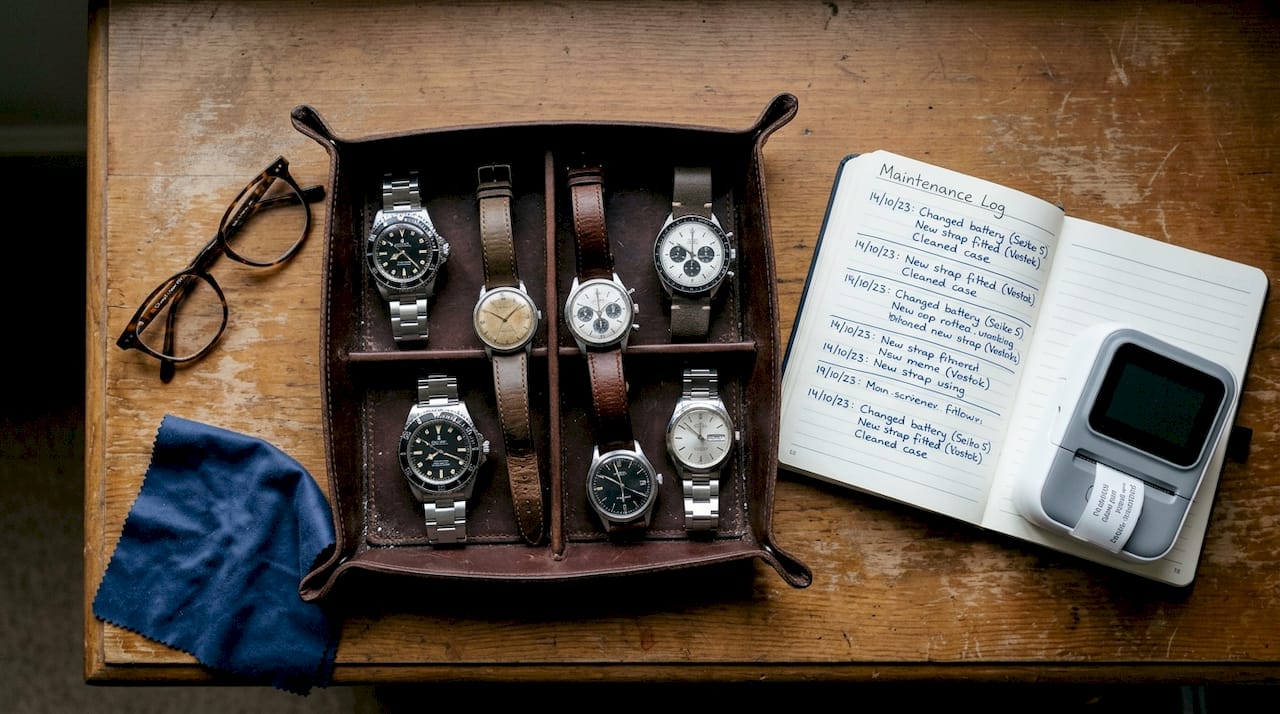
Rotation is not just about wear preference. It is preventive maintenance best practice that keeps every movement in your collection running accurately.
Pro Tip: Maintain a digital inventory with photographs and service records for each piece. A simple spreadsheet or dedicated app works well. This record becomes invaluable when insuring, selling, or servicing any watch in your collection.
Maintenance and servicing: protecting your investment
Preserving portfolio strength requires ongoing discipline. Mechanical watches are precision instruments, and they need regular professional attention to perform and retain value.
The recommended service interval for most luxury watches is every five to seven years. Here is what a sound ongoing care routine looks like:
Clean the bracelet and case monthly with a soft cloth and, where appropriate, warm water.
Check water resistance annually if the watch is worn near water.
Wind automatic watches if they have been unworn for more than two weeks.
Monitor timekeeping accuracy and note any sudden changes, which can signal internal wear.
Book a full service at a qualified UK specialist within the recommended interval.
Service frequency varies by brand and complication level:
Brand | Recommended interval | Notes |
Rolex | 5 to 10 years | Modern movements are robust |
Omega | 5 to 7 years | Co-Axial escapement reduces wear |
Audemars Piguet | 3 to 5 years | Complex movements need closer attention |
Patek Philippe | 3 to 5 years | Grand complications require specialist care |
One of the most damaging mistakes collectors make is over-polishing. Avoiding over-polishing vintage watches is essential because it removes the original surface finish and significantly reduces collector value. A worn case with honest patina is worth far more than a mirror-polished one.
“Mint condition always trumps rarity. A pristine example of a common reference will outsell a rare variant in poor condition almost every time.”
For professional UK watch servicing, always choose a specialist with brand authorisation or a demonstrable track record with the specific manufacturer. Poor repairs are often worse than no repair at all. Follow proven maintenance steps between services to keep your timepieces in peak condition.
Upgrading, selling, and documenting provenance
Most collectors eventually want to trade up, refocus their collection, or simply release capital. Having a clear exit workflow ensures you achieve the best possible return.
Assess the market for your specific reference before committing to a sale.
Gather all documentation: box, papers, receipts, and full service history.
Photograph the watch thoroughly: dial, case, bracelet, caseback, and all documents.
Choose your channel: specialist dealer, auction house, or trusted marketplace.
Agree terms clearly: confirm payment method, timeline, and any buyer protections in writing.
The documents that most significantly support resale value include:
Original box and inner packaging
Warranty card or papers with matching serial number
All service receipts from authorised centres
Original purchase receipt
Photographs taken at acquisition
Any correspondence with the manufacturer
Documenting provenance and service history consistently for value retention is what separates collectors who achieve strong resale prices from those who leave money on the table. Trusted UK channels include specialist dealers, Chrono24, and established auction houses.
When you are ready to move a piece on, selling your luxury watch through a reputable dealer offers speed and security. For those preparing for sale, presentation and paperwork are the two factors most within your control. If you prefer a digital route, understanding the process of selling watches online in the UK helps you avoid common pitfalls.
Pro Tip: Photographic provenance is underused. A timestamped image of the watch alongside its papers, taken at purchase, is compelling evidence of authenticity and condition history that buyers and dealers both respond to positively.
A collector’s insight: why workflow trumps hype (what most guides miss)
Here is the uncomfortable truth that most collecting guides sidestep: the collectors who build genuinely valuable portfolios are rarely the ones who know the most about watches. They are the ones who follow a process consistently.
Chasing hype is expensive. Investment potential in Rolex, AP, and Patek is real but not guaranteed, and those who buy on momentum rather than research tend to absorb the losses when sentiment shifts. We have seen it repeatedly. A collector buys a hyped reference at peak price, skips the authentication step because the seller seems credible, and ends up with a polished case and a questionable movement.
Workflow discipline removes emotion from the equation. It means you authenticate before you pay, service on schedule rather than when something goes wrong, and document everything even when it feels unnecessary. The role of auctions in luxury collecting is a good example: seasoned collectors use them strategically, not reactively. Structure is what turns a passion into a portfolio.
Streamline your collection with professional support
Building and managing a luxury watch collection to the standard described above takes time, expertise, and trusted relationships. That is exactly what Horology Kings offers collectors across the UK.
Whether you want to source a luxury watch from our expert network, arrange professional watch servicing and repair through vetted specialists, or buy, sell and trade watches with full transparency and secure UK bank transfers, our team in Hertfordshire is ready to support every stage of your workflow. We handle the complexity so you can focus on what matters: building a collection you are genuinely proud of.
Frequently asked questions
What’s the most common mistake new watch collectors make?
Many beginners chase hype or trends, risking overpaying or buying fakes instead of focusing on verified quality and workflow discipline.
How often should I service my luxury watch for optimal condition?
Luxury watches should be serviced every 5 to 7 years by a UK specialist to keep them running smoothly and retain value.
Which documents increase the resale value of my watch?
Original box, papers, proof of purchase, service history and photographs of the watch all support higher resale value.
Are forums useful for building a watch collecting network in the UK?
Yes, UK forums like thewatchforum.co.uk and Watchuseek are valuable for knowledge sharing, trading, and community support.
Is condition more important than rarity for investment watches?
For most luxury watch investments, mint condition outweighs rarity when it comes to maximising value at resale.
Recommended
Comments