.png)

The ultimate watch valuation checklist for UK collectors
- lewisvrichards3
- 8 hours ago
- 9 min read
TL;DR:
Professional authentication and condition assessment are essential for accurate luxury watch valuation.
Market comparison using auction data and dealer prices provides reliable benchmarks for value.
Ongoing documentation, timely re-evaluation, and understanding market drivers protect and enhance investment value.
Valuing a luxury watch accurately is harder than most collectors expect. Even seasoned buyers with decades of experience can overlook a single factor that shifts the figure by thousands of pounds. Whether you are preparing to sell a Rolex Submariner, insure a Patek Philippe Nautilus, or acquire a pre-owned Audemars Piguet, a systematic approach is not optional. It is the difference between a confident transaction and a costly mistake. This checklist walks you through every critical step: authentication, condition assessment, market benchmarking, value drivers, and documentation habits that protect your investment for years to come.
Table of Contents
Step 3: Market value comparison using UK auction data and dealer comps
Step 4: Influential factors including brand heat, size, materials, and complications
Step 5: Documentation, timing, and re-valuation best practices
Our take: The uncomfortable truths most experts won’t tell you about watch valuation
Key Takeaways
Point | Details |
Get in-person appraisals | Professional authentication with a registered UK valuer is the only reliable foundation for watch valuation. |
Document everything | Original papers, service history, and ownership proof make a measurable difference to market value. |
Use sold auction data | Benchmarks must use completed sales, not just listings, to reflect true market value—especially in 2026’s shifting market. |
Follow market trends | Stay alert for changes in demand for certain brands, sizes, or materials as hype phases often reverse quickly. |
Review regularly | Your valuation is a moving target—update it every few years or after major service, market swings, or new documentation. |
Step 1: Professional authentication and UK valuer selection
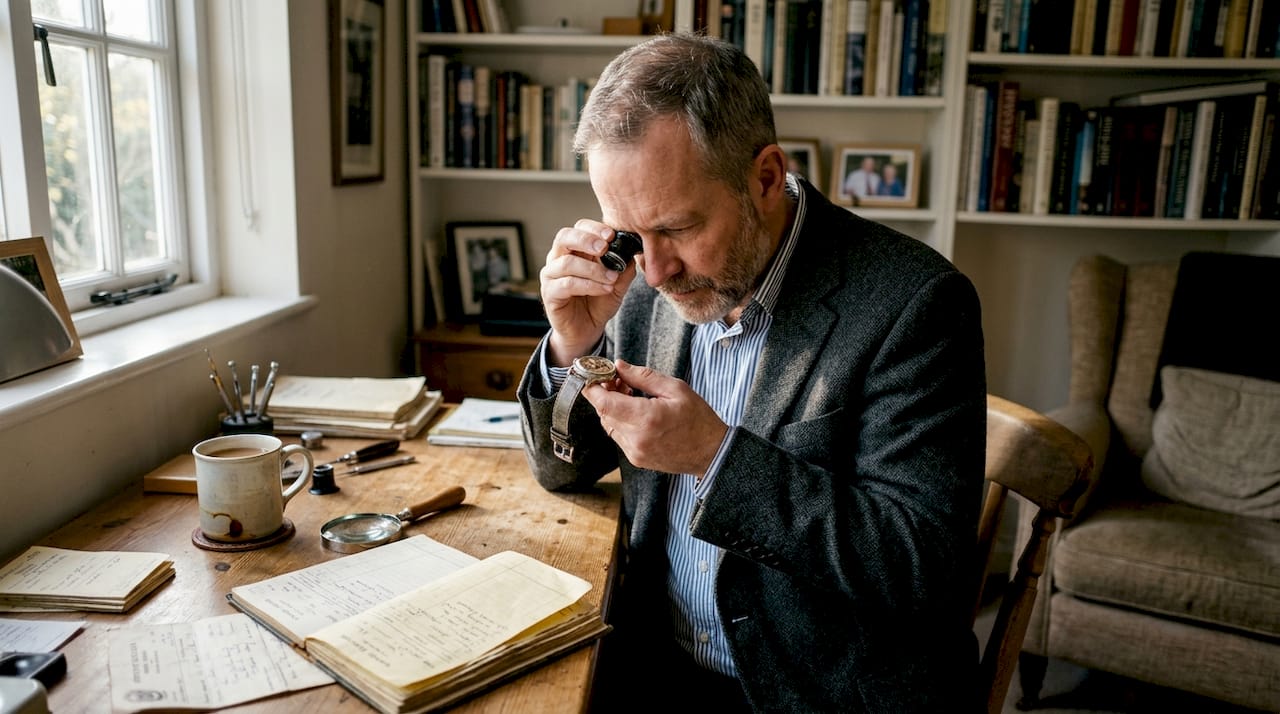
Authentication is the bedrock of any reliable watch valuation. Without it, every subsequent step is built on uncertain ground. A skilled eye can detect a counterfeit movement, identify a replaced dial, or spot a case that has been polished beyond recognition. These are not rare occurrences in the pre-owned market. They are everyday realities.
For UK collectors, professional appraisal from registered valuers or auction experts is the recognised standard for high-end timepieces. The key is selecting the right professional:
Jewellery Valuers Association (JVA) members: JVA registered valuers hold recognised qualifications and follow strict ethical codes. They are the gold standard for independent appraisals in the UK.
Major auction houses: Sotheby’s and Bonhams both offer specialist watch valuations. Their market knowledge is exceptional, though their primary interest is consignment.
Specialist dealers: Reputable dealers with a proven track record can provide valuations, though always confirm there is no conflict of interest if they are also potential buyers.
Online-only appraisals: These carry significant risk. Without physical inspection, no appraiser can reliably confirm movement originality, bracelet authenticity, or case integrity.
The upfront cost of a professional valuation typically ranges from £50 to £300 depending on complexity. Against the backdrop of a watch worth £10,000 or more, this is negligible. Before you commit to any appraiser, review our watch authentication guide to understand exactly what the inspection process should cover.
“A written, signed valuation certificate is not just paperwork. It is the single most important document you will produce in a watch transaction.” This is especially true for insurance claims and estate audits, where verbal assurances carry no weight.
Red flags to watch for include valuers who offer an instant figure without physical inspection, dealers who lowball without explanation, and anyone who cannot produce professional credentials on request. If a watch has been recently serviced, your servicing experts should provide documentation that supports the valuation.
Pro Tip: Always insist on a written, signed valuation certificate. It protects you during insurance renewals, probate proceedings, and resale negotiations.
Step 2: Condition, originality, and provenance assessment
Once authenticity is confirmed, the physical condition and provenance of your watch become the most powerful value levers available. Condition and originality outweigh age in determining market value. A 1970s Rolex Daytona in unpolished, original condition will consistently outperform a newer example that has been over-serviced or fitted with non-factory parts.
Follow this numbered process for a thorough assessment:
Box and papers: Confirm the presence of the original box, warranty card, hang tags, and any chronological paperwork. A full set can add 20 to 40 per cent to resale value.
Service history: Gather all service receipts, ideally from authorised service centres. Gaps in the record raise questions that buyers will use to negotiate downward.
Dial inspection: Look for signs of refinishing, reluming, or replaced indices. An original, unrestored dial is worth considerably more than a cosmetically improved one.
Hands and bracelet: Check for replacement hands, non-original clasp stamps, and bracelet stretch. Even small deviations from factory specification reduce value.
Case condition: Polishing removes metal and softens the sharp edges that define a watch’s original character. Unpolished cases command a significant premium among serious collectors.
Ownership history: A clear, documented chain of ownership adds credibility. Celebrity or notable provenance can dramatically amplify value at auction.
For a structured approach to presenting your watch in its best light before any transaction, the preparing your watch for sale guide covers every practical step. For a broader framework on what valuers look for, the valuation guide is an essential read. You can also review the detailed valuation process used by independent specialists.

Pro Tip: Keep a digital log of every repair, service, and part replacement, with dated receipts. This record becomes part of the watch’s value story and gives future buyers confidence.
Step 3: Market value comparison using UK auction data and dealer comps
With condition mapped out, you need hard market evidence to anchor your price expectations. Opinions are not enough. Sold prices are what matter.
The secondary market growth in luxury watches, particularly steel sports models, means that concluded auction results are far more reliable than asking prices or retail listings. Here is how to gather meaningful comparables:
Search Sotheby’s and Bonhams online archives for your reference number and year
Filter eBay UK results by “sold listings” only, never active listings
Review specialist dealer pricing across multiple platforms for the same reference
Cross-reference with independent databases that track realised prices over time
Understanding the different value types is essential:
Value type | What it means | Best used for |
Retail value | New price from an authorised dealer | Baseline reference only |
Market value | Typical resale price achieved | Buying and selling decisions |
Auction value | Hammer price plus buyer’s premium | Investment benchmarking |
Insurance value | Replacement cost at retail | Policy cover and claims |
For a practical starting point, the value calculator tool provides useful estimates based on reference, condition, and market data. For current performance data on specific references, current Rolex performance offers detailed analysis. Our guide on auction pricing explains how to interpret these results in context, and brand value factors adds further depth.
The luxury watch market has demonstrated a compound annual growth rate that outperforms many traditional asset classes over the past decade. Steel sports references from Rolex, Patek Philippe, and Audemars Piguet have traded at 87 to 145 per cent of manufacturer’s suggested retail price in recent years, making accurate benchmarking more important than ever.
Step 4: Influential factors including brand heat, size, materials, and complications
Market comparisons tell you where a watch has been. Understanding value drivers tells you where it is going. Brand heat, case size, materials, and complications are primary drivers in empirical pricing formulas, and each one can shift your valuation significantly.
Here is what to assess under each attribute:
Brand reputation: Rolex, Patek Philippe, Audemars Piguet, and Richard Mille dominate collector demand. Lesser-known brands require a far stronger case for investment-grade value. See our analysis of brand reputation for a detailed breakdown.
Case size: The 36mm resurgence is real. After years of oversized preferences, the market has shifted back towards classic proportions. A 36mm Rolex Datejust or Explorer now commands renewed collector interest.
Materials: Steel sports models continue to outperform gold equivalents in the secondary market. Titanium is gaining traction in specific references. Gold remains strong for dress watches with the right provenance.
Complications: Perpetual calendars, minute repeaters, and tourbillons hold prestige value. However, emerging complications from independent makers are attracting speculative premiums worth monitoring. The industry statistics provide useful context on which categories are gaining ground.
Factor | Current UK market impact | Notable trend |
Brand heat | Very high | Rolex/Patek dominate demand |
Case size | Moderate to high | 36mm models gaining premium |
Material | High | Steel sports outperform gold |
Complications | Variable | Independent makers rising |
Pro Tip: Subscribe to two or three reputable auction house newsletters and follow specialist watch journalists. Emerging complication trends often appear in editorial coverage months before they show up in price data.
Step 5: Documentation, timing, and re-valuation best practices
The practical habits that protect long-term value are often the ones collectors neglect until it is too late. Full sets, service records, and re-appraising every 2 to 3 years are essential best practices for investors and serious collectors alike.
Follow this checklist for documentation storage:
Store original box, papers, and receipts in a fireproof safe or bank safety deposit box
Create high-resolution digital scans of all documents and store them in an encrypted cloud service
Photograph the watch from multiple angles, including the caseback, crown, and bracelet clasp
Record the serial and reference numbers in a separate, secure document
Log every service with the date, service centre name, and parts replaced
Timing matters more than most sellers realise. The luxury watch market has seasonal patterns: January and September tend to see stronger auction results, while summer months can be quieter. Major brand announcements, particularly from Rolex at Watches and Wonders, can move secondary market prices within days.
Choosing between private sale, dealer, and auction depends on your priorities. Our guide on trading high-end watches maps out the trade-offs clearly. For understanding the mechanics of a discreet, professional transaction, the secure selling process guide is invaluable. When it comes to achieving the best price, our negotiation tips provide practical tactics.
Pro Tip: Update your valuation before every major insurance renewal. Policy values that lag behind the market leave you underinsured and exposed to significant financial loss if a claim arises.
Our take: The uncomfortable truths most experts won’t tell you about watch valuation
After years of working with UK collectors at every level, we have noticed a pattern. The most costly mistakes rarely come from ignorance of the basics. They come from overconfidence in a single data point, whether that is a recent auction result, a dealer’s verbal assurance, or a calculator estimate taken at face value.
Brand heat is the most volatile factor in any valuation. A reference that commands a 30 per cent premium today can soften within twelve months if a brand releases a new version or market sentiment shifts. Servicing history, by contrast, never goes out of fashion. A well-documented, consistently maintained watch will always find a serious buyer, regardless of market conditions.
The checklist in this article is necessary. But it is not sufficient on its own. The collectors who protect and grow their watch investments are the ones who treat understanding watch valuation as an ongoing discipline, not a one-time exercise. Markets move. Tastes shift. Your valuation strategy must move with them.
Confident valuations and secure sales with Horology Kings
Putting this checklist into practice requires more than good intentions. It requires access to genuine expertise, current market intelligence, and a partner who operates with complete transparency.
At Horology Kings, we specialise in exactly this. Whether you need a professional valuation before insuring your collection, want to sell a timepiece with full discretion, or are looking to source a watch that rarely appears on the open market, our team is ready to assist. We offer secure UK bank transfers, expert appraisals, and a buying and selling process built on trust. Explore our full range of UK watch valuation services or enquire about watch servicing and repairs to keep your timepieces in peak condition and documented value.
Frequently asked questions
How often should I re-value my luxury watch collection in the UK?
Experts recommend re-valuing every 2 to 3 years, or sooner if there are significant market movements or new service records added to the watch’s history.
What paperwork adds the most value to my watch?
Original box, warranty card, purchase receipts, and a complete service history are the most impactful documents, with full sets and service records potentially adding thousands to resale or insurance value.
Do online valuation calculators give accurate results?
Online calculators provide a useful starting estimate but should always be verified against recent UK auction results and confirmed by a qualified professional appraiser.
Which UK brands and watch models hold value best as of 2026?
The market continues to favour Rolex, Patek Philippe, Audemars Piguet, and Richard Mille, with steel sports models commanding premiums of 87 to 145 per cent of retail in recent years.
What is the difference between retail, market, and auction values?
Retail is the new price from an authorised dealer, market value is the typical resale price achieved, and auction value is the hammer price plus the buyer’s premium paid at sale.
Recommended
Comments