.png)

Rolex bracelet stretch: causes, repair and prevention
- lewisvrichards3
- Aug 7
- 16 min read
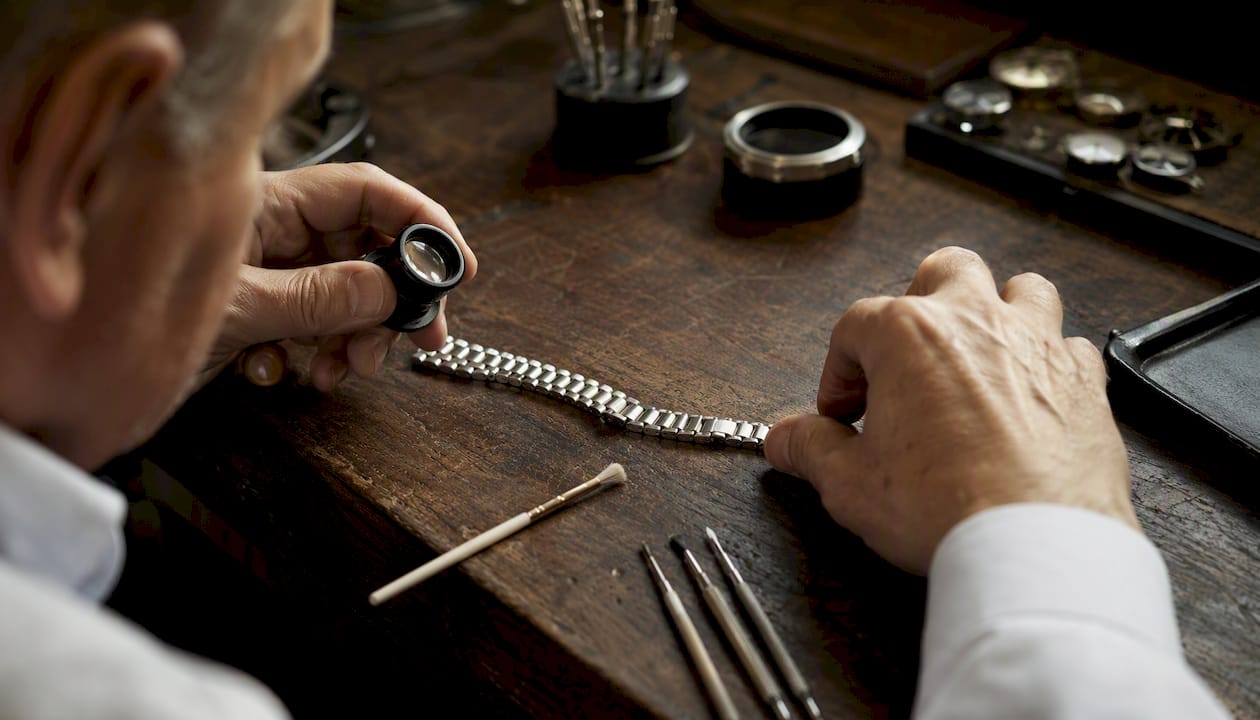
What you’re seeing on your Rolex is almost certainly not the metal itself elongating. Bracelet stretch is the industry term for cumulative wear at the link pins and holes, a mechanical process that produces genuine looseness and visible sag over years of daily wear. If your bracelet rattles, curves like a banana when laid flat, or feels noticeably slacker than it did when new, the right next step is a professional assessment. Your options in the UK are a Rolex Service Centre, a certified independent horologist, or Horology-kings, whose certified horologists handle bracelet restoration with insured transit and a preservation-first approach.
Key takeaways
Bracelet stretch on a Rolex is wear at the link pins and holes, not the metal elongating, and most cases are repairable by a certified horologist before replacement becomes necessary.
Point | Details |
What stretch actually is | Pin and hole wear across many links, not metal elongation; grit is the primary accelerant. |
Which bracelets are most at risk | Vintage hollow-link Jubilee and President bracelets; modern solid-centre Jubilee and Oyster bracelets are more resistant. |
Repair vs replacement | Moderate wear is usually restorable; severe oval holes on vintage hollow-link pieces may limit results; always get a written assessment first. |
Prevention | Clean every four to six weeks, set correct fit, rinse after saltwater, and inspect every six to twelve months. |
Horology-kings | Certified horologists in the UK offering bracelet restoration, full servicing, valuations, and insured transit with a preservation-first approach. |
Table of Contents
What does Rolex bracelet stretch actually look and feel like?
What actually causes bracelet stretch at the mechanical level?
What does professional bracelet restoration actually involve?
How to choose a repairer: credentials, questions and red flags
Horology-kings: professional bracelet restoration and valuation
What does Rolex bracelet stretch actually look and feel like?
The metal in a Rolex bracelet does not literally elongate. What happens is that the small pins and tubes connecting each link gradually wear against the holes that hold them, enlarging those holes and introducing play into every joint. Multiply that tiny gap across thirty or forty links and the cumulative result is a bracelet that feels and behaves as though it has stretched.
Symptoms you can check at home:
Lateral play: Hold the bracelet at both ends and flex it gently side to side. More than a millimetre or two of sideways movement at any link row is a clear sign of pin wear.
Audible rattle: A dry, metallic clicking when you shake the watch is often the first sign owners notice, particularly on Jubilee bracelets.
Banana curve: Lay the bracelet flat on a table. A healthy bracelet lies straight; a worn one curves upward at the ends.
Visible gaps: Look at the bracelet from the side in good light. Gaps between links that were not there when the watch was new indicate hole elongation.
Clasp looseness: The clasp itself has its own pivot points, and these wear independently. A clasp that flops open too easily is a separate but related concern.
Pro Tip: Hold the bracelet vertically from the clasp and let it hang freely. A bracelet with significant pin wear will visibly kink or bow at the worst-affected section rather than hanging in a clean, straight column. This takes seconds and costs nothing.
The boundary between “monitor it” and “book a repair” is straightforward. If the bracelet passes the hang test and shows only minor lateral play, a thorough clean and a watchful eye are reasonable for now. If it curves, rattles, or shows visible gaps, book a professional inspection without delay. Continued wear accelerates the damage.
Which Rolex bracelet types show stretch most?
Not all Rolex bracelets wear at the same rate. Construction era and link design are the two factors that matter most, and understanding them helps you judge both the urgency of a repair and its likely cost.
Jubilee bracelets have more moving parts per row than Oyster bracelets, which means more friction points and historically faster visible stretch. The five-link Jubilee design, with its three outer and two inner links, gives the bracelet its characteristic flexibility and comfort, but that same flexibility comes at a mechanical cost over time. The three-link Oyster bracelet is simpler, more rigid, and generally more resistant to stretch under daily wear.
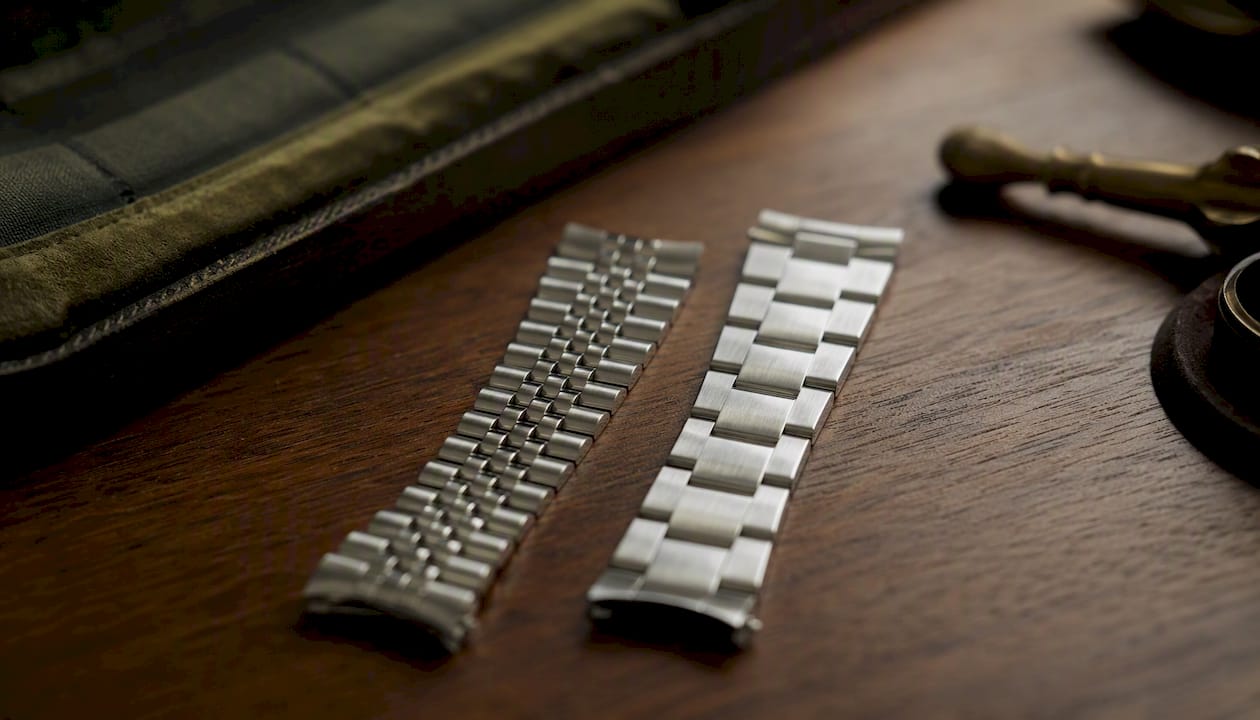
The construction era matters enormously. Vintage hollow-link Jubilee bracelets, broadly those made before the early 2000s, are substantially more prone to cumulative stretch than their modern counterparts. The hollow stamped links are lighter and less rigid, and after decades of wear the holes can become so oval that restoration is only partially effective. Modern solid-centre Jubilee constructions, introduced progressively from around 2004 on many references, have largely resolved this problem. A post-2004 Jubilee on a Datejust 41 will wear very differently from a 1980s Datejust Jubilee, even under identical conditions.
The President bracelet, fitted to Day-Date references, shares some of the Jubilee’s multi-link complexity and older hollow-link versions carry similar stretch risks. The Oyster, standard on sport models such as the Submariner and Explorer, is the most durable of the three in everyday use, though it is not immune to pin wear over many years.
Bracelet type | Construction | Stretch tendency | Repairability |
Jubilee (pre-2004, hollow link) | Hollow stamped links | High | Moderate; severe oval holes may limit results |
Jubilee (post-2004, solid centre) | Solid centre links | Low to moderate | Good; pin replacement usually effective |
Oyster (all eras) | Three-link solid | Low to moderate | Good; simpler construction aids repair |
President (vintage, hollow) | Multi-link hollow | High | Moderate; parts availability can be limited |
For buyers considering a pre-owned Rolex, bracelet condition is a genuine value factor. A well-preserved original Jubilee on a vintage Datejust carries real weight in the collector market. Understanding the different bracelet constructions before you buy is time well spent.
What actually causes bracelet stretch at the mechanical level?
The primary mechanism is friction between the link holes and the pins or screw bars that pass through them. Every time the bracelet flexes on your wrist, those pins rotate fractionally inside their holes. Over thousands of flexes, the contact surfaces abrade. The real accelerant is contamination.
Primary causes of bracelet stretch:
Grit acting as grinding paste: Microscopic particles of dust, sand, and skin debris work their way between links. Once there, each flex grinds them against the pin and hole surfaces, enlarging the holes far faster than clean metal-on-metal contact would.
Pin and tube wear: The pins themselves lose diameter over time. A thinner pin in a larger hole produces exponentially more play than either defect alone.
Loose fit: A bracelet worn too loosely slides and rotates on the wrist with every movement, multiplying the number of flex cycles per hour and concentrating wear at the same link rows repeatedly.
Tight fit: Counterintuitively, wearing the bracelet too tight compresses the links under constant tension, accelerating wear at the pivot points and making cleaning between links almost impossible.
Corrosive sweat and salt: Perspiration and seawater are mildly corrosive to the lubricating oxide layer on stainless steel. Regular saltwater exposure without rinsing leaves a residue that combines with grit to form a particularly abrasive paste.
Material softness in gold: Yellow gold and Everose gold are softer alloys than stainless steel. Older gold Jubilee and President bracelets show hole elongation more readily, which is why vintage gold pieces often appear to have “stretched” more dramatically than steel equivalents of the same age.
Dirt and grit are the dominant accelerant. The sequence is consistent: contamination enters the links, each flex grinds the particles against the pin and hole, the hole becomes slightly oval, the pin now has room to rock rather than rotate cleanly, and the rocking motion enlarges the hole further. Across forty links, the cumulative play becomes the sag you see.
Pro Tip: Clean your bracelet every four to six weeks with warm water, a drop of mild washing-up liquid, and a soft toothbrush. Pay particular attention to the inner surfaces between links. Rinse thoroughly and dry with a lint-free cloth. This single habit removes the grit that drives the majority of wear. For detailed maintenance guidance, a structured routine makes a measurable difference over years.
Can a stretched Rolex bracelet actually be fixed?
Yes, in most cases, and often to a degree that surprises owners who assumed replacement was inevitable. The realistic outcome depends on how far the wear has progressed and which bracelet type you have.
For bracelets with moderate wear, where the holes are oval but not severely enlarged, specialist repinning and restoration can replace worn internal pins, laser-fill badly worn holes and rebuild the bracelet to safe tension while preserving original stamps. The result is a bracelet that behaves like new without losing its original components. This matters considerably for collector value.
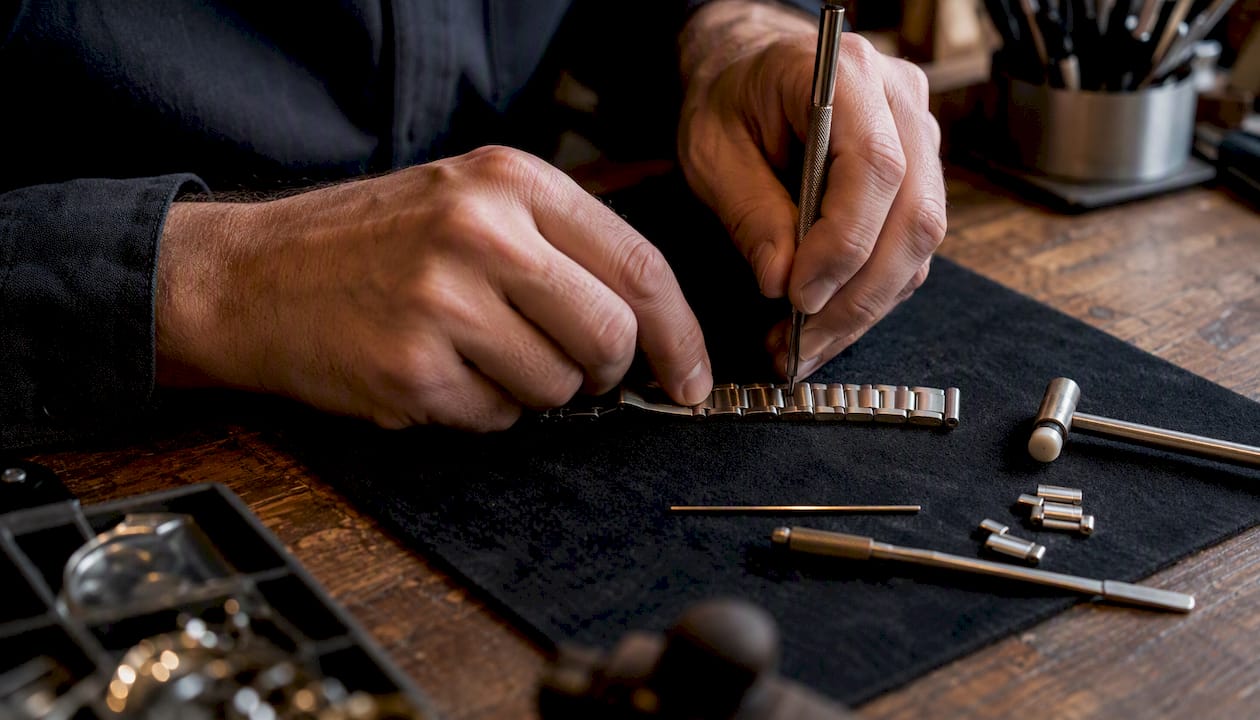
For severely worn vintage hollow-link bracelets, particularly pre-2000s Jubilee pieces, the honest answer is that restoration can improve the feel and reduce rattle but may not eliminate all play. The metal around the holes can be too thin to accept a laser fill safely, and at that point replacement becomes the pragmatic choice for a daily-worn watch. For a collectible piece, many owners choose to conserve the original bracelet even in imperfect condition and wear the watch on a strap instead.
Replacement with a genuine Rolex bracelet restores full function and carries the manufacturer’s warranty, but it removes the original component from the watch’s history. For a vintage reference where the bracelet’s date codes match the case, that is a meaningful loss. For a modern daily-beater, it is often the right call.
The short version: moderate stretch is repairable; severe stretch on hollow-link vintage pieces may be partially restorable at best; and replacement is a legitimate option for watches where originality is less critical than daily reliability.
What does professional bracelet restoration actually involve?
A competent horologist follows a consistent sequence when restoring a stretched bracelet. Knowing these steps helps you evaluate a quote and spot work that has been skipped.
Disassembly: The bracelet is removed from the case and separated from the clasp. Each link row is carefully disassembled, keeping components in order to preserve the original sequence and any period stamps.
Ultrasonic cleaning: Disassembled components go through an ultrasonic bath to remove all grit, grease, and debris. This is non-negotiable. Reassembling a dirty bracelet simply grinds the contamination back in.
Inspection and measurement: Each pin and hole is measured. The horologist identifies which holes are oval, which pins are undersized, and whether any links are cracked or deformed. This step determines the repair scope and the honest quote.
Pin and tube replacement: Worn pins are replaced with new ones of correct diameter. On screw-link Oyster bracelets, worn screw bars are replaced at the same time.
Laser filling of worn holes (where needed): For holes that have become oval beyond the tolerance a new pin can correct, a laser welder deposits metal to fill the worn area. The link is then re-drilled to the correct diameter.
Reassembly to correct tension: Links are reassembled in their original sequence. Correct tension means the bracelet flexes smoothly without excessive play but does not bind.
Finishing and polishing: Brushed surfaces are re-brushed; polished surfaces are re-polished. A conservation-first approach means minimal polishing, preserving the bracelet’s original finish rather than removing metal to achieve a showroom shine.
Final quality check: The completed bracelet is checked for lateral play, smooth articulation, and correct length. Before-and-after photographs should be taken at this stage.
Pro Tip: For a valuable or collectible bracelet, ask the repairer explicitly to preserve any date codes, reference stamps, or hallmarks on the clasp and end links. These markings are part of the watch’s provenance. A repairer who polishes them away, even inadvertently, reduces the piece’s documented history. Conservation-first means minimal metal removal and full stamp preservation.
The visible outcome after a well-executed restoration is a bracelet that lies flat, hangs straight, and no longer rattles. The clasp should close with a positive click and the bracelet should sit on the wrist without the sag that prompted the repair.
Rolex Service Centre versus an independent UK horologist
Both routes can produce excellent results. The decision comes down to what you value most: manufacturer warranty and genuine replacement parts, or cost-effective conservation that preserves originality.
The Rolex Service Centre route
An authorised Rolex Service Centre uses genuine Rolex components and follows the manufacturer’s service standards. If your bracelet is beyond restoration, they will replace it with a new Rolex bracelet, and that replacement carries Rolex’s warranty. The paperwork trail is clean and manufacturer-authenticated.
The trade-off is cost and policy. Rolex’s service approach tends towards replacement rather than conservation. If the bracelet is worn, they may replace it as a matter of course rather than attempting a pin-level restoration. For a modern watch where originality is less critical, that is straightforward. For a vintage reference where the original bracelet’s date codes match the case, losing those original components to a new replacement is a permanent change that affects resale value. Turnaround times through official channels can run to several weeks or longer, particularly when parts are involved.
The independent certified horologist route
A skilled independent specialist, working with the right tools and experience, can perform conservation-focused repinning that preserves the original bracelet. The cost is typically lower than official service, and the approach prioritises keeping original components intact. For vintage pieces, this is often the preferred route among serious collectors.
The key word is “skilled.” Not every independent watchmaker has the specialist tools or experience for bracelet restoration work. Vetting matters, and the next section covers exactly how to do that.
Choosing between the two
Factor | Rolex Service Centre | Independent specialist |
Parts used | Genuine Rolex replacement parts | Conservation repair; original parts preserved where possible |
Typical cost | Higher | Lower to moderate |
Turnaround | Several weeks to months | Days to a few weeks |
Effect on collector value | New parts replace originals; provenance altered | Original bracelet conserved; provenance intact |
Warranty on work | Rolex manufacturer warranty | Repairer’s own guarantee |
Best suited for | Structural failure; modern watches; warranty priority | Vintage originality; cost-sensitive repairs; conservation |
Decision factors worth writing down before you call anyone: how rare is the reference, does the bracelet carry matching date codes, are you planning to sell within the next few years, and is the watch a daily-wear piece or a collection piece? The answers will point clearly to one route or the other. For guidance on how bracelet originality feeds into Rolex valuation, the methodology matters as much as the condition grade.
Typical costs and turnaround times in the UK
Prices vary by bracelet type, extent of wear, and the repairer’s location and experience. Every figure below is approximate; always request a written, itemised quote before authorising work.
A minor repin on a modern Oyster bracelet with light wear tends to cost less, while a full overhaul of a vintage hollow-link Jubilee with laser-filled holes and stamp preservation tends to be more expensive. Rolex Service Centre bracelet replacement costs vary by model and metal due to genuine parts pricing.
Turnaround times for official Rolex service can extend beyond the ranges above when parts need to be ordered or when the service centre is at capacity. Independent specialists generally offer faster turnaround, and many will provide a written estimate within 48 hours of receiving the bracelet for inspection.
Request a written quote that itemises labour, parts, and any finishing work separately. This protects you if the scope changes during the repair and gives you a clear basis for comparison.
How to prevent bracelet stretch and extend its life
Prevention is straightforward and costs almost nothing. The habits below address the two primary drivers of wear: contamination and incorrect fit.
Clean the bracelet every four to six weeks. Use warm water, a small amount of mild washing-up liquid, and a soft-bristled toothbrush. Work the brush gently between the links on both sides. Rinse under running water and dry thoroughly with a lint-free cloth. Never use abrasive cleaners, bleach, or solvents.
Set the correct fit. The bracelet should sit snugly enough that it does not slide freely up and down the wrist, but loosely enough to pass two fingers underneath with slight resistance. A bracelet that flops around the wrist multiplies flex cycles and concentrates wear. One that is too tight prevents cleaning and maintains constant tension on the pivot points.
Rinse after saltwater or heavy perspiration. After swimming in the sea or a particularly active day, rinse the bracelet under fresh water and dry it. Salt residue left to dry between links forms a corrosive, abrasive deposit.
Inspect every six to twelve months. Perform the hang test and the lateral flex check described in the first section. Catching wear early means a simpler, cheaper repair.
Avoid knock-prone environments. Repetitive impact against hard surfaces, a desk edge, gym equipment, or a steering wheel, concentrates stress at specific link rows and accelerates localised wear.
Do not use a home ultrasonic cleaner. Domestic ultrasonic units are not calibrated for watch bracelets and can loosen already-worn pins further. Professional ultrasonic cleaning as part of a full disassembly is a different matter entirely.
Service the bracelet as part of a full watch service. Rolex recommends servicing their watches approximately every ten years. Including bracelet inspection and cleaning in that service cycle catches developing wear before it becomes structural.
The Oyster bracelet’s solid three-link construction responds well to this routine and can last decades without significant play when maintained correctly. The Jubilee rewards the same habits but requires slightly more attention between links given its greater number of moving parts.
How to choose a repairer: credentials, questions and red flags
The difference between a well-executed bracelet restoration and one that leaves your watch worse off often comes down to the repairer’s experience and tools, not their price.
Credentials and signals of competence
A credible bracelet repairer should be able to demonstrate: formal horological training or certification (the British Horological Institute qualification is the recognised UK standard); specific experience with Rolex bracelets rather than general jewellery repair; access to specialist tools including ultrasonic cleaning equipment, a laser welder for hole filling, and precision measuring instruments; professional indemnity insurance; and before-and-after photographs from previous bracelet restorations.
Questions to ask when requesting a quote
Ask these before authorising any work:
Will you measure the pin holes before quoting, and can you share those measurements?
Do you replace pins with original-specification components or generic equivalents?
What is your policy on preserving clasp stamps and date codes?
Do you offer before-and-after photographs as part of the service?
What guarantee do you provide on the repair, and for how long?
How will the bracelet be packaged and handled during transit?
Red flags
Walk away if a repairer: quotes a price without inspecting or measuring the bracelet first; cannot show evidence of previous Rolex bracelet work; recommends replacement without explaining why restoration is not viable; uses pressure tactics to push a more expensive service; or cannot confirm how stamps and codes will be protected during the work.
Pro Tip: Ask for an itemised written quote, not a verbal estimate. A repairer confident in their work will have no hesitation providing one. If the bracelet needs to travel by post, ask specifically about insured, tracked transit and how the watch will be packaged. A reputable specialist will have a clear protocol for this.
For buyers assessing a pre-owned Rolex with potential stretch, authenticating the bracelet’s originality before purchase is as important as assessing its mechanical condition.
A Horology-kings restoration example
To give you a concrete sense of what a professional restoration involves, here is a representative example of the type of work Horology-kings’s certified horologists carry out.
A client brought in a stainless steel Datejust on a five-link Jubilee bracelet from the late 1990s. The bracelet showed a pronounced banana curve when laid flat, audible rattle at three link rows, and visible lateral play of approximately 3mm at the worst section. The clasp pivot was also worn. The client’s priority was preserving the original bracelet, including the matching date codes on the clasp, ahead of a planned sale.
The restoration pathway chosen:
Full disassembly of the bracelet and clasp, with components kept in sequence
Ultrasonic cleaning of all parts
Measurement of all pin holes; seven holes identified as oval beyond pin-replacement tolerance
Laser filling of the seven worn holes and re-drilling to original specification
Full pin replacement across the bracelet
Clasp pivot repair and stamp preservation confirmed
Reassembly to correct tension with before-and-after photographs provided
Light brushing of the bracelet’s satin surfaces; polished edges left untouched
Illustrative cost breakdown for this type of work (these figures are illustrative and not a fixed quote):
Disassembly, ultrasonic clean and inspection: £60–£80 approx.
Pin replacement (full bracelet): £80–£120 approx.
Laser fill and re-drill (per hole, seven holes): £140–£210 approx.
Clasp pivot repair: £40–£60 approx.
Reassembly, finishing and QA: £40–£60 approx.
Illustrative total: £360–£530 approx.
The outcome was a bracelet that lay flat, hung straight, and showed no audible rattle. The original clasp stamps were intact. The client received before-and-after photographs and a written record of the work carried out, both of which accompanied the watch at sale.
Horology-kings handles bracelet restoration with insured transit and certified horologists. Owners considering a similar repair are encouraged to request a service appraisal and ask specifically for before-and-after documentation as part of the process.
The case for conservation over replacement
There is a tendency in the watch service industry to treat bracelet replacement as the default answer to stretch. It is often the easiest answer for the repairer and, at first glance, the most reassuring for the owner. A new bracelet feels new. But for any Rolex with collector significance, that logic deserves scrutiny.
A vintage Jubilee bracelet with matching date codes is not just a functional component. It is part of the watch’s documented history. Replacing it with a new Rolex bracelet produces a watch that functions perfectly but carries a permanent asterisk in any serious collector’s assessment. The role of original documentation and components in resale value is well established in the UK market, and a bracelet is a component, not an accessory.
My practical recommendation is this: for any Rolex that you might sell within the next decade, or that carries vintage significance, pursue conservation first. Get the bracelet measured, get a written assessment of what restoration can realistically achieve, and make the replacement decision only when a skilled horologist has confirmed that conservation is not viable. For a modern daily-wear piece where originality is genuinely secondary to function, replacement is a perfectly reasonable choice and there is no shame in it.
The borderline cases, a moderately worn vintage bracelet where restoration is possible but imperfect, are where a professional appraisal from someone who understands both the technical and the collector dimensions is worth its weight. That is exactly the kind of assessment Horology-kings is equipped to provide.
Horology-kings: professional bracelet restoration and valuation
For Rolex owners who want a conservation-first approach backed by certified expertise, Horology-kings offers a clear alternative to sending your watch to an official service centre and accepting a replacement bracelet by default.

The repair and servicing team at Horology-kings handles bracelet repinning and restoration, full watch servicing, professional valuations, and insured transit for clients across the UK. Every bracelet restoration is carried out by certified horologists with experience in Rolex bracelet construction across all eras, from vintage hollow-link Jubilee pieces to modern solid-centre bracelets. The preservation-first approach means original stamps, date codes, and clasp markings are protected throughout.
To request a quote, visit the watch repair and servicing page, describe the bracelet’s condition and your priorities, and include clear photographs of the bracelet laid flat, the clasp, and any visible wear points. The team will respond with a written assessment and an itemised quote before any work is authorised.
Sources
For owners who want to verify technical details or explore specialist restoration services, the following sources are worth consulting directly:
Before agreeing to any repair or restoration, request a written, itemised quote and confirm the repairer’s policy on stamp preservation and before-and-after documentation. Keep all paperwork: it forms part of the watch’s service history and supports its value at resale.
Recommended
Comments