.png)

Certified pre-owned meaning: what collectors need to know
- lewisvrichards3
- 12 hours ago
- 8 min read
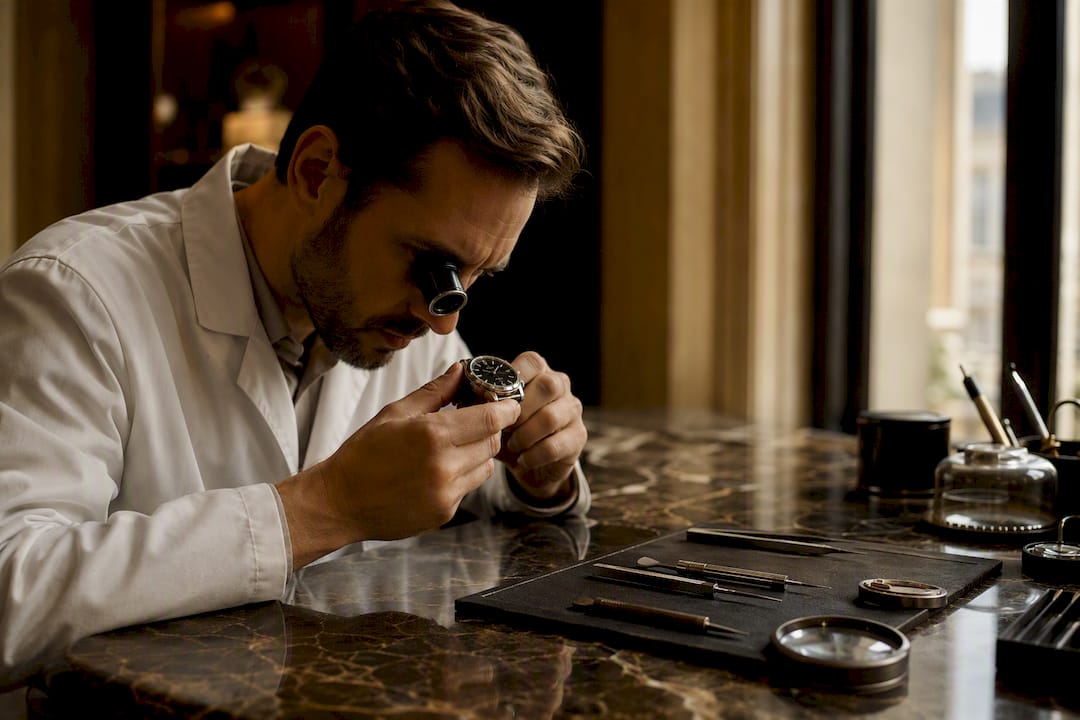
A certified pre-owned watch is a previously owned luxury timepiece that has been authenticated, professionally serviced or refurbished by qualified watchmakers, then sold with documented provenance and a warranty. That warranty typically runs 12 to 24 months, backed either by the original manufacturer or by the dealer handling the sale. For collectors and investors, the distinction matters because it changes who stands behind the watch if something goes wrong.
Certified pre-owned watches, often shortened to CPO, tend to carry a premium over uncertified pre-owned pieces while still undercutting new retail prices.
Authentication of serial numbers, movement and parts
A full service history and written CPO certificate
A warranty of 12 to 24 months, depending on the programme
CPO in numbers: certified pieces often sell for a 20 to 30% premium over comparable uncertified pre-owned watches, yet can still cost 20 to 50% less than the same model bought new. Horology-kings applies this same certification logic to every watch it sources and sells.
Key Takeaways
Certified pre-owned status reduces risk and cost against new retail, but the warranty’s value depends entirely on who backs it and whether the original set survives.
Point | Details |
Definition | Authenticated, serviced, provenance documented, and sold with a 12 to 24 month warranty. |
Pricing logic | Expect a 20 to 30% premium over uncertified pre-owned, but 20 to 50% savings against new retail. |
Manufacturer vs dealer CPO | Manufacturer programmes can restore brand coverage; dealer programmes stand on their own backing. |
Box and papers still count | A complete set supports long-term resale value even on a fully certified watch. |
Where to verify a certified offer | Horology-kings applies multi-point authentication, servicing and documented provenance to every watch it sells. |
Table of Contents
What certified pre-owned actually includes
The word “certified” gets used loosely across the trade, so it helps to know exactly what should sit behind it. A genuine certification process is methodical, not a rubber stamp applied after a quick polish.
Authentication checks — the reference number, serial number, and movement are cross-checked against manufacturer records, and every component is inspected to confirm it is genuine rather than an aftermarket substitute.
Movement servicing — a full strip-down, clean, lubrication and reassembly, with parts replaced using genuine components where wear demands it.
Case and bracelet refurbishment — polishing, crystal replacement if scratched, and strap or bracelet reconditioning so the watch performs and looks as close to its original specification as possible.
Water-resistance testing — pressure testing after any case work, since a service that disturbs gaskets without retesting can leave a watch vulnerable to moisture ingress.
Documentation — a service report, a CPO certificate, provenance notes, and the warranty document itself, each one forming part of the paper trail a future buyer will want to see.
Pro Tip: Ask to see the actual service report, not just a summary. A genuine report lists parts replaced and tests carried out; a vague one-line “serviced” note tells you almost nothing.
Every one of those service history documents does double duty. It proves the work was done, and it becomes part of the provenance file that supports resale value years down the line.

Why certified pre-owned matters for collectors and investors
Buying new means absorbing the steepest depreciation a watch will ever see, often within the first year. Certified pre-owned sidesteps that curve almost entirely, since the previous owner has already taken that hit.
Access to discontinued or hard-to-find references that manufacturers no longer produce
Purchase prices that reflect a stabilised secondary market rather than launch-day hype
A documented, warrantied alternative to the grey market, where counterfeits and undisclosed repairs are genuine risks
The numbers that matter: certified pieces typically carry a 20 to 30% premium over uncertified pre-owned equivalents, a fair price for the inspection and warranty attached. Set against new retail, buyers still often save 20 to 50%, which is precisely why CPO programmes have moved from niche reassurance to mainstream practice across the trade. For an investor, that combination of lower entry cost and reduced counterfeit risk is often the entire case for buying certified rather than gambling on an unverified private sale.
How do you verify a certified pre-owned offer before buying?
A certificate on a listing page means nothing until you have checked who issued it and what it actually covers. Treat verification as a short, disciplined process rather than a formality.
Ask who certified the watch. A manufacturer-run programme is traceable through brand records and can sometimes restore or extend brand-level coverage. A retailer-run programme is backed by that dealer alone, which is a materially different assurance.
Request the reference and serial numbers, then cross-check them against the service history and any documents supplied. Numbers that do not match the paperwork are an immediate red flag.
Insist on the written CPO certificate and recent service receipts, not just a verbal assurance that “it’s been serviced.”
Confirm warranty scope in writing: what is covered, who honours a claim, whether returns are accepted, and whether the warranty transfers if you sell the watch on.
Ask for clear photos of the full set, including box and papers if the seller claims to have them, since a missing set changes both the price and your future resale ceiling.
Manufacturer CPO: traceable through brand archives, occasionally reinstates factory coverage
Retailer or dealer CPO: backed by that dealer, does not automatically restore expired manufacturer warranty
Uncertified pre-owned: no formal inspection, no warranty, buyer carries all the risk
Pro Tip: If a seller cannot produce a dated service invoice alongside the certificate, ask why. A certificate without a corresponding receipt is the single biggest gap between a genuine CPO offer and one wearing the label loosely.
A watch authentication checklist built around these five steps takes minutes to run through and can save you from a purchase you would regret within months.
What certified pre-owned does not guarantee
Certification reduces risk. It does not eliminate every variable a buyer should weigh, and treating the label as an absolute guarantee is where collectors get caught out.
A dealer warranty is meaningful, but it is not the same instrument as a manufacturer warranty, and buying a retailer-certified watch does not automatically reinstate any factory coverage that lapsed under a previous owner.
Certification says nothing about future price appreciation, much like how collectors in other markets seek to unlock value with guidance from an expert guide to selection and savings. A watch can be perfectly authenticated and serviced and still lose value if demand for that reference cools.
Original box and papers still shape resale value even on a fully certified watch, since completeness of the set remains a factor collectors weigh independently of certification.
Standards vary between programmes. A brand’s own CPO scheme and an independent dealer’s version of “certified” are not interchangeable claims, even when the paperwork looks similar at a glance.
How Horology-kings applies certified pre-owned standards
Horology-kings works to the same principles that underpin CPO globally, applied to every Rolex, Patek Philippe, Audemars Piguet, Omega and Cartier that passes through its Hertfordshire operation.
Multi-point authentication on every watch before it is offered for sale
Expert valuations carried out by specialists familiar with each brand’s reference history
Secure UK bank transfers, so payment never depends on informal arrangements
A curated selection rather than an open marketplace of unverified listings
A dedicated sourcing service for clients chasing discontinued or waitlisted references
Provenance documentation and servicing sit at the centre of that process, not as an afterthought once a sale is agreed.
Certification is only as good as the paper trail behind it. A watch without service records and a clear ownership history is a promise, not proof, however well it has been polished.
Pro Tip: When comparing two similarly priced certified watches, ask each seller for the name of the technician or workshop that carried out the service. A dealer confident in their process will tell you without hesitation.
Is a certified pre-owned watch as good as new? Mechanically, a well-serviced CPO watch can perform identically to a new one, though it will carry evidence of prior ownership and typically a shorter warranty window.
Does certified pre-owned restore a lapsed manufacturer warranty? Usually not. Manufacturer CPO occasionally does; retailer or dealer CPO generally does not, since the warranty is issued by the seller rather than the brand.
Why the “certified” label deserves more scrutiny, not less
Most buying guides treat certified pre-owned as a box to tick, as if the label alone settles the question of trust. It does not. The far more useful question is which organisation issued the certificate and whether their name means anything if a claim needs honouring in eighteen months’ time.
The conventional advice, check for a certificate and move on, misses the actual risk. Two watches can both wear a CPO label and carry entirely different levels of protection, one traceable to a manufacturer’s records and one resting solely on a dealer’s word. Collectors who treat those as equivalent are the ones who get caught out when a warranty claim goes nowhere.
What should come first, ahead of price or even condition, is asking exactly who backs the promise. A watch with modest provenance and a dealer you can hold accountable often beats a pristine example with vague paperwork and no real recourse. That is the discipline worth applying before anything else.
Buy with confidence through Horology-kings
Private sales and unverified listings leave you carrying all the authentication risk yourself, with no recourse if a movement turns out to be swapped or a service history is invented after the fact. Horology-kings removes that exposure by applying full authentication, professional servicing and documented provenance to every watch before it reaches a buyer, backed by secure UK bank transfers rather than informal payment arrangements.
If you already know which reference you want, browse the current curated selection directly. If you are chasing something discontinued or waitlisted elsewhere, the sourcing service puts Horology-kings’s network to work on your behalf. And if you own a watch that needs bringing back to certified standard before you sell, the servicing and restoration team can handle the movement work, case refurbishment and documentation that make a resale genuinely trustworthy. Get in touch for a valuation and see exactly what your watch, or your next one, is really worth.
Frequently asked questions
What does certified pre-owned mean for a luxury watch? It means the watch has been authenticated, professionally serviced, and sold with documented provenance and a warranty, usually lasting 12 to 24 months.
Can you sell a watch without box and papers? Yes, a watch without its original box and papers can still be sold, but expect a lower price. Missing documentation reduces buyer confidence and depresses the resale ceiling, even on an otherwise certified piece.
How much does no papers reduce a watch’s value? There is no fixed percentage, since it varies by brand, model rarity and buyer demand, but dealers and private buyers alike typically pay less for an incomplete set than for one with full original documentation.
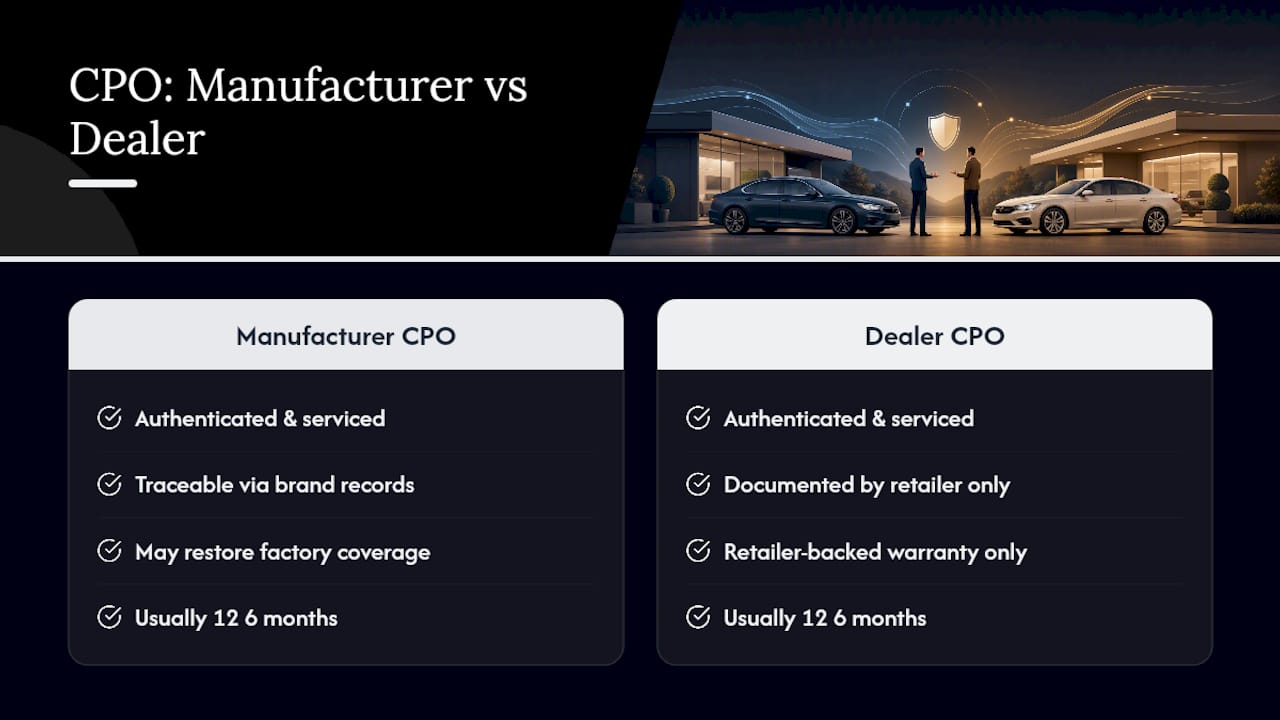
What is the difference between manufacturer and dealer certified pre-owned? Manufacturer CPO is traceable through brand records and can occasionally restore factory-level coverage. Dealer CPO is backed by that retailer alone and does not automatically reinstate any expired manufacturer warranty.
Sources
Recommended
Comments