.png)
£300 vs £550? How Consignment vs Outright Sale Pays For Watch Sellers

Choose an outright sale when you need fast, certain cash. Choose consignment when you can wait and want the highest possible return. The right route depends on two things: how urgently you need the money and how well your item is likely to sell, so a rushed seller and a patient seller can look at the same item and make opposite, equally sensible choices.
TL;DR:
Consignment keeps ownership until the item sells, meaning risk remains with the seller and payment depends on final sale price, possibly taking 30 to 120 days.
Outright sales transfer ownership immediately upon payment, providing faster cash flow within days but typically yield lower proceeds due to discounts.
For valuable or rare items, consignment often offers higher returns but requires patience and an understanding of market demand; common goods favor quick buyouts.
Comparing offers requires realistic resale estimates, converting percentages into actual pounds, and factoring in your urgency and item turnover rate.
Carefully review contract details such as sale periods, commission rates, payment schedules, and insurance responsibilities before committing to either route.
Table of Contents
Consignment vs outright sale: comparing ownership, risk and payout
The clearest way to separate these two models is to ask who owns the item at each stage, who carries the risk if something goes wrong, and how quickly the money actually lands.
In a consignment arrangement, you retain legal title to the goods right up until a buyer pays. The consignee keeps a commission and passes on the balance once the sale completes. In an outright sale, ownership transfers the moment the buyer pays you. That single distinction shapes almost everything else about the deal.
Risk follows ownership. Under standard accounting treatment, consigned stock stays on the consignor’s books as inventory, meaning you generally bear the loss if the item is damaged or stolen while it sits with the consignee. Sell outright and that risk passes to the buyer the moment the transfer completes.
Payment timing is where the two models diverge most sharply for anyone counting days rather than percentages:
Outright sale: payment typically arrives the same day or within 72 hours of agreeing a price.
Consignment: payment arrives only after the item sells, minus commission, and that can take 30 to 120 days depending on the category and demand.
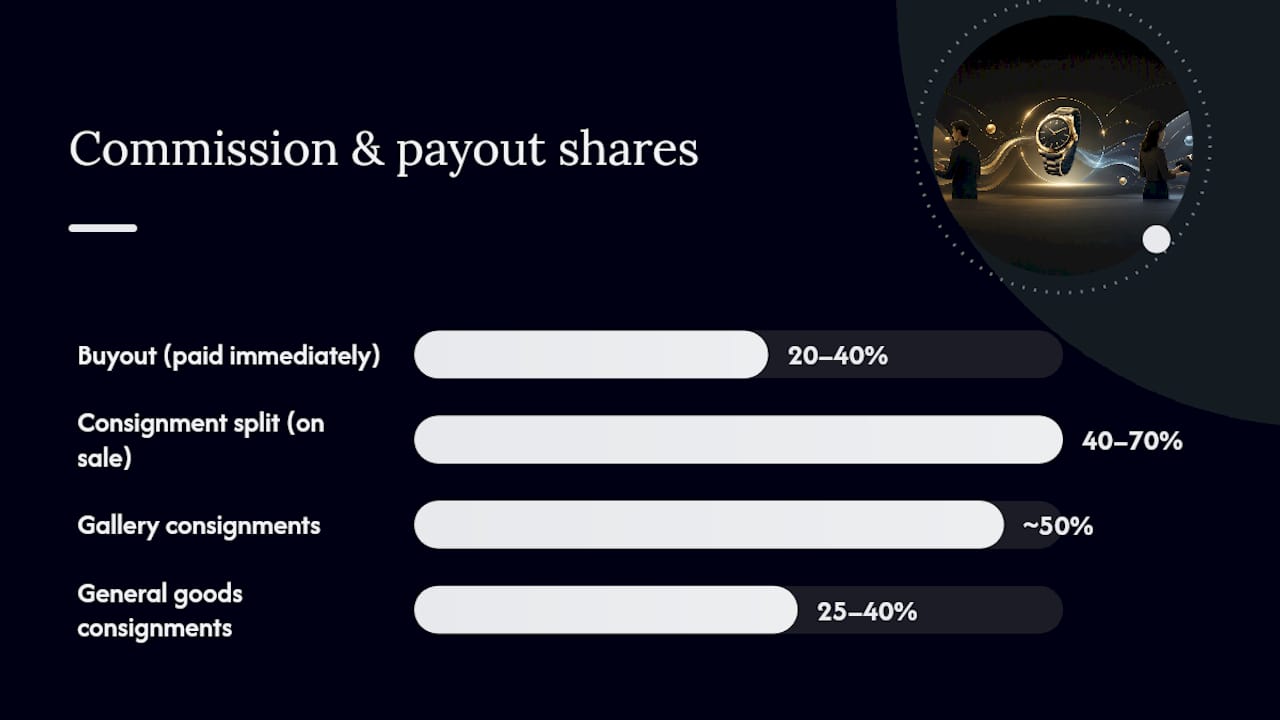
Buyout percentages: commonly 20% to 40% of estimated resale value, paid immediately.
Consignment splits: commonly 40% to 70% of the final sale price, paid on completion.
Commission variation by category: gallery and fine art consignments can run near 50%, while general goods more often sit at 25% to 40%.
Seller effort differs too. An outright sale usually ends once you hand over the item and receive payment. Consignment asks more of you upfront, photography, condition notes, sometimes ongoing communication with the consignee about pricing or markdowns, in exchange for a shot at a bigger cheque later.
Weighing the pros and cons of each selling route
Neither model is better in the abstract. Each suits a different seller, a different item, and a different appetite for waiting.
Consignment tends to reward patience and desirability:
Benefit: higher ceiling. Because you’re paid a share of the final sale price rather than a discounted estimate, a strong seller can net considerably more than a buyout would offer.
Benefit: wider reach. A good consignee markets to buyers you couldn’t easily find yourself, which matters for niche or high-value goods.
Downside: commission bite and delay. You wait out the consignment period, often 60 to 90 days, and still lose a meaningful slice to commission.
Downside: no guarantee. If the item doesn’t sell, you may face a markdown, a return, or a second listing period.
Outright sale rewards certainty over ceiling:
Benefit: speed and finality. Money in your account within days, no ongoing obligation.
Benefit: simplicity. No listing photos, no fielding offers, no waiting on a consignee’s sales calendar.
Downside: lower proceeds. You’re accepting a discount for the certainty, typically the lowest of the two payout bands.
Category matters as much as personal preference. Fast-turn fashion and everyday electronics often suit outright sale, because holding value erodes quickly and buyers are plentiful either way. High-value collectibles, fine art, and luxury watches usually favour consignment, because the ceiling on a well-marketed, rare piece can be dramatically higher than any buyout offer.
Pro Tip: Before assuming consignment’s upside is worth the wait, check how quickly comparable items in your category have actually sold over the past three to six months. A slow-moving category turns “higher ceiling” into “tied-up stock”.
How to compare a consignment offer against a buyout offer
Percentages mean nothing until you turn them into pounds. The comparison only becomes useful once you’ve done three things.
Step 1: find your comps. Pull recent sold prices for your exact item, or the closest realistic match, from marketplace data or a dealer’s valuation service. Guessing the resale value is where most sellers lose money before they’ve even compared offers.
Step 2: convert both offers into pounds. Say your item has a realistic resale estimate of £1,000.
A buyout at 30% of estimate pays you £300, today.
A consignment split at 55% of final sale price, assuming it actually sells at your £1,000 estimate, pays you £550, minus however long the sale takes.
If that same item only achieves £750 on consignment because demand is softer than expected, your 55% share drops to £412.50, still ahead of the buyout, but a smaller gap than the headline percentages suggest.
Step 3: factor in your own constraints. Sell-through rate, not the commission percentage, is what decides which route actually pays more, because a slow-selling item stuck in consignment for months can end up worth less to you than a same-day buyout once you account for the wait. If you’re offloading a large batch of similar items, a buyout across the whole lot is often more practical than managing dozens of individual consignment listings. And if you’re a first-time seller with no reliable sold-comp data for your category, taking the certainty of a buyout until you’ve learned how your category sells is a reasonable, low-risk starting point.
What to check in a consignment or sale agreement
Whichever route you choose, the contract is where good intentions either hold up or fall apart. Read it before you sign, not after something goes wrong.
For a consignment agreement, confirm these points in writing:
The consignment period (commonly 60 to 90 days) and what happens when it expires, return, markdown, or automatic relisting.
The exact commission rate and whether it’s fixed or tiered by sale price.
The payment schedule once a sale completes, some consignees pay within days, others bundle payments monthly.
Who carries insurance while the item is in the consignee’s possession, particularly relevant for jewellery, watches, and other small high-value goods, where solutions like RFID-based inventory tracking are increasingly used to keep tabs on individual pieces.
Any markdown or return rules if the item doesn’t sell within the agreed window.
For an outright sale, confirm:
Payment timing and method, ideally a secure bank transfer with a clear reference.
A written receipt confirming transfer of title at the point of payment.
Any warranty or authenticity statement the buyer is relying on.
Watch for hidden fees on either side, photography charges, storage fees, or admin costs can quietly erode a consignment split that looked generous on paper. A fair consignee should be able to state their full fee structure in one sentence; if they can’t, ask again before signing.
What selling luxury watches has taught Horology-kings about this choice
Selling a watch is rarely a simple percentage decision, and that’s the biggest lesson from years of handling both consignment and outright purchases. A tired Submariner with a full box and papers can sit near the top of its consignment range within weeks. The same watch missing its papers, or overdue a service, often sells faster and with less friction through an outright purchase, because buyers discount uncertainty far more heavily than sellers expect.
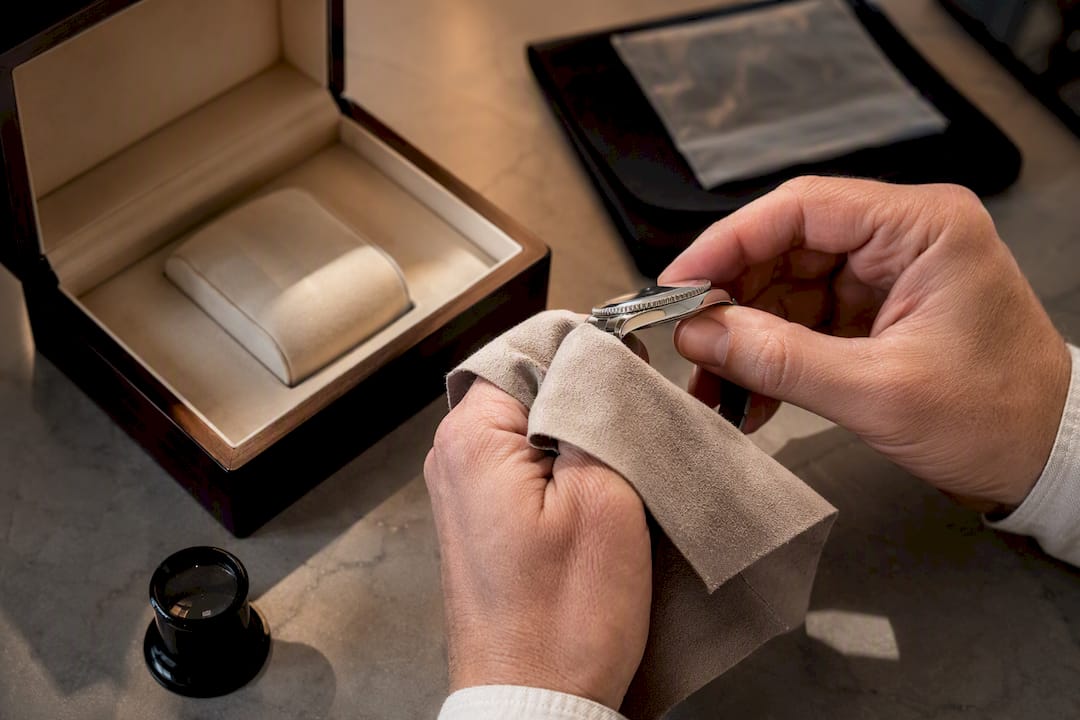
The most common mistake we see is sellers underestimating what proper valuation and brokerage can add to a consignment outcome. A watch listed with vague photos and no provenance detail tends to attract lowball offers even in a strong market. The same piece, properly authenticated and presented to the right buyer network, can close meaningfully higher.
Our general rule: if you need certainty, or the watch is common enough that its resale ceiling is narrow, an outright buy usually makes more sense. If it’s rare, desirable, or has genuine upside with the right buyer, consignment through a specialist is worth the wait.
— Lewis
Get a straight answer on your watch’s value
If you’re weighing consignment against an outright sale for a luxury watch, the maths in this guide only works once you know your item’s real resale estimate, and that’s where Horology-kings comes in.

We offer a free valuation on Rolex, Patek Philippe, Audemars Piguet, Omega, Cartier and other Swiss brands, so you can compare a same-day buyout quote against a realistic consignment estimate before deciding either way. Brokerage services can handle photography, authentication and buyer outreach if you choose consignment, while outright purchase options can get funds into your account by secure bank transfer when speed matters more than the ceiling. If your watch needs attention before sale, our watch repair and servicing team can bring it up to a saleable standard first. Looking for a specific model instead? Our sourcing service can find it for you.
Ready to see what your watch is worth? Visit Horology-kings to request a free valuation and get both a buyout figure and a consignment estimate side by side.
Sources
FAQ
What is the difference between a sale and a consignment?
In an outright sale, ownership and payment transfer immediately. In consignment, the seller retains ownership until the item sells, and payment only arrives once a buyer is found, minus commission.
What are the downsides of consignment?
The main downsides are the wait for payment, which can run 30 to 120 days, the commission cut from the final price, and the risk of markdowns or a return if the item doesn’t sell.
How long do items stay in consignment?
Most consignment periods run 60 to 90 days, after which unsold items are typically returned, marked down, or relisted under new terms.
Is it worth it to sell to consignment stores?
It’s usually worth it when your item has genuine desirability and you can afford to wait, since a strong seller can net considerably more than a buyout. For lower-demand items or urgent cash needs, an outright sale is often the more practical choice.
Recommended
Comments