.png)

First luxury watch regret avoidance: a buyer's guide
- lewisvrichards3
- Jul 20
- 8 min read
TL;DR:
Buying a luxury watch wisely involves ensuring financial stability, genuine desire, and personal lifestyle fit to avoid long-term regret. Selecting the right purchase channel, verifying authenticity, and budgeting for ongoing maintenance are crucial for lasting satisfaction. Patience and thorough research lead to a more meaningful and fulfilling ownership experience.
First luxury watch regret avoidance is the practice of selecting and purchasing a timepiece deliberately, so that satisfaction outlasts the initial excitement. Most first-time buyers focus entirely on the watch itself and overlook the three decisions that determine long-term contentment: financial readiness, purchase channel, and total cost of ownership. Get those three right and the watch becomes a source of genuine pride. Get them wrong and a £3,000 purchase can feel like a mistake within six months. This guide covers each decision in plain terms, drawing on industry standards such as mechanical movement accuracy benchmarks and authorised dealer warranty guarantees to give you a clear framework before you spend a penny.
Are you actually ready to buy your first luxury watch?
Readiness is the most overlooked factor in first luxury watch regret avoidance. Buying a Rolex or Omega to celebrate a promotion feels very different from buying one to cope with a difficult period. The watch is the same; the satisfaction is not.
The financial checklist is straightforward. Experts recommend having at least six months of living expenses saved and zero high-interest debt before committing to a luxury watch purchase. That threshold exists because a watch bought under financial pressure becomes a reminder of that pressure every time you wear it.
The emotional checklist is equally important. Ask yourself whether you have genuinely wanted this specific watch for at least a year. Waiting at least twelve months before purchasing filters out hype and impulse, leaving only genuine desire. Instant decisions driven by a new model launch or a social media trend are the single biggest source of buyer regret in this category.
The practical checklist covers lifestyle fit. A dress watch worn twice a year will feel like a waste. A diver worn daily in a desk job will feel excessive. Ask whether you will wear the watch at least three times a week and whether it suits the environments you actually move through.
Stable income with no high-interest debt
Six months of living expenses saved before purchase
Genuine desire sustained for at least twelve months
Clear personal motivation unrelated to impressing others
Lifestyle that suits the watch category you are considering
Pro Tip: Write down your reason for buying the watch today. If that reason still holds in three months, you are ready. If it has changed, wait longer.
How to choose the right watch for your wrist and your life
A luxury watch is three products stacked into one: a mechanical instrument, a piece of industrial design, and a brand story. Buyers who do not decide which of those three matters most to them tend to overspend on the wrong element and regret it.
Getting the fit right
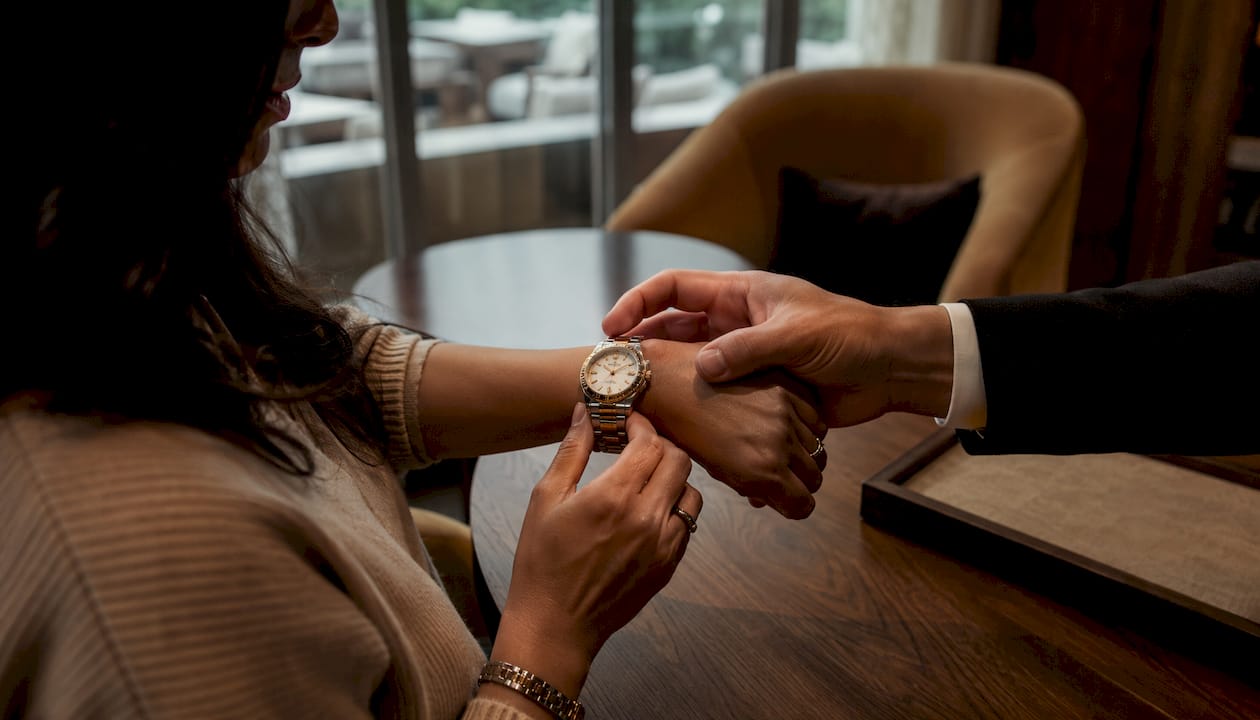
The most common fit mistake is trusting online photographs. A watch that looks proportionate on a model’s wrist can look enormous or tiny on yours. Wrist measurement and lug-to-lug distance are the two numbers that actually determine comfort. For most wrists, a case diameter of 36mm–41mm offers balanced, wearable proportions. A luxury watch size guide can help you translate your wrist circumference into a case diameter before you visit a showroom.
Try the watch on in person before committing. No photograph, video, or wrist shot on a forum replicates the feeling of a watch sitting on your own wrist for ten minutes.
Understanding mechanical accuracy
Mechanical watches operate to a defined accuracy standard. A well-regulated mechanical movement should maintain accuracy within ±5 to ±10 seconds per day under normal wear. That is the benchmark to hold any pre-owned or grey market piece against. A timegrapher reading taken within seven days of purchase will confirm whether the movement is running within that range or needs regulation.
Servicing is part of the equation too. Budget for it from day one and you will not be surprised later.
Watch type comparison
Priority | Watch type | What to look for |
Movement quality | Mechanical or automatic | COSC certification, in-house calibre |
Design aesthetics | Dress or sport | Case finishing, dial detail, bracelet quality |
Brand prestige | Heritage brands | Provenance, waitlist status, resale demand |
Versatility | Field or sport | Water resistance, strap options, case size |
Pro Tip: Visit an authorised showroom and try at least five different references before deciding. Your instinct on the wrist is more reliable than any online review.
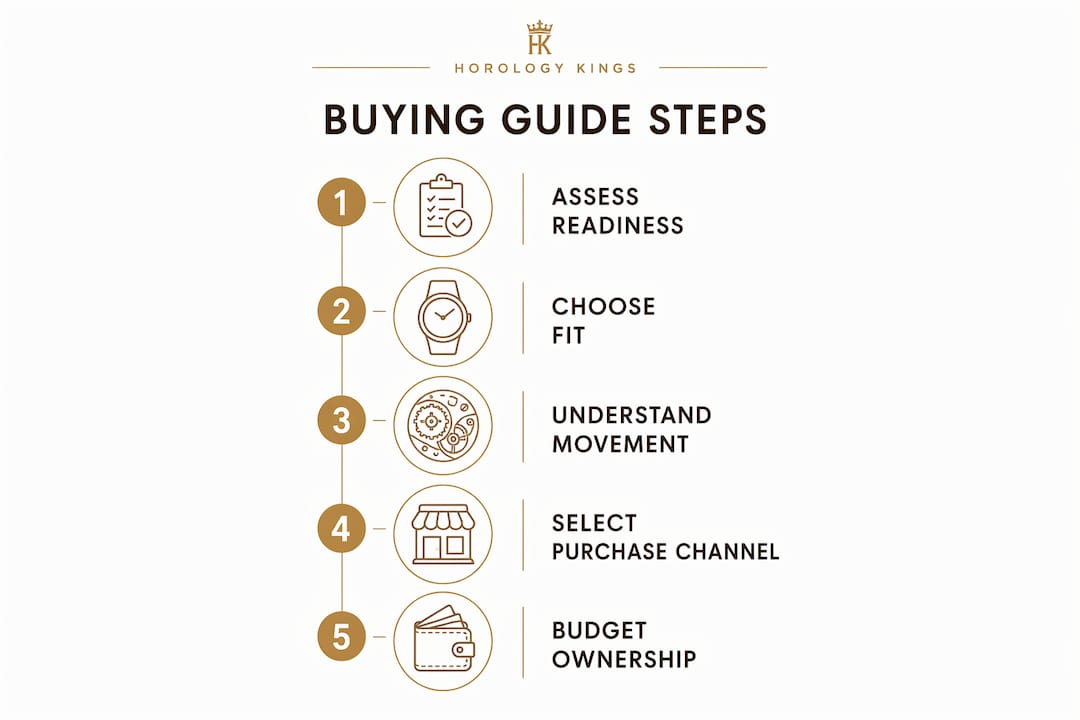
Where to buy your first luxury watch without risking authenticity
The purchase channel determines your warranty, your authenticity guarantee, and your peace of mind. Each channel carries a different risk profile, and first-time buyers frequently underestimate those differences.
Authorised dealers
Authorised dealers provide a full manufacturer warranty, guaranteed authenticity, and an ongoing dealer relationship that matters when you need servicing or want to source a future piece. The price is retail. The protection is complete. For a first purchase, that protection is worth the premium. Read more about why authorised dealers matter before ruling out the retail route on price alone.
Grey market
Grey market purchases can yield savings of 15% to 60% depending on brand and demand. Those savings come with a cost: limited or no official manufacturer warranty and a higher risk of undisclosed damage or modification. Grey market watches are genuine products, but they have left the authorised supply chain. Understanding what a grey market watch actually is before you buy one is not optional.
Pre-owned market
The pre-owned market offers the best value but demands the most due diligence. A thorough inspection of condition, papers, and service history is non-negotiable. An independent pre-purchase inspection and a timegrapher reading can protect you from hidden defects that are invisible to the naked eye. Always verify service records and authenticity before agreeing a price.
Key steps for buying pre-owned safely:
Request original box, papers, and any service receipts
Insist on a timegrapher reading or arrange an independent check
Use a watch authentication checklist to verify serial numbers, case engravings, and dial printing
Buy only from sellers with a verifiable track record and clear return policy
Confirm the watch has not been reported stolen via a recognised registry
Budgeting for the total cost of owning a luxury watch
The purchase price is only the beginning. Total ownership costs include servicing every 5–8 years at £300–£800 or more depending on the brand and movement complexity, insurance, and replacement straps or bracelets. Many first-time buyers ignore these costs entirely and experience financial regret within the first year of ownership.
Insurance is not optional for a watch worth four figures or more. Annual premiums vary by insurer and declared value, but specialist watch insurance typically costs a fraction of the watch’s value per year. That cost is far lower than replacing a lost or stolen piece out of pocket.
Strap and bracelet costs catch buyers off guard. An original Rolex Oyster bracelet or a Patek Philippe leather strap is not cheap to replace. Factor those costs into your total budget before purchase, not after.
Servicing: every 5–8 years, budget £300–£800 minimum for most Swiss movements
Insurance: specialist cover for watches valued above £1,000
Straps and bracelets: original parts carry a significant premium
Regulation: a timegrapher check on a new pre-owned purchase costs very little and can save hundreds
Resale planning: keep original box and papers to protect resale value from day one
Pro Tip: Add 20% to your purchase budget to cover the first two years of ownership costs. If that revised total still feels comfortable, you are buying at the right price point.
Key takeaways
First luxury watch regret avoidance requires financial stability, honest self-assessment, careful channel selection, and a realistic budget for the full cost of ownership.
Point | Details |
Assess readiness first | Confirm stable finances and genuine desire sustained for at least twelve months before buying. |
Fit matters more than photos | Try watches in person and use lug-to-lug measurements, not case diameter alone, to judge comfort. |
Choose your channel carefully | Authorised dealers offer full warranty; grey market and pre-owned require thorough due diligence. |
Budget beyond the price tag | Servicing, insurance, and parts add materially to the cost of ownership over five to eight years. |
Keep box and papers | Original documentation protects resale value and confirms authenticity for future buyers. |
Why patience is the most underrated luxury watch buying tip
The watch industry is very good at creating urgency. Limited editions, waitlists, and social media hype cycles all push buyers towards faster decisions. My honest view, after years of working in this market, is that urgency is almost always the enemy of satisfaction.
The buyers who contact Horology-kings with regret rarely made a bad choice of watch. They made a rushed choice. They bought the right reference at the wrong time, under the wrong financial conditions, or through a channel they had not properly researched. The watch itself was fine. The circumstances were not.
The buyers who are most satisfied are the ones who treated the process as a slow, deliberate education. They visited showrooms without any intention of buying. They tried watches they could not afford yet. They read about movements, studied case finishing, and developed a genuine opinion before they spent anything. By the time they purchased, the decision felt inevitable rather than impulsive.
The emotional satisfaction of wearing a watch that truly resonates with you is real and lasting. A Patek Philippe Calatrava worn because you love the simplicity of its dial is a completely different experience from the same watch bought because someone told you it was a good investment. Buy for yourself, buy when you are ready, and the watch will reward you every time you look at your wrist.
— Lewis
How Horology-kings helps first-time buyers get it right
Horology-kings is a Hertfordshire-based luxury watch dealer specialising in authentic timepieces from Rolex, Patek Philippe, Audemars Piguet, Omega, and Cartier. For first-time buyers, the team offers bespoke sourcing assistance, meaning you describe the watch you want and Horology-kings locates it through a verified expert network. Every transaction is backed by transparent valuations and secure UK bank transfers. If you are ready to buy with confidence, browse the curated collection or use the watch sourcing service to find a specific reference. For buyers who already own a piece, professional servicing keeps it running accurately and retaining its value.
FAQ
What is first luxury watch regret avoidance?
First luxury watch regret avoidance is the practice of buying your first luxury watch deliberately, with financial readiness, clear personal motivation, and thorough research, so that satisfaction lasts well beyond the purchase date.
How much should I budget for my first luxury watch?
Budget the purchase price plus at least 20% to cover servicing every 5–8 years, insurance, and potential strap or bracelet replacements. Servicing alone typically costs £300–£800 for most Swiss movements.
Is it safe to buy a luxury watch from the grey market?
Grey market watches are genuine products but carry higher risk. Savings of 15%–60% are possible, though official manufacturer warranties are usually absent. Always verify authenticity and condition independently before purchasing.
What case size suits most wrists?
A case diameter of 36mm–41mm suits the majority of wrists and offers balanced proportions for everyday wear. Lug-to-lug distance is equally important and should be measured against your wrist circumference before buying.
How do I verify a pre-owned luxury watch is authentic?
Request original box and papers, check serial numbers against manufacturer records, arrange a timegrapher reading to confirm movement accuracy, and use a full authentication checklist covering case engravings, dial printing, and crown markings.
Recommended
Comments