.png)
Secure your watch sale with expert discreet processes
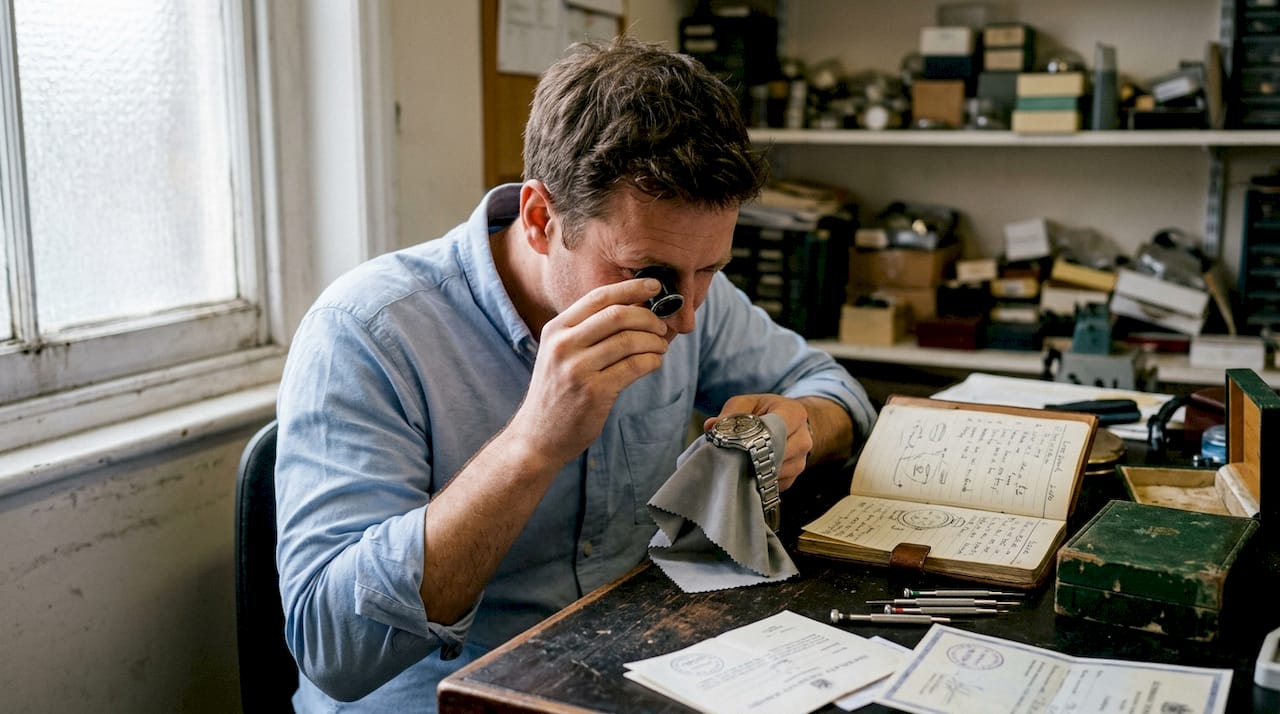
Selling a luxury timepiece discreetly poses significant challenges for UK collectors who value both privacy and fair market returns. The risks of theft, undervaluation, and compromised confidentiality can deter even experienced enthusiasts from entering the secondary market. Expert valuation and specialist sale processes offer robust solutions that protect both your investment and personal security. This guide walks you through each step of executing a discreet, secure luxury watch sale whilst maximising value and maintaining complete confidentiality throughout the transaction.
Table of Contents
Key Takeaways
Point | Details |
Expert valuation | Expert valuation provides accurate pricing based on condition, rarity and current market demand and is foundational to a discreet sale. |
Provenance matters | Original box and papers can add up to 50 per cent to value, making complete provenance crucial. |
Discreet specialist sales | Selling through discreet specialist channels prioritises security and confidentiality while aiming to maximise returns. |
Documentation and condition | Thorough documentation alongside careful condition assessment and movement originality safeguards value and reduces buyer risk. |
Understanding expert watch valuation
Expert valuation serves as the essential foundation for any discreet luxury watch sale, providing accurate pricing based on condition, rarity, and current market demand. Professional valuers assess multiple factors including brand prestige, model desirability, mechanical originality, and overall aesthetic condition. Most reputable auction houses and specialist dealers offer free initial valuations, examining recent comparable sales data to establish realistic market expectations. This process typically involves detailed inspection of the movement, case, dial, and any modifications that might affect authenticity or value.
The presence of original box and papers can add up to 50% to your watch’s valuation, making complete documentation crucial for maximising returns. Collectors who retain factory certificates, warranty cards, purchase receipts, and service records demonstrate provenance that reassures buyers about authenticity and ownership history. Watches lacking these elements remain sellable but command lower prices due to increased authentication requirements and buyer caution. Inherited timepieces or heirlooms require additional provenance verification to establish legitimate ownership chains and historical context that sophisticated collectors value highly.
Condition assessment directly impacts valuation outcomes, with even minor damage reducing market appeal and final sale prices significantly. Professional valuers examine cases for scratches, dents, or polishing evidence that might indicate heavy wear or inappropriate restoration attempts. Dial condition receives particular scrutiny, as refinished or replaced dials can reduce value by 30% or more depending on the brand and model rarity. Movement originality matters immensely, with non-factory parts or amateur repairs triggering substantial valuation reductions that reflect increased risk for future buyers.
Pro Tip: Schedule regular valuations every one to five years to track market fluctuations and adjust insurance coverage accordingly, particularly for vintage models experiencing rapid appreciation.
Key valuation factors affecting price:
Brand reputation and historical significance within horological circles
Model rarity and current collector demand trends
Mechanical condition and service history documentation
Aesthetic originality including dial, hands, and case integrity
Completeness of box, papers, and ancillary accessories
Condition category | Typical value impact | Collector appeal |
Complete set with box and papers | Baseline 100% | Highest demand |
Watch only, no documentation | Reduction of 30-50% | Moderate interest |
Visible damage or heavy wear | Reduction of 40-60% | Limited to restoration buyers |
Non-original parts or refinishing | Reduction of 50-70% | Specialist market only |
Preparing your luxury watch for a discreet sale
Thorough preparation protects both value and personal security whilst streamlining the sale process through organised documentation and strategic specialist selection. Begin by gathering all available paperwork including original purchase receipts, service records, warranty cards, and certificates of authenticity that establish clear provenance. Even partial documentation proves more valuable than none, as it provides verifiable touchpoints that professional valuers can cross-reference against manufacturer records and historical sales data.
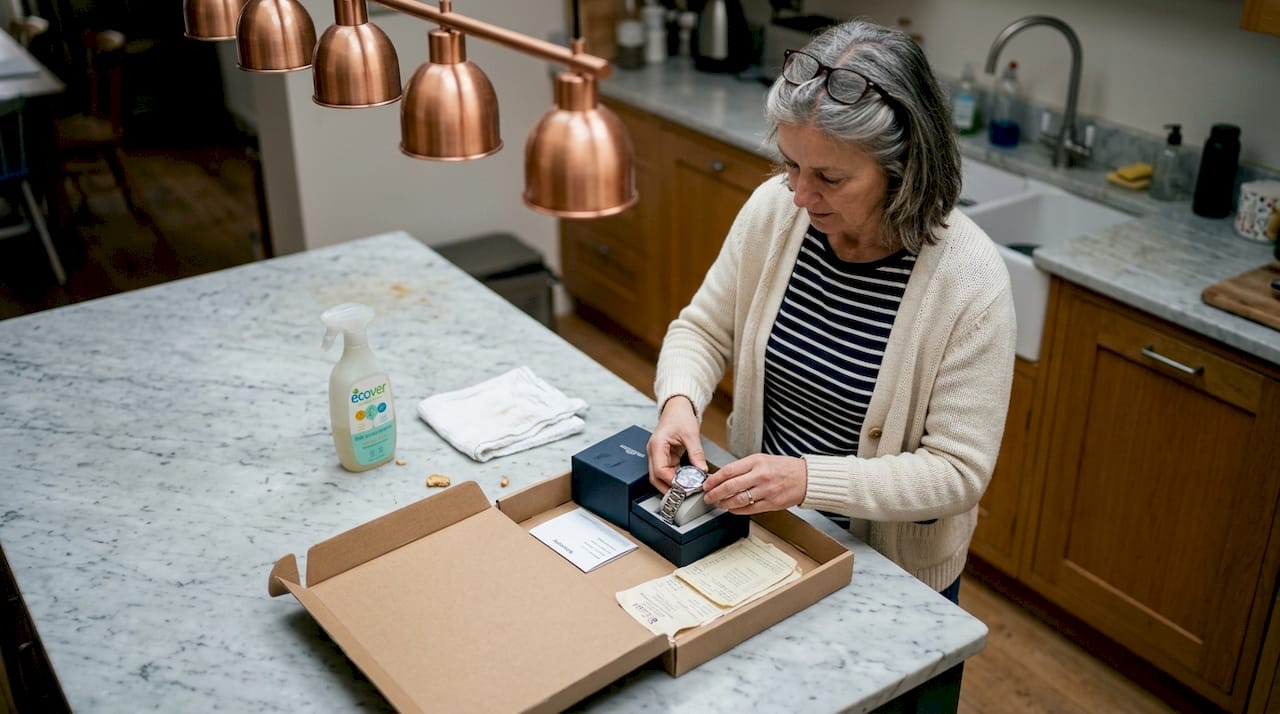
Conduct a careful condition assessment noting any scratches, dents, or functional issues that might affect valuation or require disclosure during negotiations. Honest evaluation prevents disputes later and builds trust with potential buyers who appreciate transparency about wear patterns and service needs. For inherited timepieces, research family history and any documentation that establishes legitimate ownership transfer, as provenance gaps can complicate sales and reduce buyer confidence significantly.
Choosing the right specialist dealer or valuer determines both the security level and final sale outcome you’ll achieve. Research established firms with proven track records in discreet transactions, checking online reviews, industry accreditations, and years of operation within the luxury watch sector. Reputable specialists offer secure premises for in-person valuations, insured transport options for high-value pieces, and confidential handling that protects your identity throughout the process.
Pro Tip: Never post high-value watches without comprehensive insurance covering full replacement value, as standard postal services exclude luxury items from standard liability coverage.
Preparation checklist for discreet sales:
Compile all documentation including box, papers, receipts, and service records
Photograph the watch comprehensively showing case, dial, movement, and any condition issues
Research current market values using recent auction results and specialist dealer listings
Verify specialist credentials through industry bodies and independent reviews
Arrange secure transport or in-person valuation at insured premises
Establish confidential communication channels avoiding public marketplace exposure
Set realistic price expectations based on condition and documentation completeness
Edge cases require special consideration: watches lacking box and papers remain sellable but need expert authentication to reassure buyers about originality and condition. Damaged timepieces attract restoration specialists or parts buyers at significantly reduced prices reflecting repair costs and reduced collector appeal. Heirlooms without clear provenance need additional verification through family records, photographs, or manufacturer archives that establish legitimate ownership chains. Avoid posting valuable watches without specialist insurance, as standard carrier liability excludes high-value items and leaves you vulnerable to complete loss without recourse.
Executing a discreet sale: choosing the right method
Selecting the optimal sale method balances your priorities around speed, security, confidentiality, and financial return whilst considering how each channel affects warranty status and future serviceability. Specialist dealers prioritise authentication and discretion, offering professional valuations, secure transactions, and immediate payment through established UK banking channels. These dealers maintain confidential client relationships, conduct business in secure premises, and provide expert knowledge that protects both parties from fraud or misrepresentation throughout the transaction process.
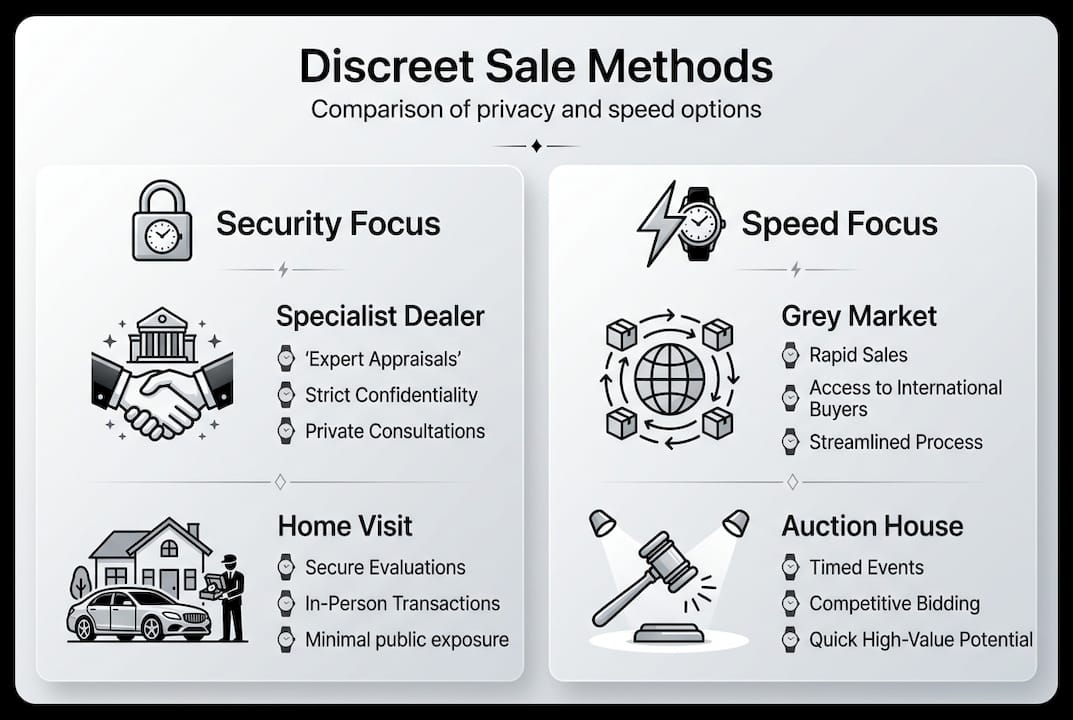
Auction houses deliver transparency through public bidding but sacrifice privacy as your watch appears in catalogues and online listings accessible to global audiences. This exposure can achieve strong prices for rare or historically significant pieces that attract competitive bidding from international collectors. However, auctions require patience as sale cycles span weeks or months, and seller commissions typically range from 10% to 20% of the hammer price plus additional fees for photography, insurance, and catalogue production.
Grey market selling offers speed advantages over traditional channels but introduces warranty and service complications that affect long-term value. Legal for genuine watches sold outside authorised dealer networks, grey market transactions bypass manufacturer distribution controls and associated service benefits. Buyers accept risks including no manufacturer warranty coverage, potential for non-original parts during previous services, and reduced access to factory-authorised service centres that may refuse work on grey market pieces. Speed compensates for these drawbacks when sellers prioritise immediate liquidity over maximising final sale prices or maintaining full service histories.
Pro Tip: For ultra-high-value timepieces exceeding £50,000, arrange home visits from established specialists to eliminate transport risks and maintain maximum discretion throughout the valuation and sale process.
Sale method | Speed | Privacy level | Typical fees | Warranty impact |
Specialist dealer | Days to weeks | Highest | 10-15% commission | Maintained if documented |
Auction house | 4-12 weeks | Low | 15-25% total costs | Neutral |
Grey market | Immediate | Moderate | Varies widely | Potentially voided |
Private sale | Variable | Highest | Minimal | Maintained |
Comparing discreet sale channels:
Specialist dealers provide authentication services and confidential handling ideal for privacy-focused collectors
Auctions suit rare pieces benefiting from competitive bidding despite public exposure
Grey market channels prioritise speed but may compromise future service access and warranty coverage
Private sales offer maximum control but require extensive vetting of potential buyers
Home visits eliminate transport risks for exceptionally valuable or historically significant timepieces
Your choice depends on personal priorities: collectors valuing discretion and security favour specialist dealers, whilst those seeking maximum exposure for rare pieces accept auction publicity. Grey market speed appeals when immediate liquidity outweighs concerns about warranty status or future service complications. Understanding these trade-offs enables informed decisions aligned with your specific circumstances and risk tolerance levels. For additional guidance on safe selling practices, consult established industry resources that outline security protocols and verification procedures.
Confirming sale completion and post-sale considerations
Securing payment and properly documenting ownership transfer protects both parties whilst preserving your watch’s future value through maintained provenance records and service history. Never release the timepiece until you’ve confirmed cleared funds in your account, as reversible payment methods expose you to fraud where buyers reclaim money after receiving the watch. Bank transfers through established UK institutions provide the most secure payment method, offering irreversible transactions with clear audit trails that protect against disputes or fraudulent claims.
Obtain signed documentation confirming ownership transfer, including detailed descriptions of the watch, serial numbers, included accessories, and agreed sale price. This paperwork serves multiple purposes: it releases you from liability for the watch’s condition after sale, provides the buyer with provenance for future transactions, and creates legal records should disputes arise about authenticity or undisclosed damage. Reputable dealers and auction houses provide standardised transfer documentation as part of their service, whilst private sales require you to create these records independently.
Consider post-sale servicing to maintain your remaining collection’s functionality and value, as regular maintenance preserves mechanical integrity and prevents expensive repairs from neglected wear. Professional servicing every three to five years ensures accurate timekeeping, maintains water resistance, and documents care that reassures future buyers about the watch’s condition. Keep detailed records of all service work, including invoices, replacement parts lists, and technician credentials that demonstrate proper maintenance by qualified horologists.
Pro Tip: Maintain ongoing relationships with specialist dealers you’ve successfully transacted with, as these connections facilitate future purchases, trades, and access to rare pieces before public market availability.
Post-sale security checklist:
Verify cleared funds in your UK bank account before releasing the watch
Obtain signed ownership transfer documentation with complete watch details
Photograph the watch and packaging before shipping to document condition at handover
Retain copies of all sale correspondence and payment confirmations
Update insurance policies to remove sold items and adjust coverage levels
Preserve provenance records even after sale for reference in future transactions
For collectors prioritising authentication and discretion, specialist dealers offer superior security compared to general marketplaces lacking horological expertise. Home visits prove ideal for ultra-high-value pieces where transport risks outweigh convenience, particularly for historically significant timepieces requiring enhanced security protocols. Building relationships with trusted specialists creates opportunities for future trades and preferential access to incoming inventory matching your collecting interests.
Maintaining comprehensive documentation throughout the sale process preserves your reputation within collector communities whilst protecting against legal disputes or authenticity questions. Consider professional servicing for remaining pieces to maintain their condition and value, particularly for vintage models requiring specialist attention from experienced horologists familiar with historical movements and restoration best practices.
Discover expert watch valuation and discreet sales at Horology Kings
Navigating the complexities of discreet luxury watch sales requires expertise, security infrastructure, and market knowledge that individual collectors rarely possess independently. Horology Kings specialises in providing comprehensive valuation services, secure purchasing channels, and professional servicing that protects your investment whilst maintaining complete confidentiality throughout every transaction stage.
Our Hertfordshire-based team offers expert free valuations for luxury timepieces from Rolex, Patek Philippe, Audemars Piguet, and other prestigious Swiss manufacturers. We facilitate secure, discreet selling through established UK banking channels and provide sourcing services for rare models unavailable through conventional retail channels. Professional servicing and repair preserves your collection’s value post-sale whilst maintaining the mechanical integrity that discerning collectors demand. Trust our personalised attention and proven track record to guide your next luxury watch transaction with confidence and complete security.
Frequently asked questions
How long does an expert valuation usually take?
Expert valuations are generally completed within a few days by established dealers and auction houses offering free initial assessments. Timeline depends on specialist availability and watch complexity, with straightforward modern pieces assessed more quickly than vintage or complicated movements requiring detailed research. Most reputable valuers provide preliminary estimates during initial consultation, followed by formal written valuations after thorough examination and market research. For comprehensive guidance, consult our valuation resource covering the complete assessment process.
Is it safe to sell without box and papers?
Selling without original box and papers remains possible but reduces value by 30% to 50% depending on brand and model desirability. Expert authentication becomes crucial to verify originality and reassure buyers about condition and ownership legitimacy. Provenance documentation through service records, purchase receipts, or family history helps compensate for missing factory paperwork. Reputable specialists conduct thorough verification before purchase, protecting both parties from fraud whilst establishing fair market pricing. Review our safe selling practices for additional security guidance when documentation is incomplete.
What are the risks of grey market sales?
Grey market transactions are legal for genuine watches but eliminate manufacturer warranty coverage and potentially compromise future service access at authorised centres. Risks include possibility of non-original parts from previous grey market services, reduced resale value due to warranty absence, and potential service refusal from factory-authorised technicians. Speed advantages attract sellers prioritising immediate liquidity over long-term value preservation or complete service histories. For balanced perspective on secure online selling, explore resources comparing authorised channels against grey market alternatives and their respective trade-offs.
Should I service my watch before selling?
Servicing before sale can increase value for watches with documented maintenance needs or visible performance issues affecting timekeeping accuracy. However, service costs may exceed value gains for modern pieces in good working order or vintage watches where originality preservation outweighs mechanical perfection. Consult specialists about whether servicing makes financial sense for your specific timepiece, as some collectors prefer purchasing unserviced watches to control service provider selection. Recent service documentation adds value by demonstrating proper care and reducing buyer concerns about immediate maintenance expenses.
How do I verify a buyer’s legitimacy for private sales?
Verify private buyers through multiple channels including online reputation research, requesting identification documentation, and conducting transactions in secure public locations or through escrow services. Established collectors often have verifiable social media presence, forum participation, or references from other sellers willing to confirm successful past transactions. Avoid buyers requesting unusual payment methods, refusing to meet in person, or pressuring immediate decisions without proper verification time. Bank transfers to verified UK accounts offer more security than cash transactions or international wire transfers lacking recourse for fraud.
Recommended
Comments