.png)
What really drives luxury watch value in 2026
TL;DR:
Luxury watch value is driven by brand reputation, rarity, condition, and market demand.
Understanding these factors enables investors to make smarter buying and selling decisions in a volatile market.
Even among seasoned collectors, genuine disagreement exists about which factors truly drive a luxury watch’s value. Is it the brand name alone? The scarcity of a specific reference? Or something less tangible, like the story attached to a particular piece? The reality is that valuation sits at the intersection of heritage, condition, timing, and market sentiment — and getting it wrong can cost you significantly. This article breaks down each major driver in turn, with real data and honest perspective to help you make sharper decisions about buying, selling, or building a collection.
Table of Contents
Key Takeaways
Point | Details |
Brand legacy matters | Prestige and reputation heavily influence appreciation and buyer confidence. |
True rarity drives premiums | Limited production and unique references often outpace standard models in value growth. |
Condition and proof add value | Pristine, original condition and full documentation can mean thousands more in resale. |
Market demand fluctuates | Watch values change with trends—timing a sale is crucial for maximum returns. |
Expert guidance pays off | Informed sourcing and valuation can help investors avoid expensive mistakes. |
Brand legacy and reputation
Brand is the bedrock of luxury watch valuation. It is not simply a name on a dial; it represents decades of manufacturing excellence, cultural presence, and the confidence buyers feel when they consider resale. Rolex, Patek Philippe, and Audemars Piguet sit at the apex of this hierarchy because they have consistently combined technical credibility with aspirational status.
The numbers support this. Luxury watches averaged 22.85% appreciation over five years according to Chrono24 data, with the Rolex Daytona delivering a compound annual growth rate of roughly 11.2% and certain Patek Nautilus references gaining as much as 369% in value. These are not average outcomes — they represent the strongest performers — but they reveal just how powerfully brand and model alignment can drive returns.
Understanding brand reputation in watches matters because not all prestigious brands perform uniformly. A vintage Patek Philippe minute repeater and a contemporary entry-level model from the same manufacturer will behave very differently in the market. Brand provides a floor, not a ceiling.
Key legacy brands and standout models worth tracking include:
Rolex: Submariner, Daytona, and GMT-Master II are the most liquid and consistently demanded references
Patek Philippe: Nautilus 5711, Aquanaut, and grand complications hold exceptional collector interest
Audemars Piguet: Royal Oak in steel, particularly the reference 15202, has shown strong appreciation cycles
Omega: Speedmaster Professional retains cultural value through its NASA heritage and broad collector base
Cartier: Santos and Tank remain highly coveted, particularly in yellow gold and with original bracelet configurations
Pro Tip: Do not overlook independently-minded brands such as F.P. Journe or H. Moser and Cie. These manufacturers produce extremely limited volumes, and their collector communities are growing quickly. Rising brand recognition at an early stage can yield meaningful investment gains, but be cautious of short-lived hype around newer micro-brands without genuine manufacture credentials.
Once the foundation of brand is understood, it is worth examining the watch valuation guide that identifies how each factor compounds on another.
Rarity and production numbers
If brand is the foundation, rarity is the multiplier. Limited production, discontinued references, and unusual configurations all introduce scarcity into the equation, and scarcity almost always translates into price premiums when genuine collector demand exists. As noted by Proactive Investors, rarity from limited production drives desirability and price premiums in ways that steady production models rarely replicate.
“Scarcity is not just about what exists — it is about what collectors believe they can obtain. Once a reference is perceived as genuinely difficult to acquire, auction rooms and private transactions respond accordingly.” This dynamic explains why a standard steel Patek Nautilus 5711 on the original waitlist could not be purchased at retail, yet simultaneously traded privately at two to three times retail price.
The most compelling limited edition value cases are often not the models explicitly labelled “Limited Edition.” True rarity sometimes comes from discontinued dial variants, production errors that became desirable (such as tropical dials on vintage Rolex pieces), or simply the fact that a manufacturer quietly reduced output on a specific reference.
Recent auction results that illustrate this principle include:
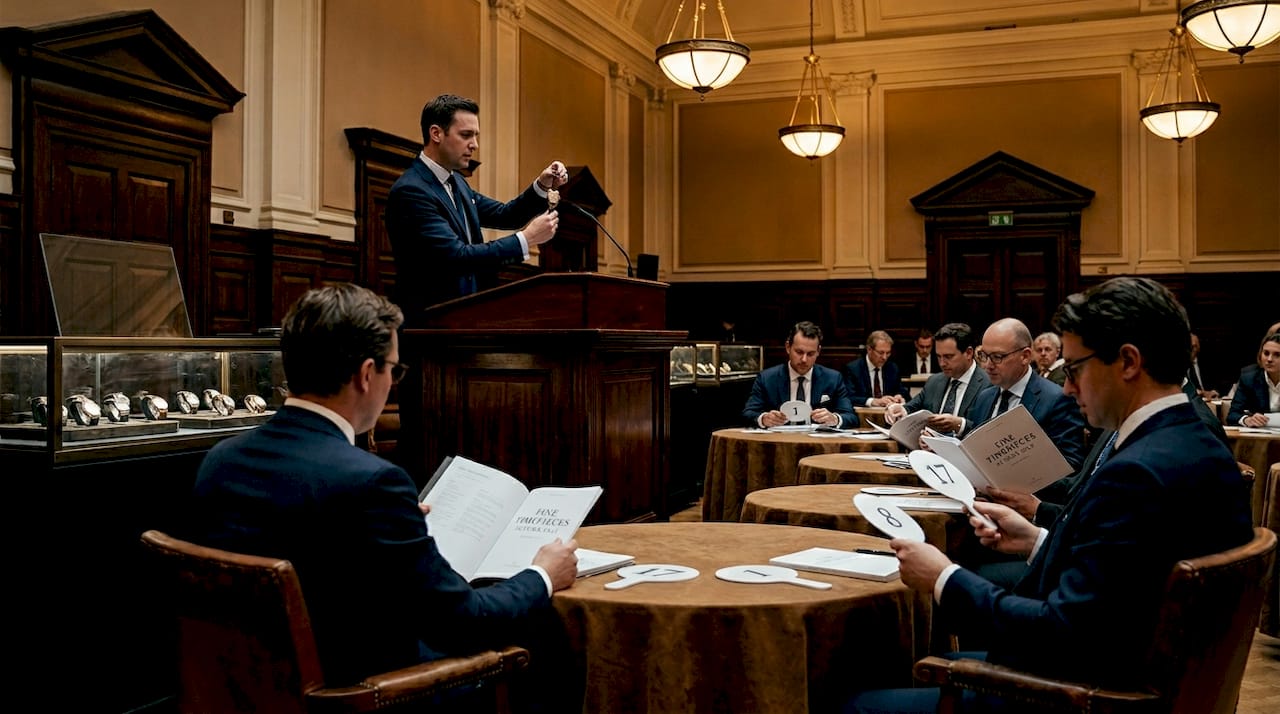
A Rolex Daytona ref. 6263 in “Paul Newman” exotic dial configuration realising over £700,000 at Phillips Geneva
A Patek Philippe ref. 2499 perpetual calendar reaching over £1.4 million due to its rarity within the complication category
An Audemars Piguet Royal Oak “Jumbo” ref. 5402 from the mid-1970s achieving prices well above current production equivalents
These rare Swiss watch examples illustrate that scarcity and provenance together are extraordinarily powerful.
Pro Tip: When assessing rarity, look at production figures where available through academic auction house catalogues and specialist databases. Some references labelled “limited” were produced in the thousands, whilst apparently standard references may have had production runs below 500 pieces. The actual number matters enormously.
Condition, originality, and provenance
The difference between a watch in original, unpolished condition with complete documentation and an identical reference that has been polished, serviced with non-factory parts, and sold without papers can easily represent a 30 to 50 percent difference in price. This is not an exaggeration — it is the lived reality of the secondary market.
Originality is paramount. Watch cases that retain their original surfaces tell a story of careful ownership. Polishing removes metal and alters the angles that manufacturers spent considerable time perfecting. A Rolex Submariner with its original brushed surfaces intact signals that its owner respected its integrity, and the market rewards that accordingly. An authentication checklist is an invaluable tool before any significant transaction.
Signs of excellent condition that add value:
Original dial: Unrestored, with no refinishing or touchups under UV light
Unpolished case and bracelet: Sharp lugs, intact finishing patterns
Original bracelet: Correct reference, matching serial number range
Complete set: Outer box, inner box, original warranty card or papers, hang tags
Service history: Documented servicing at authorised service centres only
Warning flags that reduce value:
Replaced hands, bezel insert, or crown with non-factory components
Evidence of amateur movement servicing without documentation
Polished cases on watches known for their distinctive brushed finishing
Papers belonging to a different serial number
Provenance, meaning the documented ownership history of a piece, adds another layer entirely. Celebrity-owned watches or those with well-documented first ownership from a notable figure can command extraordinary premiums. The watch worn by Paul Newman, which lent its name to an entire category of Daytona dials, sold for $17.75 million in 2017. Understanding the signs of true watch value requires appreciating that emotional and historical resonance genuinely translates into market price.
Pro Tip: Before consigning or selling a watch, resist the temptation to have it “freshened up.” Polishing for presentation purposes is one of the most common and costly mistakes sellers make. If you want to know how to prepare for sale correctly, the process is simpler than most expect.
Market demand, timing, and liquidity
A watch may score highly on every other metric and still disappoint in a sale if market timing is poor. Demand cycles exist for specific brands, complications, and materials — and they are influenced by broader economic conditions, generational taste shifts, and cultural moments.
During the period between 2020 and 2022, secondary market premiums for steel sports watches reached extraordinary levels. A Rolex Submariner Date retailed at roughly £8,500 yet traded privately above £18,000. By 2024, those same watches had normalised significantly. This is the volatility risk that luxury watches averaged 22.85% headline figures can obscure when viewed at portfolio level.
Model | Approx. retail price | Peak secondary price (2022) | 2025 secondary estimate | 5-year CAGR |
Rolex Submariner Date | £8,500 | £18,000+ | £11,500 | ~6.2% |
Rolex Daytona (steel) | £12,000 | £30,000+ | £16,500 | ~7.8% |
Patek Nautilus 5711 | £26,500 | £100,000+ | £55,000 | ~15.7% |
AP Royal Oak 15202 | £22,000 | £70,000+ | £42,000 | ~13.8% |
Omega Speedmaster | £5,500 | £7,000 | £6,200 | ~2.4% |
Liquidity, meaning how quickly and easily you can convert a watch into cash at a fair price, deserves as much consideration as headline appreciation. A steel sports Rolex will always find a buyer quickly. A complicated dress watch from a less mainstream manufacturer may be theoretically more valuable but practically much harder to liquidate at the right moment. Understanding the auction sales role in price discovery is essential context here.
Steps to assess market conditions before selling:
Monitor recent sold listings on Chrono24 and WatchCharts for your specific reference and condition grade
Check auction results from the past 18 months at Phillips, Christie’s, and Sotheby’s for comparable pieces
Identify whether demand for your model appears to be rising, stable, or declining based on average transaction prices over the last 12 months
Assess asking price distribution to understand realistic buyer expectations versus aspirational seller pricing
Consider seasonal patterns: the Geneva and New York auction seasons in May and November often create market momentum
Comparing top investment watches
Bringing all these factors together into a single view helps clarify which models suit different investment profiles.
Model | Brand strength | Rarity | Condition sensitivity | Demand stability | Liquidity | Risk profile |
Rolex Submariner | Very high | Moderate | Moderate | Very high | Excellent | Low to medium |
Rolex Daytona (steel) | Very high | High | High | High | Very good | Medium |
Patek Nautilus 5711 | Very high | Very high | Very high | High | Good | High |
AP Royal Oak Jumbo | High | High | Very high | Medium-high | Good | Medium to high |
Omega Speedmaster Pro | High | Low to moderate | Low to moderate | Stable | Good | Low |
Cartier Santos (gold) | High | Moderate | Moderate | Moderate | Moderate | Low to medium |
The Rolex Submariner remains the most accessible entry point for those prioritising capital preservation over speculative gain. Its long-term analysis reveals steady rather than spectacular performance, which suits collectors who value stability. The Patek Nautilus 5711, discontinued in 2021, remains the highest-volatility option with the strongest upside potential and the greatest exposure to market sentiment shifts. The AP Royal Oak occupies a compelling middle ground — rare enough to command premiums, iconic enough to maintain broad recognition.
For stability-seekers, the Submariner and Speedmaster Professional offer solid foundations. For those comfortable with higher volatility in exchange for greater upside, the Nautilus 5711 and Royal Oak Jumbo deserve serious consideration when priced correctly.
Why the industry often misleads on watch value
The marketing machinery around luxury watches has become extraordinarily effective at amplifying exceptional outcomes whilst quietly omitting the far more common reality: most watches lose value, at least initially, and many never recover their purchase price in the secondary market.
Headline stories about watches returning 369% gains are real, but they represent a fraction of transactions. The vast majority of pre-owned luxury pieces from respectable but less hyped references trade at discounts to retail, sometimes significant ones. The Chrono24 long-term data reinforces this point: Rolex is not among the top winners in the pre-owned market over very long holding periods when inflation-adjusted returns are considered.
“No watch is a guaranteed store of value. Due diligence applied to any other investment class should be applied here with equal rigour, not suspended because the asset is aesthetically pleasing.”
Our view at Horology Kings is that the most successful collectors are those who build their framework around real rare-value cases rather than marketing narratives. They buy what they understand deeply, they pay attention to condition and documentation, and they take a long view. Passion for horology and investment discipline are not mutually exclusive. In fact, genuine enthusiasm tends to produce better outcomes because it leads to deeper research and more patience.
The uncomfortable truth is that watches bought during hype peaks — as happened with steel sports watches from 2020 to 2022 — frequently disappoint buyers who purchased for financial return rather than genuine appreciation of the object. The market found its level, and those buyers learned an expensive lesson about the difference between asset classes and collectibles.
Expert help for your next investment watch
Understanding these valuation factors intellectually is only the starting point. When genuine capital is at stake, the quality of advice and due diligence supporting each transaction matters enormously.
At Horology Kings, we work with collectors and investors across the UK who want transparent, expert-led guidance on buying, selling, and sourcing significant timepieces. Our approach combines deep market knowledge with honest valuation, so you always know what you are paying for or what your piece is genuinely worth. Whether you are looking to acquire a specific reference or sell a watch from your existing collection, our discreet service and secure UK bank transfers remove the friction and uncertainty that can undermine private transactions. If you are ready to find a specific piece, you can source a luxury watch through our specialist network today.
Frequently asked questions
Which watch brands retain value best?
Prestige brands like Rolex and Patek Philippe typically retain value best, but as the Chrono24 data shows, returns vary significantly model by model, with standout performers like the Patek Nautilus far outpacing more mainstream references.
Does watch condition really matter for resale?
Yes, significantly. Originality, unpolished cases, and complete documentation greatly increase resale value, whilst modified or polished examples frequently trade at meaningful discounts as secondary market analysis confirms.
How important is rarity for a watch’s value?
Very important. Limited production and unique configurations create the scarcity that drives collector competition and auction premiums well beyond what brand or condition alone can achieve.
Are luxury watches always a good investment?
No. Whilst select models appreciate strongly, many luxury watches lose value or only keep pace with inflation, and Chrono24’s long-term analysis suggests even Rolex underperforms expectations over extended holding periods when adjusted for inflation.
What documentation increases a watch’s value?
Original box and papers, manufacturer-stamped warranty card, authorised service records, and proof of authentic first ownership are the most significant documentation factors, often adding 20 to 40 percent to achievable sale prices in competitive markets.
Recommended
Comments