.png)
The watch consignment process: a complete guide
TL;DR:
Selling a luxury watch through consignment requires proper documentation, authentication, and understanding market timing to maximize value and minimize risks.
Thorough preparation, clear agreements, and choosing reputable partners protect against fraud and ensure a smooth sale process.
Selling a luxury watch is rarely as simple as finding a buyer and exchanging funds. The watch consignment process sits at the intersection of authentication, trust, legal agreements, and market timing. Get it right and you achieve a strong price with minimal hassle. Get it wrong and you risk underselling a Rolex, waiting months without a sale, or worse, falling victim to fraud. Whether you are consigning a Patek Philippe for the first time or looking to buy through a reputable consignment service, this guide covers every stage from preparation to payout.
Table of Contents
Key takeaways
Point | Details |
Gather full documentation | Watches with box, papers, and service records sell faster and achieve better prices on consignment. |
Understand fee structures | Commission fees typically range from 8% to 20%, with possible additional charges for marketing or storage. |
Use escrow for security | Trusted escrow services protect both buyers and sellers by holding payment until delivery is confirmed. |
Authenticate before and after | Independent authentication before consigning and during the buyer’s return window is the strongest fraud defence. |
Set realistic timelines | Consignment periods can extend to 180 days or more, which directly affects your liquidity as a seller. |
Before the watch consignment process begins
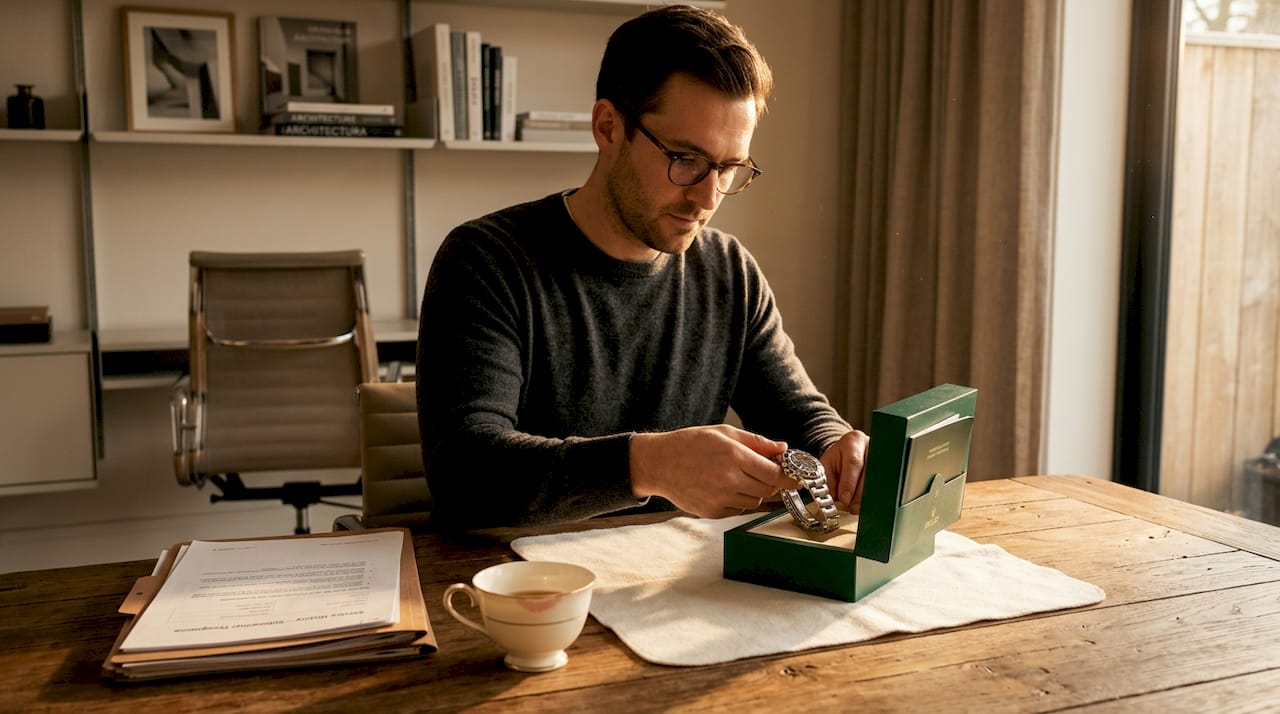
Most people jump straight into listing a watch without doing the groundwork. That is the single biggest mistake in consigning luxury watches. Preparation separates sellers who achieve top market value from those who accept whatever offer arrives first.
Documentation is non-negotiable. Full provenance including the original box, papers, and any service records will directly improve both your sale speed and final price. A Rolex Submariner with full documentation consistently fetches a meaningful premium over the same reference without papers. Buyers, particularly collectors and investors, treat missing documentation as a red flag.
Before approaching any consignment partner, you should also have your watch independently authenticated. A professional watchmaker or authorised service centre can confirm that all components are original, which is especially relevant for watches prone to being “frankensteined” with non-original parts. You can use the authentication checklist from Horology Kings as a practical starting point.
Here is what to prepare before you consign:
Original box and papers, including the warranty card and any supplementary booklets
Service history, particularly for watches over five years old or with high complications
Purchase receipt or proof of ownership, which protects against any provenance disputes
Photographs of the watch from multiple angles, capturing the case, dial, caseback, and any visible wear
A realistic price expectation, informed by current secondary market data rather than retail price memory
Understanding the consignment agreement before signing is also critical. Commission fees range from 8% to 20%, and some services add charges for photography, marketing, or storage. Read the contract carefully, particularly the clauses covering minimum consignment duration and what happens if the watch does not sell within the agreed period.
Pro Tip: Ask your consignment partner for a written breakdown of all fees before signing. What looks like a low commission rate on the surface can quietly include hidden marketing fees that erode your net return.
Step-by-step walkthrough of the watch consignment process
Understanding each stage removes uncertainty and helps you manage expectations around both timeline and outcome.
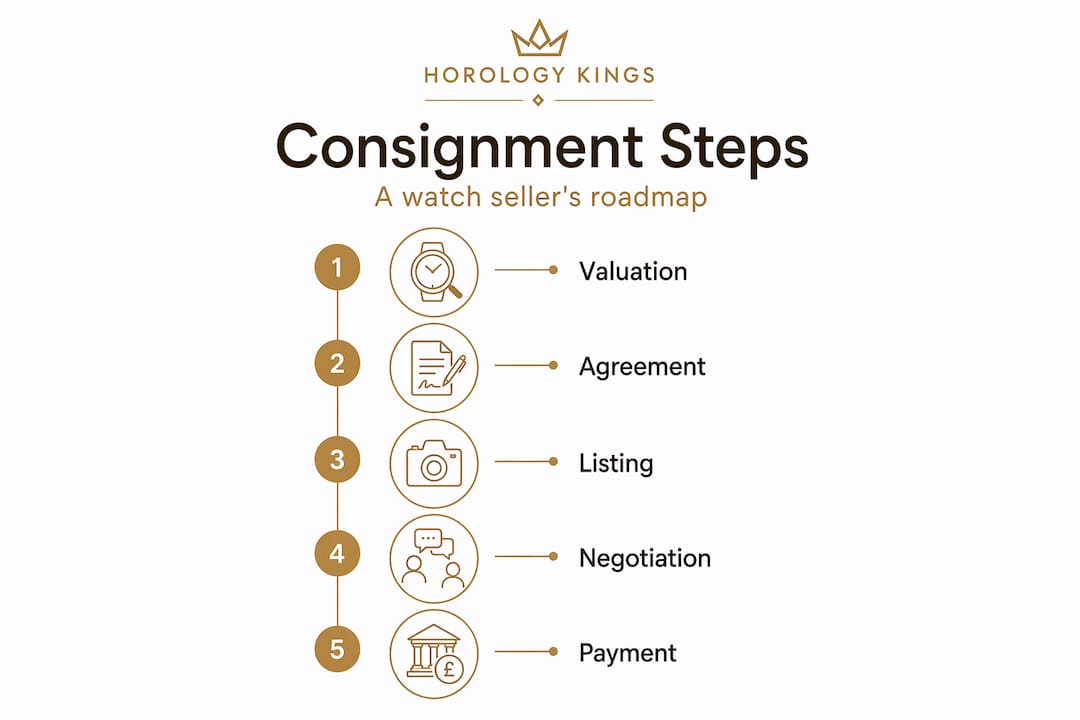
Step 1: Initial valuation and consultation
The process begins with a market valuation. A reputable consignment partner will assess the watch in person or via detailed photographs and reference it against current secondary market prices. This is not simply a retail price divided by two. It reflects real buyer demand, recent auction results, and condition-specific pricing. Be honest about any scratches, service history gaps, or replaced components.
Step 2: Signing the consignment agreement
Once you agree on a target sale price and fee structure, you will sign a formal consignment agreement. This document should specify:
Element | What to check |
Commission rate | Percentage of final sale price taken by the consignee |
Additional fees | Photography, storage, insurance, marketing costs |
Consignment duration | Minimum period before you can request the watch back |
Early termination | Notice period and any penalties for withdrawing early |
Return condition | Clause confirming the watch is returned in the same condition |
Minimum consignment periods of up to 180 days are common in competitive marketplaces. That means your capital is tied up for potentially six months. Factor this into your decision if liquidity matters to you.
Step 3: Listing and marketing
Your consignment partner takes responsibility for presenting the watch to qualified buyers. This includes professional photography, detailed listings across relevant platforms, and in some cases, physical display in a showroom. The quality of this marketing directly affects the buyer pool you attract.
Step 4: Negotiations and buyer enquiries
The consignee handles all buyer communications and negotiation on your behalf. This is one of the core benefits of watch consignment services: you are not fielding lowball offers at midnight. A good partner keeps you informed of any significant enquiries and will not accept an offer below your agreed floor price without consultation.
Step 5: Sale confirmation and payment
Once a sale is agreed, trusted platforms use escrow arrangements to protect both parties. Chrono24’s Trusted Checkout holds buyer payment until delivery is confirmed, typically with a 14-day return window. Horology Kings processes payments via secure UK bank transfer, which provides a clear, traceable transaction record. Payout to the consignor typically follows after the buyer’s return window closes.
Pro Tip: Confirm payout timing in writing before the sale completes. Some platforms hold funds for longer than buyers expect, which can create frustration if you are depending on those proceeds.
Risks, pitfalls, and how to protect yourself
The watch resale process carries real risks on both sides of the transaction. Knowing what to watch for keeps your investment protected.
The frankenstein watch problem. A “frankenwatch” is a piece assembled from components of multiple watches, often presented as original. This is one of the most common forms of deception in the pre-owned market. Authentication within the buyer’s return window is the most reliable protection. If you receive a watch on consignment, take it to an independent watchmaker within that 14-day window without exception.
“Trusted third-party platforms facilitate secure watch transactions by providing escrow and enforcing return policies, preventing scams and protecting both buyers and sellers.” Horology Kings
Beyond authentication, here are the key risks to manage:
Fake seller profiles on peer-to-peer platforms use stolen photographs and false provenance. Always transact through verified consignment services that have vetting processes in place.
Undisclosed condition issues can surface after sale. Document the watch thoroughly with timestamped photographs before handing it over for consignment.
Fee creep occurs when additional charges are applied mid-process that were not clearly outlined at the start. Review the agreement for clauses that allow the consignee to add costs.
Timeline disappointment is common among first-time consignors. A Cartier Santos may sell in a week. An unusual reference of an Audemars Piguet may take five months. Build a realistic timeline before committing.
Knowing when to walk away matters. If a consignment partner cannot clearly explain their authentication process, buyer protection terms, or fee structure, that is a reason to look elsewhere.
Expert tips for consigning luxury watches effectively
The difference between a mediocre and an excellent consignment outcome often comes down to a handful of decisions made before the watch is ever listed.
Presentation matters more than you think. A watch that arrives at a consignment partner in poor cosmetic condition will be valued lower and attract less buyer interest. Before consigning, consider having the watch professionally cleaned and, if appropriate, lightly serviced. Premium watch cleaning products can help bring a watch to its best cosmetic condition before photographs are taken.

Timing your sale to the market cycle can also improve your return. Certain references spike in demand following trade show announcements or when a particular model is discontinued. If you have flexibility on timing, monitor secondary market trends before committing to a consignment.
On the relationship side, clear communication between consignor and consignee is what keeps the process smooth and reduces the likelihood of disputes. Agree on update frequency upfront. A fortnightly check-in on listing performance, buyer enquiry volume, and any pricing adjustments is a reasonable standard.
For those managing multiple watches through consignment, inventory tracking tools help you monitor which pieces are listed, what commission is owed, and which are approaching the end of their consignment period. Even a simple spreadsheet tracking each watch’s consignment start date, agreed floor price, and fee structure will save you from unwanted surprises.
Pro Tip: Negotiate the commission rate before signing, particularly for high-value pieces. A 2% reduction on a £20,000 watch is £400 back in your pocket. Most consignment partners have more flexibility than they initially present.
My honest take on the watch consignment process
I have seen the watch consignment process work beautifully and I have seen it go wrong in completely avoidable ways. The pattern is almost always the same: the transactions that fail do so because one party did not read the contract carefully, or chose a partner based on lowest fees rather than genuine expertise.
The fee structure conversation is where I see the most friction. People fixate on commission percentage and overlook storage fees, insurance clauses, and what happens if the watch is returned damaged. I have spoken to collectors who received their Omega back with a scratched crystal because nobody documented condition at intake. That oversight cost more to fix than the commission they saved by choosing a budget service.
What I find genuinely encouraging is how escrow-based services have matured. Five years ago, secure payment in the secondary watch market was largely informal. Today, structured tools and clear return windows have raised the baseline for buyer protection significantly.
My advice is this: choose your consignment partner the way you would choose a solicitor. Credentials, transparency, and track record matter far more than headline fees. And always, always get everything in writing before your watch leaves your hands.
— Lewis
Sell or source watches with Horology Kings
Horology Kings is a Hertfordshire-based luxury watch specialist with expertise across Rolex, Patek Philippe, Audemars Piguet, Omega, and Cartier. Whether you are looking to sell or source watches through a trusted consignment partner, or simply want an expert valuation before making a decision, the team offers a discreet, professional service with secure UK bank transfers and transparent fee structures.
For buyers, the platform provides access to authenticated pre-owned timepieces alongside a dedicated watch sourcing service for rare or hard-to-find references. First-time consignors and seasoned collectors alike benefit from clear contracts, professional presentation, and a team that genuinely understands both the market and the watches in it. Get in touch with Horology Kings to discuss your requirements and take the next step with confidence.
FAQ
What is the watch consignment process?
The watch consignment process is an arrangement where a seller leaves their watch with a trusted dealer or platform, which markets and sells the piece on their behalf in exchange for a commission fee, typically between 8% and 20% of the final sale price.
How long does consigning a luxury watch take?
Timelines vary considerably depending on the reference, condition, and market demand. Some watches sell within days, while others may take several months. Minimum consignment periods of up to 180 days are common.
What fees should I expect when I consign a watch?
Commission fees range from 8% to 20%, with some services adding charges for photography, insurance, or storage. Always request a full written fee breakdown before signing the agreement.
How do I protect myself when buying a consignment watch?
Use platforms or dealers that offer escrow payment and a formal return window. Have the watch inspected by an independent watchmaker within that window. Buyer protection through escrow ensures your payment is held until delivery is confirmed and any issues can be resolved.
Do I need box and papers to consign a watch?
You do not always need them, but full documentation including box, papers, and service records will improve both your sale speed and the price you achieve. Missing paperwork is a common reason buyers negotiate harder or walk away entirely.
Recommended
Comments