.png)
5–10 Years Isn’t a Rule: Evidence Based Watch Service Intervals
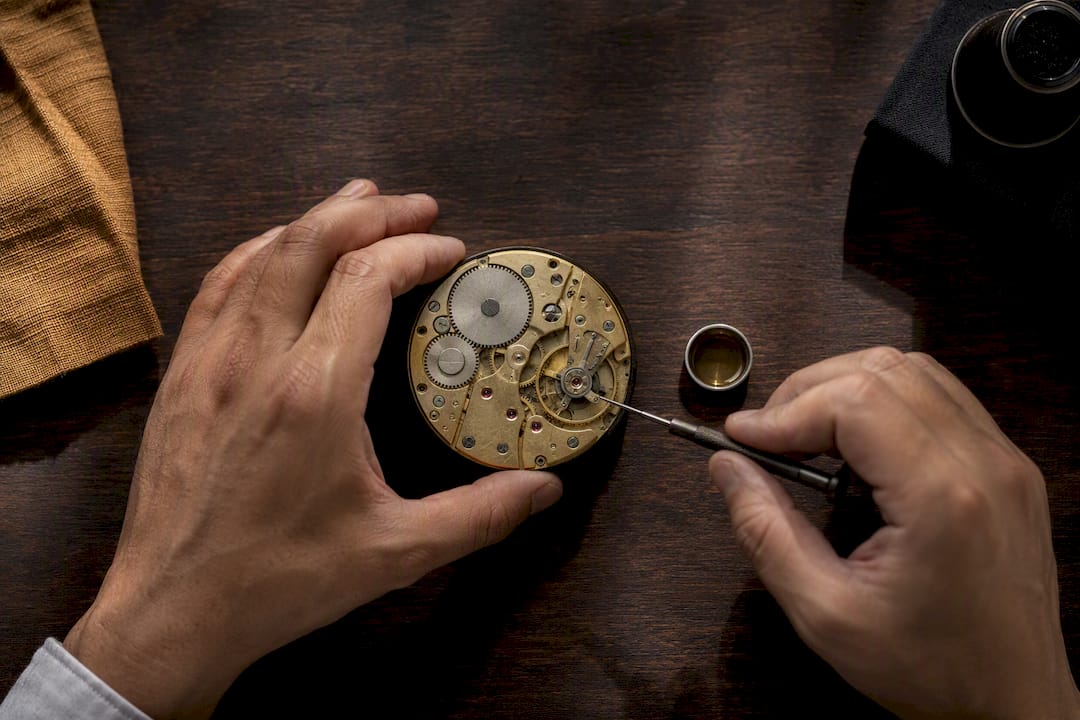
Treat manufacturer intervals, commonly several years depending on movement, as the outer limit, not a target. The better approach is evidence-based: watch for rate drift, falling amplitude, poor power reserve or condensation, and act on those signals rather than a date on the calendar. Water resistance runs on its own, more frequent clock. Test it separately, roughly every few years.
TL;DR:
Modern watch brands recommend service intervals of 8 to 10 years due to advances in synthetic lubricants and escapement design, but environment and usage habits significantly affect actual timing.
Signs indicating immediate servicing needs include condensation, significant timekeeping drift, reduced power reserve, and rough winding, which are more urgent than calendar-based targets.
Water resistance should be checked annually if exposed to humidity or frequent water contact, with shorter intervals after impacts or case opening; water-resistance tests are quick and non-invasive.
Vintage and complicated watches require more frequent service, every 2 to 3 years, because parts scarcity and added components increase wear and the risk of damage.
Maintaining a detailed service history and monitoring rate drift and water resistance can prevent costly failures and preserve a watch’s value.
Table of Contents
Understanding watch service intervals: what the manufacturers actually say
Brand guidance on watch service intervals has shifted dramatically over the past decade, and most owners haven’t caught up with it. The old rule of thumb, service every three to five years, came from an era of animal and mineral-based lubricants that broke down predictably. Modern synthetic oils and improved escapement designs have changed that maths considerably, which is why so many current manufacturer recommendations now stretch well beyond what enthusiasts grew up expecting.
Rolex now cites intervals of roughly ten years for its modern calibres, a figure that would have seemed reckless twenty years ago. Patek Philippe advises a similar eight to ten year window for many of its current watches, while pairing that guidance with a strong emphasis on regular winding and careful handling between services. Omega’s co-axial escapement, meanwhile, typically sits in a several-year bracket. These aren’t outliers. They reflect a broader industry pattern where longer intervals are credited largely to synthetic lubricants and refined escapement geometry, both of which slow down the oil breakdown and metal wear that used to force earlier intervention.
Not every brand has moved as far. A consolidated comparison of brand-by-brand recommendations shows many mechanical watches still sitting comfortably in a 4 to 7 year full-service window, particularly among mass-market and mid-tier automatics that haven’t adopted the newest lubricant technology.
For practical purposes, here’s how that translates by category:
Quartz watches: battery changes every 1 to 2 years; full movement service rarely needed, if ever.
Mass-market automatics (Seiko, Tissot, entry Omega): 3 to 5 years as a sensible default.
Modern luxury automatics (current Rolex, Patek, Omega co-axial): 5 to 10 years, closer to the brand’s own published figure.
High-complication or vintage pieces: 2 to 3 years, for reasons covered further down.
Here’s the caveat that matters most: manufacturer guidance is usually a conservative maximum built around ideal conditions, not a guarantee that your specific watch will run trouble-free until that date arrives. A watch worn daily in a humid climate will not age at the same rate as one worn occasionally in a temperate office. Treat the published figure as the latest point you should be servicing, not the earliest.
Factors that shorten or lengthen your watch maintenance schedule
Two watches of the identical reference number, serviced on the identical date, can need attention years apart. The manufacturer’s number is a starting point; your habits and environment do most of the actual work of ageing a movement.
Usage patterns matter more than most owners assume. A watch worn eight hours a day accumulates far more wear on its pivots, jewels and mainspring than one that spends most of its life in a drawer. Environment compounds that: humidity accelerates lubricant breakdown and encourages corrosion, while sharp temperature swings, think a hot car dashboard followed by an air-conditioned office, stress the oils and the gaskets simultaneously. Magnetic fields from phones, laptop speakers and induction hobs can throw off a movement’s rate without a single visible sign until you check it against a reference clock. A hard knock against a doorframe does similar damage silently.
Movement complexity plays its part too. High-beat calibres oscillate more times per second, which means more friction cycles per hour and, generally, a shorter comfortable interval than a slower-beat equivalent. Vintage movements carry their own penalty: original parts were often made to looser tolerances than modern CNC-machined equivalents, and decades of prior wear compound faster once lubricants finally give out.
Storage and winding habits are the one variable fully within your control. A mainspring left fully wound under tension for months, or a movement left dry and unwound for years, both age faster than one kept in gentle, regular motion. If you rotate several watches and want to keep them all in good condition between wears, our guide to luxury watch maintenance for preserving value covers the winding and storage habits that genuinely extend service life.
Daily heavy wear shortens intervals versus occasional wear.
Humid or coastal climates accelerate both lubricant and gasket wear.
Regular exposure to magnets or impacts can force an early service regardless of age.
High-beat and vintage movements generally need shorter intervals than modern standard-beat calibres.
Pro Tip: Keep a simple log of any hard knocks or magnet exposure (speakers, phone cases with magnetic mounts, induction hobs). If your watch starts running fast or stops entirely after one of these events, that log will save your watchmaker time diagnosing the cause.
Signs your watch needs a service now
Most watches announce a developing problem well before they actually stop. Learning to read those signals is the entire basis of servicing on evidence rather than habit.
Timekeeping drift. Compare your watch against a reliable time source at the same time each day for four or five days. A consistent daily gain or loss of a few seconds is normal for a mechanical movement; a rate that’s noticeably worse than when the watch was new, or one that changes unpredictably day to day, points to ageing lubrication or a developing fault.
Poor power reserve. If a fully wound automatic used to run for 48 hours off the wrist and now stops after 20, something inside is dragging, most often thickened or depleted oil.
Rough or gritty winding feel. A crown that used to turn smoothly and now feels inconsistent or crunchy usually signals dry components in the winding mechanism.
A stuttering seconds hand. This often indicates falling amplitude, the movement running with less energy than it should, and is one of the clearer visual cues that servicing is due sooner rather than later.
Condensation under the crystal. This one is urgent. It means moisture has breached the case, and every hour it sits there increases the risk of rust on steel components and corrosion on the dial.
Drift and reduced power reserve can be monitored for a few weeks before booking a service. Condensation and a fully stopped movement cannot wait. Get those looked at immediately.
Water resistance runs on a separate maintenance clock
Movement servicing and water-resistance testing follow different calendars, and conflating the two is one of the most common mistakes owners make. Rubber and nylon gaskets degrade through compression, temperature cycling and simple age, independent of whatever is happening inside the movement, which is why Seiko explicitly recommends periodic water-resistance checks even for watches that aren’t due a full service.
A sensible testing rhythm looks like this:
Annually, if you swim, dive or wear the watch daily somewhere humid or coastal.
Every 2 to 4 years, for watches worn mainly in dry, office-based conditions.
Immediately, after any hard impact, before a beach or diving holiday, or any time the case back has been opened for a battery change or inspection.
A pressure test itself is quick and non-invasive: the watch goes into a sealed chamber where air or water pressure simulates depth, and any seal failure shows up as a pressure change within minutes. If a watch fails, a reseal replaces the gaskets and retests before the watch goes back to you, typically a same-day or next-day job rather than a full strip-down.
Vintage and complicated watches need their own schedule
Vintage pieces and heavy complications don’t follow the same rules as a current-production three-hander, and treating them the same way is how condition and value both get eroded. A vintage watch typically needs servicing every 2 to 3 years, not because the movement is inherently more fragile, but because parts scarcity changes the entire calculation. A worn pivot or a cracked jewel on a decades-old calibre may need a period-correct part sourced from donor movements, which takes far longer to arrange than ordering from a modern parts catalogue. Catching wear early, while a repair rather than a full part replacement, protects both the watch and your wallet.
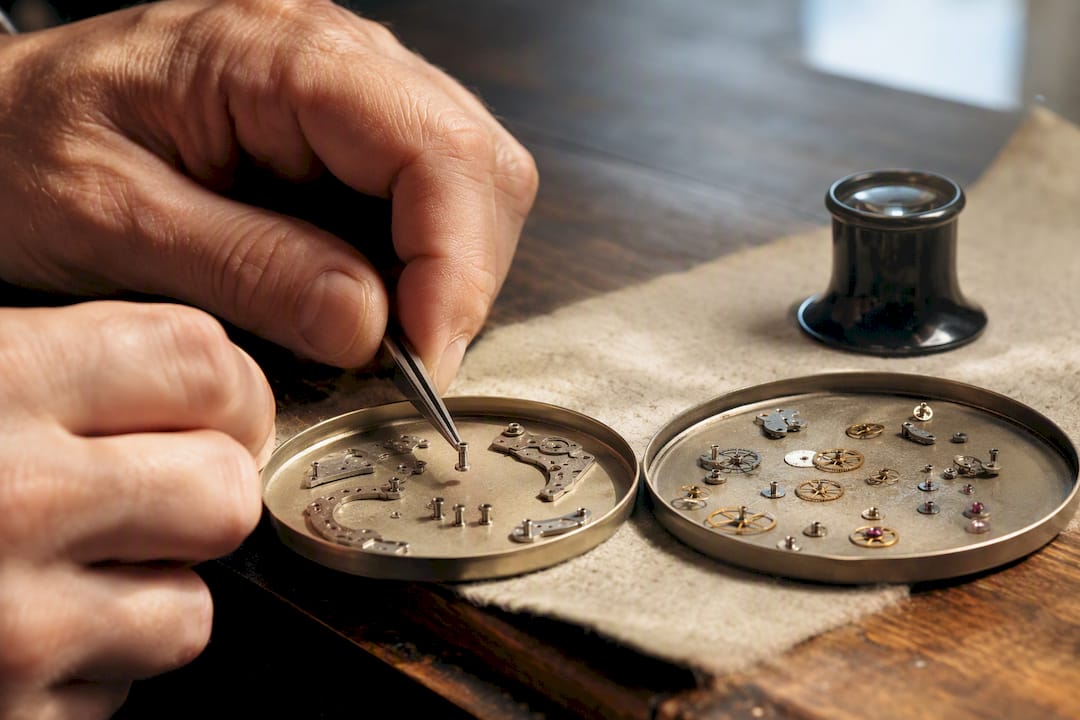
Complications add their own pressure. A chronograph, perpetual calendar or minute repeater has more components under load, and more ways for a small fault to cascade into a bigger one if ignored. These pieces reward a trusted specialist who knows the specific calibre rather than a generalist workshop.
The single best thing you can do for a vintage or complicated watch is keep a written service history and resist the urge to have the case back opened unnecessarily, as maintenance matters for vintage guitars illustrate the importance of conservative upkeep to preserve value and function in vintage mechanical instruments. Every opening carries a small risk to gaskets and finish; only open it when there’s a genuine reason to.
How to check your watch’s health like a professional
Turning calendar guesswork into evidence takes about ten minutes and no special equipment beyond a phone.
Amplitude, rate and beat error, explained plainly: amplitude measures how far the balance wheel swings with each oscillation, essentially how much energy the movement has to work with. Rate is how many seconds fast or slow the watch runs per day. Beat error measures whether the balance swings symmetrically on both sides. Amplitude typically falls well before a watch visibly gains or loses time, which makes it the earliest warning sign available, but it requires a timegrapher to read directly.
Check the daily rate at the same time each day, ideally in the same wrist position, for four to five consecutive days.
Test the power reserve by fully winding the watch, leaving it stationary, and timing how long it runs before stopping.
Inspect the crystal for any hint of condensation or moisture.
Listen and watch the seconds hand for stutter or hesitation, a subtle but telling sign of low amplitude.
Pro Tip: If you want a genuinely objective reading, most independent watchmakers will run a free or low-cost timegrapher check without committing you to a service. Ask for the amplitude figure in both a vertical and horizontal position, that comparison alone tells a watchmaker whether wear is even across the movement or concentrated in one area.
Book a professional check the moment daily rate variance becomes erratic rather than consistent, or if amplitude readings sit noticeably below the movement’s typical range. Report the specific numbers to your watchmaker rather than a general “it feels off”, it saves diagnostic time and often money.
What’s actually included in a full service, and what it costs
There’s a real difference between a light maintenance check and a full overhaul, and the price gap reflects that. Several brands, Breitling among them, publish a two-tier model: a lighter maintenance check roughly every two years, and a complete overhaul every four to six.
A maintenance check typically covers:
Gasket inspection and replacement where needed
Water-resistance pressure test
Visual inspection of the movement through the case back
External cleaning and polish
A full service goes considerably further:
Complete disassembly of the movement
Ultrasonic cleaning of every component
Replacement of worn parts (mainspring, jewels, pivots as needed)
Full relubrication with fresh synthetic oil
Reassembly, timing regulation and multi-position testing
Case and bracelet refurbishment, plus a final pressure test
Pricing varies enormously by brand, complication and parts availability, but expect a full service on a mainstream automatic to sit well below the cost of an equivalent service on a chronograph or perpetual calendar, where extra components and specialist labour both add up. Genuine watchmaker commentary is consistent on one point: servicing isn’t a manufactured revenue exercise, it’s labour and parts-intensive work that prevents small wear from cascading into expensive failures further down the line.
For high-end pieces, a documented service history does more than reassure you the watch runs well. It supports authenticity and materially affects resale value, buyers and dealers alike treat a clear paper trail as evidence the watch has been properly cared for rather than neglected and quietly patched up.
What we’ve learned from watches that come through our doors
Owners who service on evidence rather than habit tend to have fewer surprises and better-preserved watches. That’s the pattern we see consistently: a watch monitored for rate drift and checked periodically for water resistance rarely arrives in the kind of state that forces an expensive emergency overhaul. Keeping a service history matters just as much for a five-year-old automatic as it does for a vintage piece, it’s the single easiest way to protect resale value later. For certain current-production models, using an authorised service centre at the point a factory warranty is nearing expiry can double as a free inspection and reseal, effectively resetting the maintenance clock at no extra cost.
If you’re weighing up whether a watch genuinely needs attention or simply needs monitoring, that’s exactly the kind of judgement call worth getting a second opinion on before committing to a full strip-down.
— Lewis
Book a professional watch check with Horology-kings
We service and repair Swiss watches to the same standard applied when authenticating pieces for sale, performed by certified horologists rather than a generalist high-street counter. Where alternatives may vary between expensive brand boutiques and unverified local repairers, our servicing offers proper diagnostic work and transparent pricing, with a team experienced in handling luxury Swiss watch brands.

When you enquire, have the reference number, approximate service history and any specific symptoms (rate drift, power reserve issues, condensation) ready, it lets us give you an accurate estimate rather than a vague range. We’ll also flag if a water-resistance test alone would cover your immediate concern, so you’re never paying for a full overhaul you don’t yet need. Visit our watch repair and servicing page to check current turnaround times and submit your watch’s details, or start with a free valuation if you’re also weighing up whether to sell rather than service.
Sources
FAQ
How often should I get my watch serviced?
Modern manufacturer guidance ranges from about 3 years for many mass-market automatics up to 8 to 10 years for current Rolex and Patek Philippe models, but rate drift or falling power reserve should override the calendar whenever they appear.
What is the 3 watch rule?
There’s no established “3 watch rule” tied to servicing intervals; if you’ve seen the phrase used for a rotation strategy (owning three watches to cover different occasions and reduce wear on any one piece), it’s a collecting habit rather than a manufacturer standard.
How do I know when my watch needs a service?
Watch for daily rate drift beyond what’s normal for the movement, a shortened power reserve, a rough winding feel, a stuttering seconds hand, or any hint of condensation under the crystal, the last of which needs immediate attention.
How much will it cost to service a Rolex in 2026?
Rolex doesn’t publish a single fixed price, and cost depends on model, complication and parts required; a straightforward service typically costs less than one involving case refinishing or part replacement, so an accurate figure needs a specific reference number and inspection.
Recommended
Comments