.png)

Flipping luxury watches for profit: your 2026 guide
- lewisvrichards3
- 1 day ago
- 9 min read
TL;DR:
Watch flipping involves buying pre-owned luxury watches below market value and reselling them for profit. Success requires knowledge of brand hierarchy, proper authentication, understanding market channels, and building trusted relationships with dealers and collectors. The most profitable flips in 2026 focus on models like Rolex Daytona and Patek Nautilus, with private sales offering the highest returns when full provenance and cost calculations are considered.
Watch flipping is the practice of buying pre-owned luxury timepieces below market value and reselling them at a profit. Flipping luxury watches for profit has become more disciplined since the 2022 market correction, when models like the Patek Philippe Nautilus 5711 dropped by roughly 45% and Rolex sports watches fell 25–35% from their peaks. That correction cleared out speculative buyers and left a market now driven by rarity, provenance, and genuine collector demand. Brands like Rolex, Patek Philippe, Audemars Piguet, and Cartier remain the core of any serious flipping strategy. Profit is still available, but it requires knowledge, patience, and the right network.
What do you need to start flipping luxury watches for profit?
The foundation of any profitable watch flip is knowing the brand hierarchy. Rolex, Patek Philippe, and Audemars Piguet sit at the top of the resale pyramid. Below them, brands like Cartier and Omega offer strong liquidity with lower entry costs. Understanding how brand reputation shapes value is the first skill any aspiring flipper must develop.
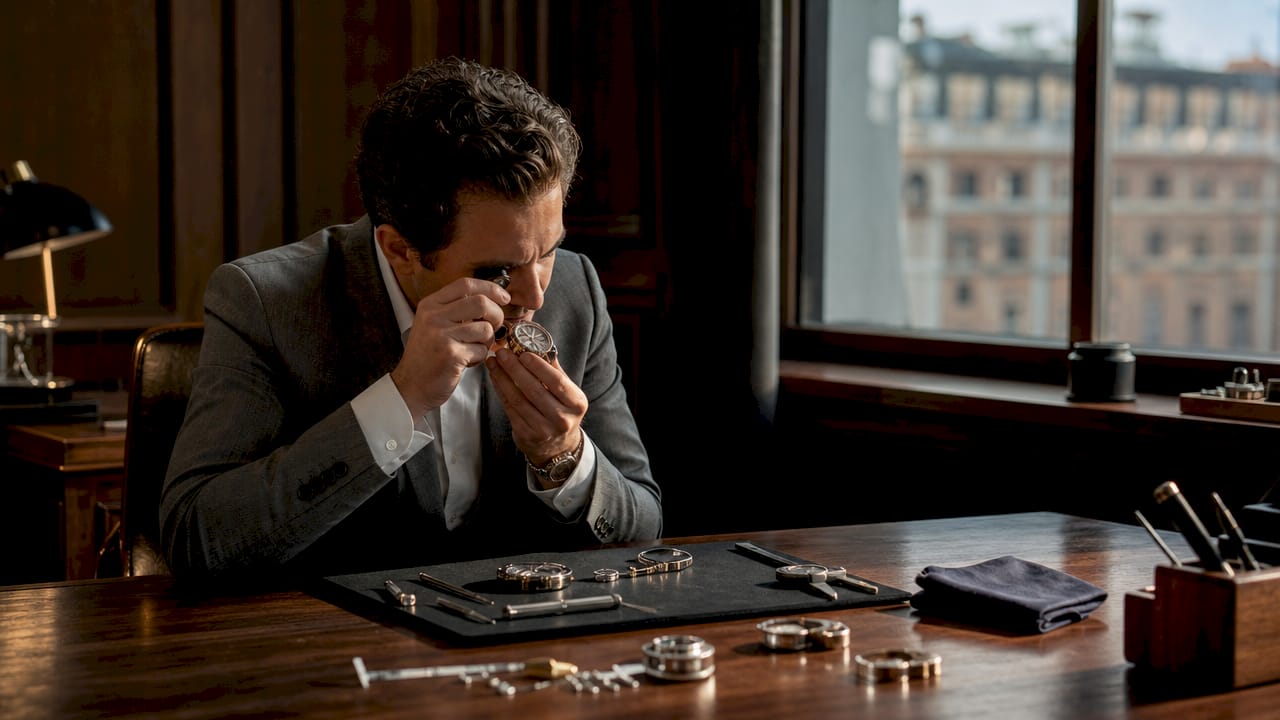
Authentication and condition assessment come next. A watch’s resale value depends heavily on its completeness. Collectors pay premiums for pieces with original box and papers, full service history, and no polishing to the case. A watch missing its box and papers can lose a meaningful portion of its resale value compared to a full set.
You also need familiarity with the main buying and selling platforms. Private sales, specialist dealers, online marketplaces, and auction houses each serve a different purpose. Knowing which channel suits which watch is a skill that separates profitable flippers from those who break even.
Tools and resources every flipper needs
Price tracking platforms: Chrono24 and WatchCharts provide live secondary market data for reference pricing.
Authentication services: Independent watchmakers and brand service centres can verify movement authenticity and condition.
Market indices: The Knight Frank Luxury Investment Index tracks broader luxury asset performance and provides context for watch market trends.
Dealer networks: Building relationships with specialist dealers like Horology-kings gives access to off-market stock and expert valuations.
Provenance tools: Service records, purchase receipts, and warranty cards all contribute to a watch’s documented history.
Pro Tip: Before committing to any purchase, calculate your full unit cost including authentication fees, insurance, shipping, and any platform commission. Hidden costs can turn an apparent £2,000 profit into a loss.
How to identify which watch models are worth buying
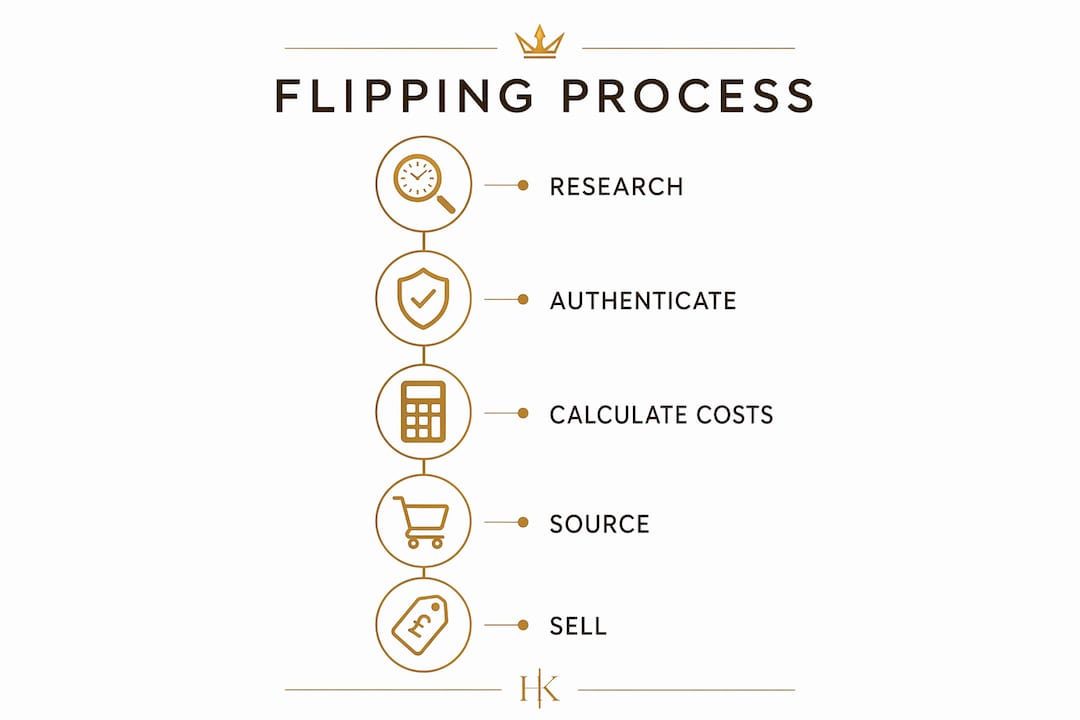
The post-correction market rewards buyers who target undervalued models with strong long-term demand. The Rolex Daytona remains the most liquid classic in the secondary market. The Patek Philippe Nautilus and Aquanaut show catch-up potential after their price corrections, making them worth monitoring closely.
Patek Philippe led the resale market in 2025/2026, with Nautilus and Aquanaut models growing 7.7–12.1%. Cartier quietly outperformed the broader market on select references. That data points clearly to where disciplined buyers should focus their attention.
Avoid models that spiked on social media hype without underlying scarcity. Watches that reached inflated prices purely on speculation tend to correct sharply and stay depressed. The Knight Frank Luxury Investment Index confirms the market now favours rarity, provenance, and historical significance over short-term hype cycles.
Model comparison: investment potential in 2026
Model | Liquidity | Post-correction status | Flipper appeal |
Rolex Daytona | Very high | Stable, strong demand | Excellent for quick resale |
Patek Nautilus 5711 | High | Recovering, up 7.7–12.1% | Strong medium-term hold |
Patek Aquanaut | High | Growing collector interest | Good entry-level Patek play |
Cartier Santos / Tank | Medium-high | Steady, undervalued by some | Emerging value opportunity |
Rolex Submariner | Very high | Stable post-correction | Reliable, lower margin |
Dial variants and production years matter more than most beginners realise. A Rolex Submariner with a specific dial configuration can command a premium over a standard example. Flipping success hinges on this level of nuance, not just brand recognition.
How to buy and authenticate watches before you flip them
Buying from reputable sources reduces authentication risk significantly. Specialist dealers, established auction houses, and vetted platforms all offer some level of provenance verification. Private deals can yield better prices, but they carry higher risk unless you can verify the seller’s history and the watch’s documentation independently.
Always request the full set before agreeing a price. Original box and papers are not optional extras for a profitable flip. They are the difference between a watch that sells quickly at full value and one that sits unsold or requires a price reduction.
Steps to authenticate a watch before purchase
Verify the serial and model number against the manufacturer’s production records or a trusted reference database.
Inspect the movement through the caseback where possible, or request a watchmaker’s report confirming the movement is original and unmodified.
Check the case and bracelet for signs of polishing, replaced parts, or aftermarket modifications that reduce collector value.
Confirm service history by reviewing any service receipts and cross-referencing with the movement’s condition.
Authenticate the papers by checking print quality, date stamps, and retailer details against known genuine examples.
Calculate your total cost including purchase price, any servicing required, insurance, shipping, and the selling platform’s commission.
Pro Tip: Time your purchases around market dips rather than peaks. Watches that have recently corrected in price but retain strong collector demand offer the best margin for resale. Check the watch investor guide for current timing signals.
The most common purchase mistake is overpaying for a watch with incomplete provenance and then discovering the resale market will not support the price paid. Thorough due diligence before purchase protects your margin more reliably than any selling tactic after the fact.
Which sales channel gives you the best return?
Private sales to collectors and enthusiasts deliver the highest net returns, often reaching 90–100% or more of market value. Dealers and specialist buyers offer 65–85% of market value but provide speed and certainty. Online marketplaces sit in the middle, typically yielding 80–95% net after commissions.
Chrono24 is the dominant online marketplace for pre-owned luxury watches, attracting 9 million visitors monthly. Its escrow system protects sellers, and payment arrives within 7 days of confirmed delivery. The commission rate is approximately 6.5%, which is competitive compared to auction houses that charge 10–15% in seller fees.
Auction houses suit rare, high-value pieces where competitive bidding can push prices above private sale estimates. For standard production models, the fees rarely justify the process. The role of auctions in watch sales is best reserved for genuinely scarce references where provenance and presentation are exceptional.
Private sale: Highest return, slowest process, requires trusted buyer network.
Specialist dealer: Fastest cash, lowest return, useful for quick capital recycling.
Online marketplace: Balanced return, broad exposure, commission fees apply.
Auction house: Best for rare pieces, highest fees, unpredictable timing.
Most profitable flips happen through private off-market deals secured via strong dealer and collector networks. Public platforms are efficient, which means margins are thinner. Building a trusted network is the single most valuable long-term asset for any serious flipper.
Common mistakes that kill your profit margin
Misjudging market timing is the most frequent error. Buying at the peak of a hype cycle and expecting prices to continue rising is a reliable way to lose money. The 2022 correction proved that even the most sought-after references can fall sharply when speculative demand evaporates.
Underestimating hidden costs is equally damaging. Authentication fees, insurance, shipping, and commissions erode margins if not accounted for from the start. A watch bought for £8,000 with a target sale price of £9,500 can easily yield a net loss once all costs are included.
Treating a watch flip as a simple buy-low-sell-high transaction is the mindset that leads to losses. Every successful flip is the result of thorough research, accurate cost accounting, and a clear exit strategy before the purchase is made.
Other common pitfalls include:
Buying without a network: Sourcing from public listings at retail prices leaves no room for profit. Off-market sourcing through trusted contacts is where margins are found.
Ignoring condition details: A watch with a polished case or replaced crown sells at a discount to collectors who know what to look for.
Selling too quickly: Rushing a sale through the wrong channel to recover cash often means accepting a lower price than the market would otherwise support.
Skipping insurance: A lost or damaged watch in transit without insurance is a total loss. Always insure for full replacement value.
If a flip stalls, reassess the asking price against current market data, improve the listing photography, and consider switching channels. A watch that does not sell on an online marketplace may sell quickly through a specialist dealer or a collector community.
Key takeaways
Profitable watch flipping in 2026 requires disciplined sourcing, full cost accounting, and a trusted network to access off-market deals at the right price.
Point | Details |
Target post-correction models | Patek Nautilus, Rolex Daytona, and Cartier references offer the strongest value recovery potential. |
Full set completeness matters | Box and papers significantly increase resale value and buyer confidence. |
Account for all costs upfront | Commissions, authentication, insurance, and shipping must be calculated before purchase. |
Private sales yield the most | Selling directly to collectors returns 90–100% of market value versus 65–85% through dealers. |
Network access drives profit | Most high-margin flips come from off-market deals, not public listings. |
What I have learned from years in the secondary watch market
The biggest misconception about watch flipping is that it is primarily about finding the right watch. It is not. It is about finding the right seller. The watch is almost secondary.
I have seen buyers pay fair market value for a Rolex Daytona in perfect condition and still make a solid return, simply because they sold it privately to a collector who had been searching for that specific dial variant for two years. The watch was not underpriced at purchase. The profit came entirely from knowing the right buyer existed and having the relationship to reach them.
The post-2022 market has been clarifying in that respect. The flippers who survived the correction were not the ones who bought the most hyped references. They were the ones who understood what drives luxury watch value at a granular level: production years, dial configurations, service history, and the specific preferences of serious collectors.
My honest view on profit expectations in 2026 is this: realistic margins on a well-executed flip sit in the range of 10–20% net after costs on liquid references. Exceptional deals through private networks can yield more. Anyone promising consistent 50% returns is either very lucky or not accounting for all their costs honestly.
The discipline that separates profitable flippers from enthusiasts who break even is simple. Buy only when the numbers work before the purchase, not after. Sell only through the channel that maximises net return for that specific watch. And never let enthusiasm for a particular piece override the unit economics.
— Lewis
How Horology-kings helps you flip watches with confidence
Flipping designer timepieces profitably depends on having the right partner at every stage, from sourcing to sale.

Horology-kings is a specialist luxury watch dealer based in Hertfordshire, offering expert authentication, transparent valuations, and secure UK bank transfers for every transaction. Whether you are looking to buy, sell, or source a specific reference, the team provides the kind of trusted access that public marketplaces cannot replicate. For investors who need a specific model sourced discreetly, the watch sourcing service connects you to a verified network of dealers and collectors across the UK. Horology-kings also offers professional watch servicing to maintain or restore condition before resale, protecting the value of your investment at every step.
FAQ
What is watch flipping?
Watch flipping is the practice of buying pre-owned luxury watches below market value and reselling them at a profit. It requires knowledge of brand hierarchy, model scarcity, and secondary market pricing.
Which luxury watches are best for reselling in 2026?
The Rolex Daytona, Patek Philippe Nautilus, and Patek Aquanaut offer the strongest combination of liquidity and value recovery potential. Cartier references are emerging as undervalued plays in the current market.
How much profit can you make flipping luxury watches?
Net margins on well-executed flips typically sit in the 10–20% range after accounting for authentication, insurance, shipping, and platform commissions. Private sales to collectors can yield higher returns than marketplace or dealer channels.
Where is the best place to sell a luxury watch?
Private sales to collectors return the highest percentage of market value, typically 90–100%. Online marketplaces like Chrono24 offer broad exposure with approximately 6.5% commission, while dealers provide the fastest sale at 65–85% of market value.
Do box and papers really affect resale value?
Yes, significantly. Collectors consistently pay premiums for complete sets with original box, papers, and service history. Watches without documentation sell at a discount and take longer to move in the secondary market.
Recommended
Comments