.png)
Watch bracelet types: a guide for luxury watch lovers
TL;DR:
Watch bracelet types are metal link constructions that define the style and function of luxury timepieces.
Choosing the right bracelet enhances a watch’s character, comfort, and durability for different occasions.
Watch bracelet types are the metal link constructions that define both the style and the functionality of a luxury timepiece. Unlike straps, which use non-metal materials optimised for comfort, metal bracelets prioritise durability and formal appeal. The distinction matters because changing a bracelet can completely redefine a watch’s character, shifting it from a rugged tool watch to a polished dress piece. This guide covers every major style, from the iconic Oyster and Jubilee to Milanese mesh and integrated designs, so you can choose with confidence.
1. What are the main watch bracelet types?
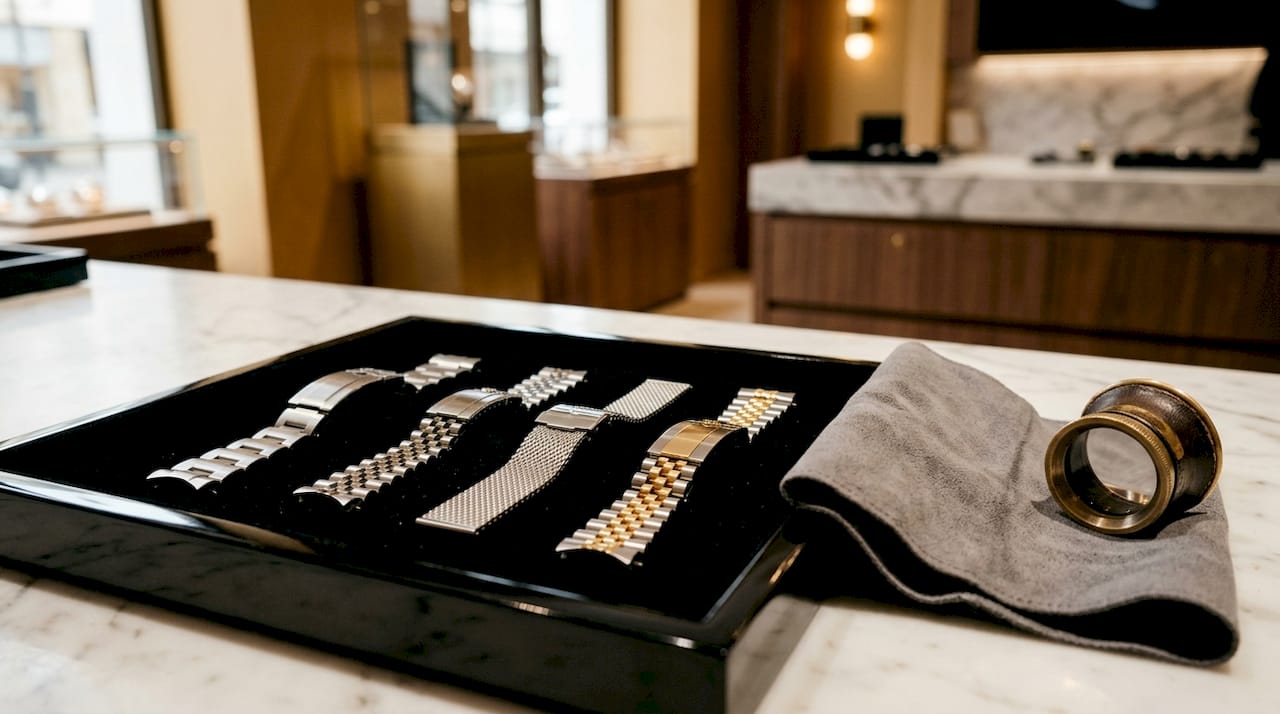
The bracelet-to-case integration is one of the most overlooked design indicators in watchmaking. A bracelet does not simply hold a watch on your wrist. It shapes the watch’s silhouette, its weight, and how it reads in a room. The most recognised styles in luxury horology are the Oyster, Jubilee, Milanese mesh, President, Beads-of-Rice, Integrated, H-link, Engineer, and Expansion. Each serves a different purpose and suits a different wearer.
2. The Oyster bracelet: robust and versatile
The Oyster bracelet is the most popular three-link design in watchmaking, known for its robustness and secure fit on sport and tool watches. Its construction uses three rows of links: two flat outer links flanking a wider, flat centre link. The result is a bracelet that sits firmly on the wrist without flexing excessively, which makes it the natural choice for dive watches and everyday sport watches.
The Oyster’s appeal lies in its balance. It is sturdy enough for active wear yet clean enough for a business setting. The flat link geometry gives it a classic, unfussy look that ages well across decades of design.
Pros and cons of the Oyster bracelet:
Pros: Extremely durable; suits sport and dress-casual occasions; widely available in solid-link construction; pairs well with both polished and brushed case finishes
Cons: Less fluid on the wrist than five-link designs; can feel heavy on smaller wrists; less formal than a Jubilee or President
Pro Tip: When buying a pre-owned watch with an Oyster bracelet, check whether the links are solid or folded. Solid links provide more weight and durability; folded links can feel rattle-prone and less robust over time.
3. The Jubilee bracelet: comfort and elegance combined
The Jubilee bracelet features a five-link design with smaller links that create a fluid, drapey feel on the wrist. The higher articulation density means the bracelet moves with your wrist rather than against it. That quality makes it noticeably more comfortable than a three-link Oyster over a full day of wear.
The Jubilee suits dress-sport and office watches particularly well. Its intricate link pattern catches light differently from every angle, giving it a jewellery-like quality that the Oyster does not attempt. If you wear a watch to meetings as often as you wear it at weekends, the Jubilee is the more versatile choice.
Key features and wearing occasions:
Key features: Five-link construction; higher articulation; elegant light play across links; available in steel, gold, and two-tone
Best for: Business attire; smart-casual; dress watches; watches with a polished bezel or dial
Pro Tip: The Jubilee’s smaller links make it more prone to stretch over years of wear. When sourcing a pre-owned example, ask about the bracelet’s service history. A well-maintained Jubilee should sit flush against the wrist with no visible sag between links.
4. Milanese mesh: breathable and infinitely adjustable
Milanese mesh bracelets use woven stainless steel wire to create a construction that is breathable, adjustable, and elegant in equal measure. The weave is fine enough to feel almost fabric-like against the skin, which makes it one of the most comfortable metal bracelet options available. A sliding clasp allows infinite size adjustment, so the fit is always exact regardless of wrist fluctuation through the day.
The Milanese mesh originated in 19th-century Milan and has remained a fixture of dress watch design ever since. It suits vintage-inspired pieces and minimalist modern watches equally well. The open weave also means it performs better in warm climates than solid-link bracelets, which can trap heat against the wrist.
Advantages and typical uses:
Advantages: Infinite adjustability; breathable construction; elegant drape; suits both vintage and contemporary designs
Typical uses: Dress watches; minimalist field watches; vintage reissues; watches with a slim case profile
Pro Tip: Milanese mesh is harder to clean than solid-link bracelets because debris collects in the weave. A soft toothbrush and warm soapy water, followed by a thorough rinse, keeps the mesh looking its best. Avoid ultrasonic cleaners, which can distort the fine wire.
5. Other notable styles every luxury watch lover should know
The styles below appear across the catalogues of the most respected names in Swiss watchmaking. Understanding them helps you read a watch’s character at a glance and make a more informed decision when buying or sourcing a piece.
Style | Construction | Best for | Key consideration |
President | Three semi-circular links | Formal and dress occasions | Associated with gold and high-end dress watches |
Beads-of-Rice | Small rounded centre links, flat outer links | Vintage-style watches | Requires extensive hand assembly |
Integrated | Flows directly from the case | Modern sport-luxury watches | Bespoke fit; costly to replace |
H-link | Rectangular links in an H-pattern | Clean, geometric dress watches | Strong visual structure |
Engineer | Heavy, industrial-style links | Tool and field watches | Prioritises durability over elegance |
Expansion | Accordion-style flexible links | Everyday wear; fluctuating wrist sizes | No clasp; slips on and off |
President
The President bracelet uses three semi-circular links to create a smooth, rounded profile on the wrist. It reads as unambiguously formal and is most commonly seen on gold dress watches. The link shape gives it a softer silhouette than the angular Oyster, which makes it better suited to a suit than to a wetsuit.
Beads-of-Rice
The Beads-of-Rice bracelet features many small rounded centre links flanked by flat outer ones, giving it exceptional suppleness and a close wrist hug. It is the bracelet choice for vintage-style watches precisely because it drapes rather than sits. The engineering complexity is significant. Each bracelet requires extensive hand assembly, which is why bracelet engineering complexity correlates directly with luxury status and premium pricing.
Integrated bracelets
Integrated bracelets flow directly from the case, creating a unified architectural look that no aftermarket bracelet can replicate. The trade-off is significant. Because the bracelet is bespoke to the case, repairs and replacements are costly and often require going back to the manufacturer. If you are buying a watch with an integrated bracelet on the secondary market, factor in the cost of a full bracelet service.
H-link and Engineer
The H-link bracelet uses rectangular links arranged in an H-pattern, producing a clean geometric look that suits dress watches with angular case designs. The Engineer bracelet takes the opposite approach, using heavy industrial-style links that prioritise durability and a bold visual presence. Both styles are less common than the Oyster or Jubilee, which makes them a point of distinction for collectors who want something less expected.
Expansion bracelets
Expansion bracelets use an accordion-style flexible construction with no traditional clasp. They slip on and off the wrist without adjustment, which makes them practical for wearers whose wrist size fluctuates. The trade-off is that they offer less precise fit than a deployant or butterfly clasp, and the flexible links can stretch permanently over time.
Key takeaways
The bracelet you choose defines a luxury watch’s character as much as its dial or movement.
Point | Details |
Bracelet vs strap | Metal bracelets prioritise durability and formal appeal; straps prioritise comfort and flexibility. |
Oyster for sport | The three-link Oyster suits active and everyday wear with a secure, stable fit. |
Jubilee for comfort | The five-link Jubilee offers superior wrist comfort and a more formal, jewellery-like appearance. |
Milanese for adjustability | Woven mesh provides infinite fit adjustment and breathability, ideal for dress and vintage watches. |
Solid links matter | Solid-link construction outperforms folded links in durability, weight, and long-term feel. |
Why bracelet choice matters more than most collectors realise
Most collectors spend hours debating a watch’s movement or dial colour and then accept whatever bracelet comes on the case without a second thought. That is a mistake. The bracelet accounts for a large proportion of the watch’s total weight, its comfort over a full day, and the way it reads against a shirt cuff.
The detail that changed my thinking was clasp engineering. Clasp systems like Rolex’s Glide-lock mechanism provide micro-adjustment that aftermarket bracelets simply cannot replicate. That level of precision is not marketing. It is the difference between a bracelet that fits correctly at 9AM and still fits correctly after a long lunch. Aftermarket pieces may mimic the look, but the feel gives them away immediately.
The other point collectors underestimate is the bracelet-to-case junction. On a well-made watch, the bracelet flows from the lugs as if it were always meant to be there. On a poorly matched piece, there is a visible gap or a misaligned taper. That junction is where you see the real quality of the watchmaker’s thinking. When I am assessing a pre-owned watch at Horology-kings, the bracelet condition and fit at the lugs tells me as much about the watch’s history as the dial or the movement.
My practical advice: prioritise solid links over folded ones, check the clasp for play and rattle, and consider whether the bracelet suits your climate. A heavy solid-link Oyster is less comfortable in a warm British summer than a Milanese mesh. Matching the bracelet to your lifestyle is as important as matching it to the watch’s design. You can read more about how bracelet quality connects to overall luxury watch value if you want to go deeper on that point.
— Lewis
Horology-kings: finding the right watch and bracelet for you
Choosing the right bracelet style is only half the decision. Finding a watch in the right condition, with the right bracelet, at the right price, is where most buyers need genuine expertise.

Horology-kings is a specialist luxury watch dealer based in Hertfordshire, working with collectors and enthusiasts across the UK to source, buy, and sell pre-owned luxury timepieces from Rolex, Patek Philippe, Audemars Piguet, Omega, and Cartier. If you have a specific reference in mind, the watch sourcing service connects you with an expert network to find it. For watches already in your collection, the repair and servicing team handles bracelet restoration, link adjustment, and full movement servicing with the care these pieces deserve.
FAQ
What is the difference between a watch bracelet and a strap?
A watch bracelet is made from metal links and prioritises durability and formal appeal. A strap uses non-metal materials such as leather, rubber, or nylon, and is optimised for comfort and flexibility.
Which watch bracelet type is the most comfortable?
The Jubilee and Milanese mesh are widely regarded as the most comfortable metal bracelet styles. The Jubilee’s five-link construction moves fluidly with the wrist, while the Milanese mesh offers infinite adjustability and a breathable, fabric-like feel.
Are solid-link bracelets better than folded-link bracelets?
Solid links provide more weight, durability, and a more substantial feel than folded links. Folded links can feel rattle-prone and are less robust over time, which makes solid-link construction the preferred choice for long-term wear.
What is an integrated bracelet and why does it cost more to repair?
An integrated bracelet flows directly from the watch case and is engineered specifically for that model. Because it is bespoke, repairs and replacements are costly and often require going back to the original manufacturer.
How do I choose the right bracelet style for my watch?
Match the bracelet to the watch’s intended use and your lifestyle. Sport and tool watches suit the Oyster; dress and office watches suit the Jubilee or President; vintage and minimalist pieces suit Milanese mesh. Consider your climate and wrist shape, and always check clasp quality before buying.
Recommended
Comments