.png)
Haute horlogerie: The pinnacle of luxury watchmaking
TL;DR:
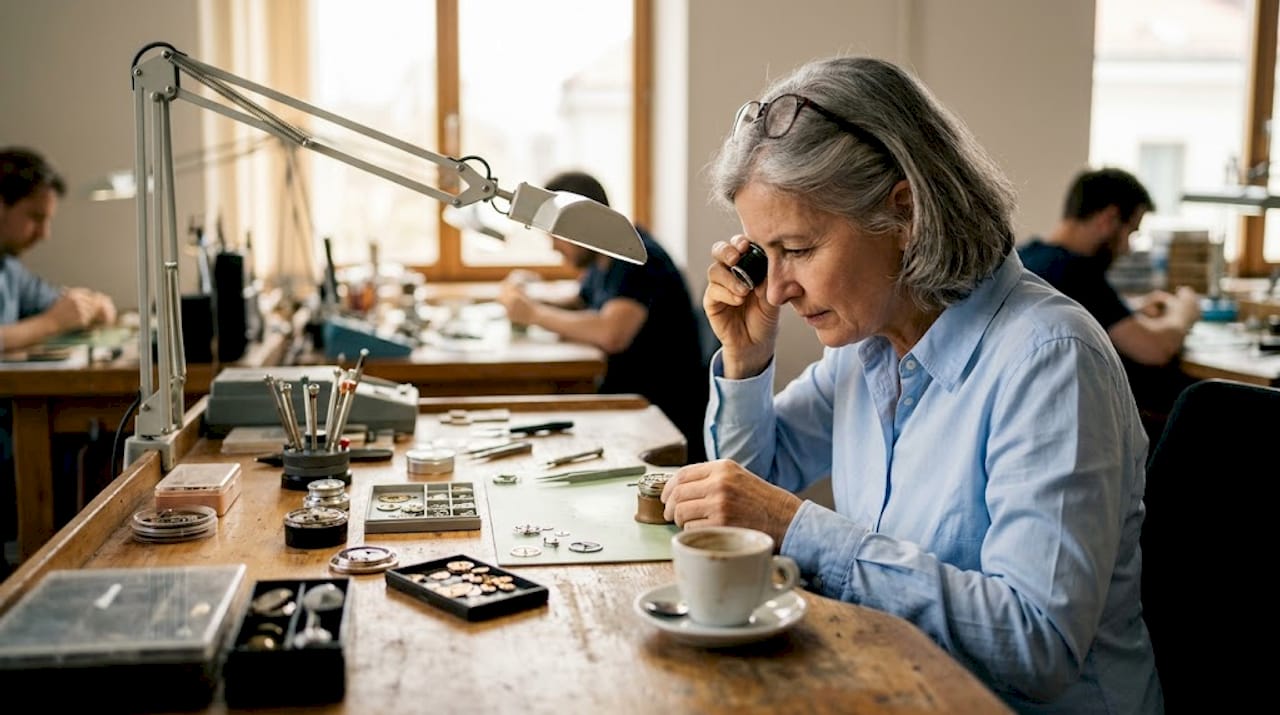
Haute horlogerie represents the highest level of mechanical complexity and hand-finishing in watchmaking.
Key complications like tourbillons, perpetual calendars, and minute repeaters demonstrate technical mastery.
Rarity, provenance, and authenticity are critical factors influencing long-term value for collectors.
Not every luxury watch is created equal. Somewhere between the polished bezel of a well-regarded dress watch and the rarefied atmosphere of a Patek Philippe grand complication lies a chasm so vast it demands its own vocabulary. Haute horlogerie, literally “high watchmaking,” represents the summit of what human skill, patience, and mechanical ingenuity can produce. These are not simply expensive watches. They are portable sculptures housing feats of engineering that can take a single master craftsman thousands of hours to complete. This guide will take you through the definition, the craft, the key complications, and the investment logic that makes haute horlogerie the obsession of the world’s most discerning collectors.
Table of Contents
Key Takeaways
Point | Details |
Mastery beyond luxury | Haute horlogerie represents unmatched craftsmanship, hand-finishing, and technical innovation well above typical luxury watches. |
Complications define value | Watches featuring advanced complications like tourbillons and minute repeaters are the hallmarks of haute horlogerie. |
Rarity and provenance | Pieces with unique history, limited production runs, and verifiable provenance hold stronger long-term investment potential. |
Artistry and craftsmanship | Traditional techniques such as engraving and guilloché elevate watches to works of art within this rarefied domain. |
Expert evaluation required | True collectors consider more than hype or branding—technical quality and documented history are crucial. |
Defining haute horlogerie: More than luxury
The term haute horlogerie carries significant weight, yet it is frequently misappropriated by marketing departments eager to attach prestige to mid-tier products. In its truest sense, haute horlogerie refers to timepieces that push the absolute boundaries of mechanical watchmaking, combining exceptional technical complexity with hand-crafted finishing of the highest order. Think of it as the equivalent of couture in fashion, where every stitch is placed by hand and every proportion is considered with obsessive care.
The origins of this tradition trace back to eighteenth-century Geneva and the Swiss Vallée de Joux, where independent masters competed to create the most technically sophisticated pocket watches imaginable. Patrons from European royal courts demanded not just accurate timekeeping, but demonstrations of intellectual and artistic prowess. That culture of one-upmanship never left. It simply migrated from pocket watches into wristwatches across the twentieth century.
So what exactly qualifies a watch as haute horlogerie? Several criteria are widely accepted within the industry:
Exceptional mechanical complexity: Key complications such as tourbillons, perpetual calendars, minute repeaters, and chronographs, often involving hundreds of parts assembled with precision to demonstrate mastery.
Hand-finishing throughout: Every component, including those the wearer will never see, must show evidence of hand-applied finishing. Anglage, bevelling, and polishing are expected as standard.
Rarity: Production numbers are strictly limited, not for commercial strategy, but because the human time required means production cannot be scaled.
In-house manufacturing: Credible maisons produce their own movements rather than sourcing ébauches (unfinished movement blanks) from third parties.
Provenance and heritage: The brand must have a demonstrable history of technical innovation, not simply a recently acquired luxury identity.
The crucial distinction to understand here is the difference between “mass-luxury” and genuine haute horlogerie. A Rolex Datejust is a superbly engineered, beautifully finished watch. But it is produced in significant volume with consistent, machine-assisted processes. Haute horlogerie operates in an entirely different register. To build a solid understanding of the luxury watch foundations that precede this level, it helps to first appreciate the broader craft before narrowing your focus to the summit.
Craftsmanship and artistry: What makes a masterpiece
If complications represent the intellect of haute horlogerie, the métiers d’art represent its soul. These are the decorative crafts, historically practised by independent artisans, that transform a movement into a work of art. The most celebrated include engraving, grand feu enamelling, guilloché, and gem-setting, each requiring years of dedicated apprenticeship before a craftsperson reaches competency.
Grand feu enamelling involves applying powdered glass to a metal surface and firing it in a kiln at temperatures exceeding 800 degrees Celsius. The process is repeated multiple times to build depth, and a single crack or bubble at the final stage means starting from scratch. Guilloché, by contrast, involves engraving intricate geometric patterns onto a metal surface using a rose engine lathe, a machine so delicate that its operation is closer to playing a musical instrument than operating industrial equipment.
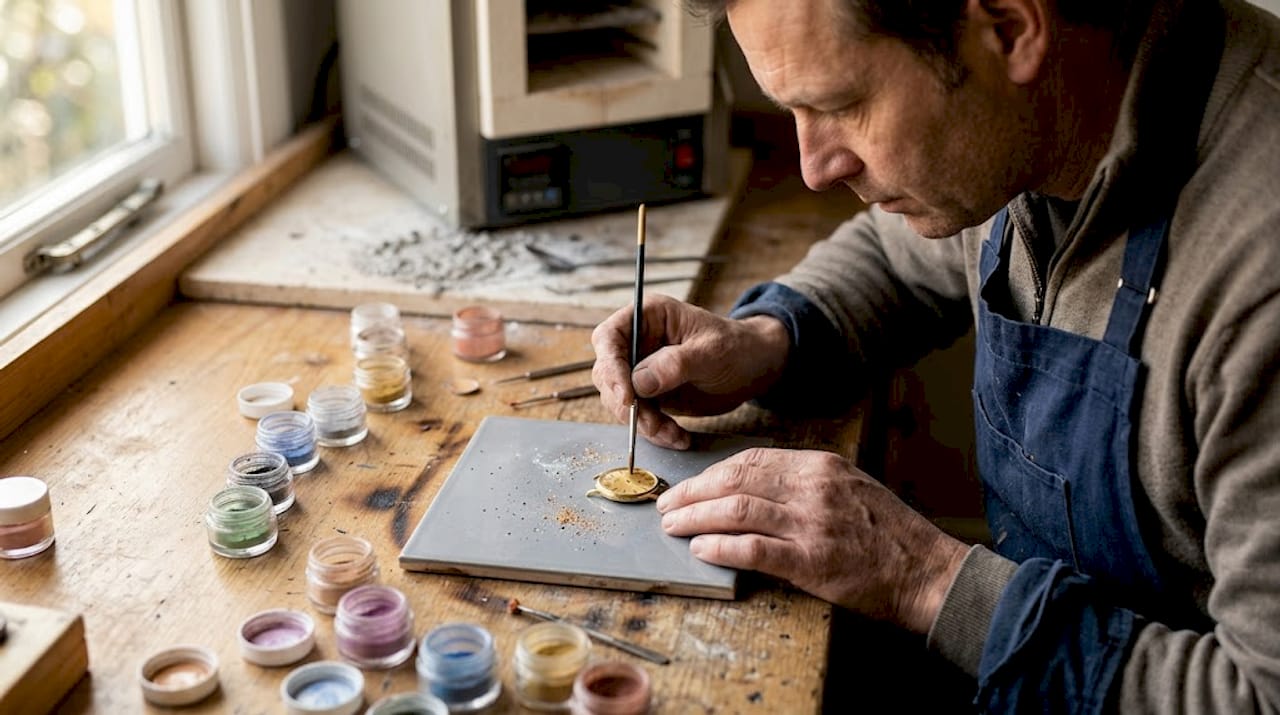
Hundreds of parts assembled with precision showcase the mastery over both mechanics and finishing, and the two disciplines must complement each other. A movement that performs brilliantly but looks rough under a loupe is not haute horlogerie. The standards are holistic.
Brands like Cartier have long understood that watchmaking and jewellery craftsmanship are inseparable at this level. Their approach to Cartier innovations since 1904 demonstrates how design philosophy and technical execution can evolve together without sacrificing either.
Here is a quick reference for the key métiers d’art techniques:
Technique | Material | Skill level | Time investment |
Grand feu enamelling | Powdered glass on gold | Master level | Weeks per dial |
Guilloché | Metal (gold or silver) | Highly specialised | Days per component |
Hand engraving | Metal or gemstone | Master level | Days to weeks |
Gem-setting | Precious stones | Advanced specialist | Hours to days |
Visual indicators of genuine hand-craftsmanship include the following:
Crisp, precise anglage: Bevelled edges on bridges and plates should be perfectly symmetrical and polished to a mirror finish.
Côtes de Genève striping: Parallel decorative lines on movement plates, applied by hand and checked under magnification.
Perlage: Circular graining on hidden surfaces, applied purely for aesthetic tradition even where no eye will fall.
Pro Tip: When examining a piece described as haute horlogerie, ask to view the movement through the caseback with a loupe. If the finishing is inconsistent, scratched, or obviously machine-applied, the watch does not qualify regardless of the price tag.
The complexities of haute horlogerie: Watchmaking’s ultimate challenges
In watchmaking, a “complication” refers to any function beyond simple timekeeping. A date window is technically a complication. But the complications that define haute horlogerie are of an entirely different magnitude of difficulty.
Here are the four most significant, ranked by technical challenge:
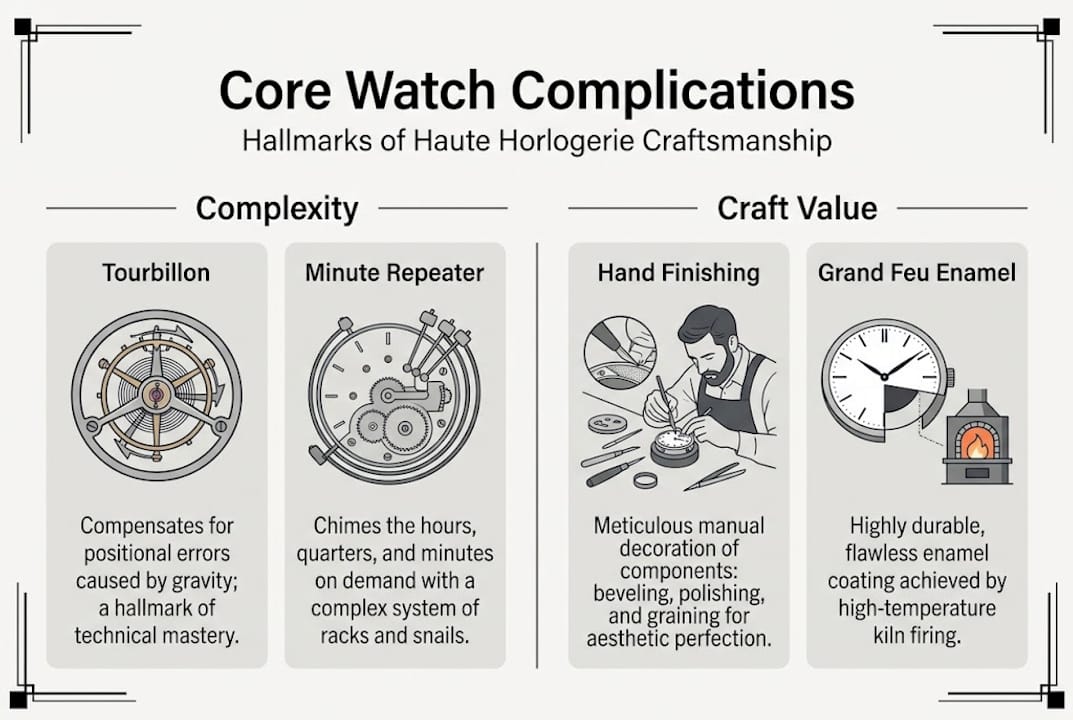
Minute repeater: A mechanism that chimes the time on demand using tiny hammers and gongs. Assembling and regulating the acoustic properties alone can take months.
Tourbillon: A rotating cage that holds the escapement and balance wheel, rotating continuously to cancel gravitational error. Originally patented by Abraham-Louis Breguet in 1801, it remains a demonstration of supreme mechanical skill.
Perpetual calendar: A mechanism that tracks the varying lengths of months, including leap years, without manual correction. A well-made perpetual calendar requires resetting only once every 100 years.
Chronograph: A stopwatch function integrated into the movement. At haute horlogerie level, this becomes a split-seconds chronograph (rattrapante), capable of timing two simultaneous events independently.
Tourbillons, perpetual calendars, minute repeaters, and chronographs are core complications that require mastery and precision, and understanding them deeply separates the serious collector from the casual admirer.
Complication | Technical difficulty | Production rarity | Impact on value |
Minute repeater | Extreme | Very high | Significant |
Tourbillon | Very high | High | Significant |
Perpetual calendar | High | Moderate | Moderate to high |
Chronograph | Moderate to high | Moderate | Moderate |
Understanding what defines a collector’s timepiece guide will sharpen your ability to distinguish genuine complexity from decorative complexity. Similarly, the logic behind understanding limited editions is closely tied to how complications affect rarity. For those drawn to the broader case for mechanical watch value, complications sit at the very core of that argument.
A notable figure: A grand complication wristwatch can contain over 600 individual components, some measuring less than 0.1 millimetres in diameter. Assembling them is not manufacturing. It is surgery.
Value, rarity, and investment: Why collectors choose haute horlogerie
The investment case for haute horlogerie is compelling, but it requires a more nuanced understanding than simply buying the most expensive watch available. Serious collectors focus on a specific combination of attributes that reliably drive long-term appreciation.
For investors and collectors, value derives from rarity, provenance, and technical innovation. Early production runs and hand-finishing consistency signal long-term appreciation over mass-luxury alternatives. A watch from a brand’s early production of a specific reference, with original paperwork and an unpolished case, will outperform a later example almost universally at auction.
The attributes most closely watched by seasoned collectors include:
Brand heritage: A maison with a demonstrable history of independent movement manufacture commands a premium that newer entrants simply cannot replicate.
Early reference numbers: Within any given model line, earlier production examples carry greater collector significance.
Unpolished cases: Case polishing removes metal and erases the sharpness of original anglage. An unpolished example is significantly more desirable.
Complete set: Box, papers, service records, and original accessories. These items, collectively known as “full set,” can represent 20 to 30 per cent of a watch’s auction value.
Unusual dials: Exotic or transitional dials produced in limited numbers during a specific production period are among the most aggressively contested lots at auction.
“The pieces that consistently outperform are those where the technical achievement is inseparable from the artistic one. When you can’t tell where the engineering ends and the art begins, you have something truly rare.”
Pro Tip: Before acquiring any haute horlogerie piece as an investment, research its specific reference history. Know the production period, dial variations, and movement versions. The signs of true value in a watch are rarely visible at first glance.
The modern collector’s perspective: What truly matters in haute horlogerie
Over the years we have observed a consistent pattern among collectors who later regret their early purchases: they were seduced by narrative rather than substance. A limited-edition release with a compelling story and celebrity association will generate short-term excitement, but without genuine technical pedigree, it rarely sustains value. The market corrects these pieces quickly.
What serious collectors increasingly prioritise is the intersection of provenance and technical honesty. A watch that does what it claims, is finished as well as it appears under magnification, and comes from a brand with an unbroken thread of independent manufacture, is the watch worth holding for a decade or more.
The uncomfortable truth is that haute horlogerie collecting rewards patience and knowledge far more than budget alone. We see this repeatedly. Collectors who invest time in understanding movement architecture, finishing standards, and reference history before spending money consistently build stronger collections than those who simply follow what is fashionable. Our collecting tips blog exists precisely to help you build that foundation of knowledge before you commit.
Source and invest in haute horlogerie with confidence
Knowledge is only valuable when it connects to action. If this guide has sharpened your appreciation for what separates a truly exceptional timepiece from an expensive one, the next step is finding pieces that meet those standards in today’s market.

At Horology Kings, we specialise in sourcing, authenticating, and presenting haute horlogerie pieces that meet the criteria serious collectors demand. Whether you are looking to source a watch from a specific reference or require expert guidance on what to look for, our team brings the knowledge and network to match. We also offer comprehensive watch repair and servicing to ensure your timepiece retains its integrity and value long after acquisition. Every transaction is handled with the discretion and professionalism your investment deserves.
Frequently asked questions
What qualifies a watch as haute horlogerie?
A watch must demonstrate expert hand-finishing, high complication, rarity, and consistent technical innovation to be considered haute horlogerie. As confirmed by the Fondation de la Haute Horlogerie, key complications assembled with precision are fundamental to this classification.
Which complications are most highly prized in haute horlogerie?
Tourbillons, perpetual calendars, minute repeaters, and split-seconds chronographs are especially prized for their technical and artistic complexity. These complications represent mastery that cannot be replicated through automation.
How does haute horlogerie compare to regular luxury watches in terms of investment?
Haute horlogerie watches tend to deliver stronger long-term appreciation due to rarity, provenance, and consistent hand-finishing, unlike mass-luxury pieces. Rarity, provenance, and technical innovation consistently drive superior returns at auction.
What role does provenance play in haute horlogerie value?
Provenance significantly boosts a watch’s value by verifying its authenticity and history, making it far more attractive to serious collectors and investors. Value derives from provenance alongside technical innovation and genuine rarity.
Recommended
Comments