.png)

How to sell vintage watches safely: A collector's guide
- lewisvrichards3
- Apr 18
- 8 min read
TL;DR:
Accurate valuation, original parts, and provenance are crucial for maximizing vintage watch sale value.
Selecting the appropriate sales channel depends on rarity, timeline, and desired involvement.
Insured handling and a secure, confidential process are essential for safe transaction completion.
Selling a vintage Rolex or Patek Philippe is not simply a matter of posting an advert and waiting for offers. The stakes are real. A single misstep, whether accepting an unverified payment, skipping insured transport, or presenting a watch without proper documentation, can cost you thousands of pounds and leave you with no legal recourse. Equally, rushing the process often means accepting far less than your timepiece is worth. This guide walks you through every stage of a secure, value-maximising sale: from accurate valuation and documentation, through choosing the right sales channel, to completing a legally sound transfer of ownership.
Table of Contents
Key Takeaways
Point | Details |
Preparation is crucial | Careful documentation and assessment dramatically impact resale value and buyer confidence. |
Choose the right sales channel | Evaluate pros and cons of consignment, auction, and direct sale to align with your goals. |
Protect your asset | Insured handling and privacy safeguards are essential for high-value transactions. |
Timing affects returns | Market demand and auction cycles can raise or lower sale price, so monitoring trends is key. |
Trusted platforms matter | Expert platforms facilitate secure transactions, market exposure, and informed negotiation. |
Assessing value and preparing your vintage watch
Once you understand the risks, the first step is to accurately value and prepare your vintage watch for sale. This stage is where most collectors either gain or lose significant ground, and the decisions you make here will shape every subsequent step.
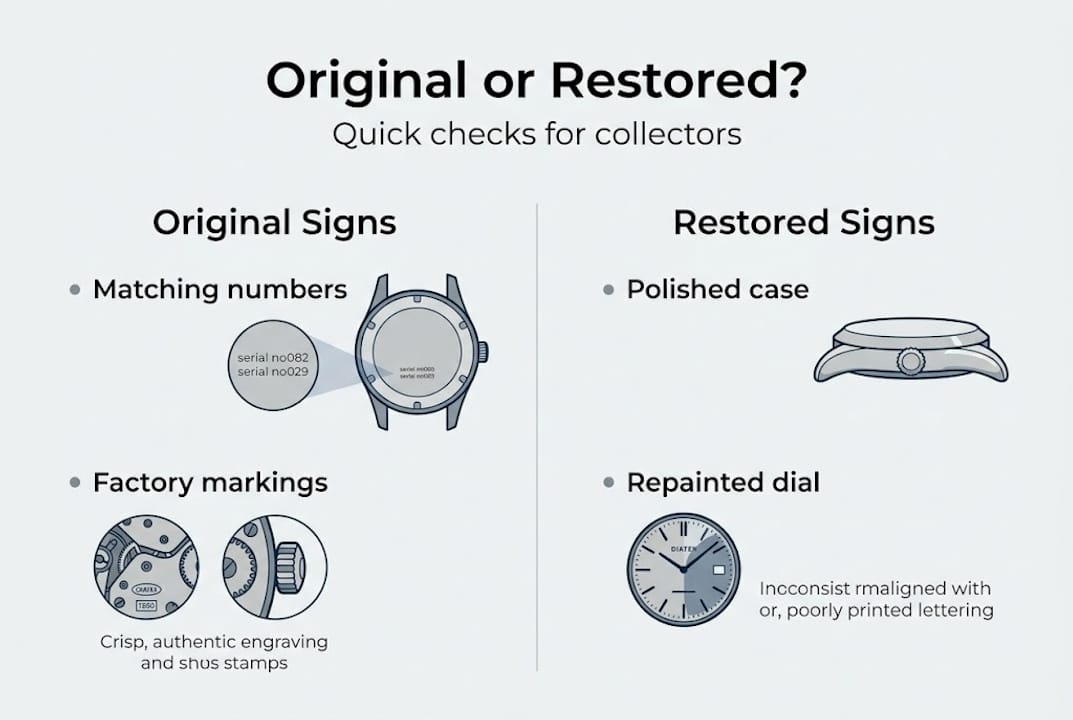
The first thing to examine is originality. A vintage watch commands its highest price when it retains factory-original components: the dial, hands, crown, and case back. Replacement parts, even high-quality ones, reduce collector appeal and resale value. Consult a collector timepiece value guide to understand exactly which components matter most for your specific reference.
One of the most counterintuitive truths in vintage horology is that patina is an asset, not a flaw. Natural ageing on a dial, whether tropical browning on a Rolex or gilt fading on a Patek Philippe, signals authenticity to experienced buyers. As expert negotiation guidance confirms, over-polishing destroys value, while provenance or celebrity ownership can boost a watch’s price by 20 to 50 per cent. Resist the temptation to send your watch for a full polish before sale.
Provenance is equally powerful. A thorough guide to provenance will show you how to document your watch’s history in a way that resonates with serious buyers. This includes:
Original purchase receipts and retailer documentation
Service records from authorised dealers or marque specialists
Certificates of authenticity and warranty cards
Photographs showing the watch at key points in its history
Letters or records linking the piece to a notable previous owner
Use a reliable watch valuation guide to benchmark your piece against recent auction results. Market demand fluctuates considerably, and a reference that fetched record prices eighteen months ago may have softened since. Check current hammer prices at Christie’s, Phillips, and Sotheby’s to understand where your watch sits today.
Condition factor | Impact on value |
Original dial and hands | Strongly positive |
Natural patina (untouched) | Positive |
Full provenance documentation | Positive (up to 50% uplift) |
Over-polished case | Negative |
Replaced components | Moderately negative |
Missing paperwork | Negative |
Pro Tip: Never clean or polish a vintage watch before sale without consulting a specialist. What looks like tarnish to you may look like authenticity to a collector willing to pay a premium.
Choosing the right sales channel: Auction, direct, or consignment
With your watch assessed and documentation ready, consider which sales channel aligns with your needs and priorities. Each route carries distinct advantages, timelines, and costs, and the right choice depends on your watch’s rarity, your financial timeline, and how much hands-on involvement you want.

Auction houses such as Phillips or Christie’s are well suited to exceptional, rare, or historically significant pieces. They bring global exposure and competitive bidding, which can drive prices beyond expectations for the right watch. However, seller’s commissions typically range from 10 to 15 per cent, and you are bound by the auction calendar, which may mean waiting several months for the right sale.
Direct sale to a dealer or private buyer offers speed and simplicity. You receive an immediate offer, there is no waiting, and the transaction can complete within days. The trade-off is that direct offers tend to reflect wholesale rather than retail value. A specialist watch dealer guide can help you identify reputable dealers who offer fair, transparent pricing rather than opportunistic lowball figures.
Consignment sits between these two options. As consignment versus direct purchase analysis confirms, consignment through a trusted dealer or platform allows higher returns by marketing your watch directly to collectors, with seller commissions typically around 10 per cent, insured handling throughout, and a longer but more rewarding timeline. It is the preferred route for watches with strong provenance or significant collector appeal.
Understanding auctions for luxury watches in depth will help you decide whether the auction route suits your specific reference and timeline.
Sales channel | Typical commission | Timeline | Best suited for |
Auction house | 10 to 15% | 3 to 6 months | Rare, historically significant pieces |
Dealer consignment | Around 10% | Weeks to months | Collector-grade watches with provenance |
Direct dealer sale | None (lower offer) | Days | Quick liquidity needs |
Private sale | None | Variable | Well-connected sellers only |
Research recent comparable sales before accepting any offer
Request itemised commission breakdowns from any platform
Confirm whether the platform provides insured storage during the sale period
Understand whether you retain the right to set a reserve price
Pro Tip: Consignment may yield a higher final price than a direct sale, but patience is essential. If you need funds quickly, a direct sale to a reputable dealer is the more practical choice.
Preparing for a secure transaction: Insured handling and privacy
After choosing your sales channel, ensuring a secure and confidential transaction is vital. Luxury watches are high-value, portable assets, which makes them attractive targets for fraud and theft. A structured approach to security protects both your financial interests and your personal privacy.
Insured shipping is non-negotiable. Whether you are sending a watch to a dealer for assessment or consigning it to an auction house, it must travel under full insurance cover for its assessed replacement value. Specialist carriers such as Malca-Amit or Brinks are experienced in handling high-value timepieces. Standard postal services, even tracked and signed options, are wholly inadequate for watches worth tens of thousands of pounds.
“Insured handling is not optional for high-value vintage watches. It is the baseline standard for any legitimate sale platform or dealer.”
Privacy matters as much as physical security. Reputable platforms and dealers will never disclose your identity or the details of your sale to third parties. A secure discreet sale process ensures your transaction remains confidential from valuation through to completion. If you want to understand how to protect privacy in watch sales at every stage, specialist guidance is available.
Know the red flags. Fraudulent buyers are sophisticated and often target sellers who are new to the market. Common scams include:
Overpayment cheques that bounce after the watch has been shipped
Fake escrow services that appear legitimate but release funds to the scammer
Requests to bypass a platform’s standard payment process
Pressure to ship immediately before payment has cleared
Unverified bank transfers that are reversed after receipt of the watch
A safely buy and sell guide covers these risks in detail. For sellers using a dealer, review their selling luxury watches safely best practice guidance before proceeding. As consignment platforms confirm, insured handling is a standard feature of legitimate consignment arrangements, and its absence should be treated as a serious warning sign.
Completing the sale and verifying transfer of ownership
Once the transaction is underway, take these essential steps to verify payment and complete transfer. This final phase is where many sellers become complacent, assuming the hard work is done. It is not.
Confirm cleared funds before releasing the watch. A bank transfer confirmation email is not proof of cleared funds. Wait for your bank to confirm that funds have settled in your account, typically one to two working days for UK transfers.
Request a formal receipt from the buyer or platform. This should include the watch’s reference number, serial number, agreed sale price, and the date of transfer.
Complete a bill of sale. This document records the legal transfer of ownership and protects both parties. Include full descriptions of the watch, its condition, and any accessories included in the sale.
Transfer all original documentation to the buyer. Certificates, service records, and warranty cards should be handed over at the point of sale. Retain photocopies for your own records.
Notify your insurer. Once the watch has left your possession, update your contents or specialist watch insurance policy accordingly.
Reviewing successful sale preparation guidance before you reach this stage will help you anticipate each requirement. Market conditions also influence timing, and as expert negotiation advice notes, demand fluctuates, so tracking recent auction results right up to the point of sale ensures your agreed price remains competitive.
Pro Tip: Keep a complete digital record of every document, photograph, and communication related to the sale. Should a dispute arise later, this archive is your most valuable asset.
A collector’s insight: What experts wish you knew
Beyond the mechanics of selling, there are deeper lessons from those who have navigated the vintage watch market for decades. The first is that most collectors systematically underestimate the commercial value of natural patina. A tropical dial on a vintage Rolex Daytona or a faded gilt chapter ring on a Patek Calatrava is not a cosmetic defect. It is a fingerprint of authenticity that serious buyers actively seek. As expert guidance on negotiation makes clear, over-polishing destroys value, while genuine provenance or celebrity ownership can elevate a price by 20 to 50 per cent.
The second lesson concerns timing. The vintage watch market moves in cycles tied to market trends and auctions. Selling immediately after a landmark auction result for your reference is almost always more profitable than selling in a quiet period. Patience, when you can afford it, is a genuine competitive advantage.
Finally, the importance of provenance cannot be overstated. A watch with a compelling, documented history is a different product to one without. Invest time in building that narrative before you approach any buyer.
Pro Tip: Resist the urge to over-restore. Buyers at the top of the market prize authenticity above cosmetic perfection every time.
Connect with trusted vintage watch experts
If you’re ready to take the next step, having the right partner makes all the difference between a stressful sale and a seamless one.
At Horology Kings, we offer a fully guided process from initial valuation through to secure, discreet completion, with UK bank transfers and expert handling at every stage. Whether you want to source a vintage watch for your collection, arrange watch servicing and repairs before a sale, or simply explore your options with a trusted specialist, our team in Hertfordshire is here to help. Reach out today for a confidential, no-obligation conversation about your timepiece.
Frequently asked questions
How can I tell if my vintage watch is original or restored?
Check for matching serial numbers, factory markings, and examine the dial for natural ageing. As expert guidance confirms, natural patina signals authenticity, while excessive polishing is a strong indicator of restoration.
What documentation should I prepare before selling my vintage watch?
Gather certificates, receipts, service records, and provenance details before approaching any buyer or platform. Documenting your watch’s history thoroughly supports authenticity claims and maximises resale value.
Is insured shipping always necessary when selling a vintage watch?
Yes, without exception. Consignment platforms include insured handling as standard, and any arrangement that does not offer this protection should be treated with serious caution.
How quickly can I sell my vintage watch through a dealer or auction?
Dealer consignment typically takes weeks to months as the watch is marketed to the right buyers. Consignment timelines are longer than direct sales, but the financial return is generally superior for collector-grade pieces.
Recommended
Comments