.png)

How to verify buyer identity for high-value deals
- lewisvrichards3
- Jun 4
- 8 min read

TL;DR:
Buyer identity verification employs layered techniques, including document authentication, biometric face matching, and database cross-referencing, to prevent fraud. Employing multiple signals ensures a defensible position against synthetic identities, deepfakes, and forgery, especially in high-value transactions. Compliance requires maintaining audit trails and using tools suited for international clients, emphasizing the importance of thorough, consistent verification processes.
Buyer identity verification is the process of confirming that a buyer is genuinely who they claim to be, using multiple overlapping techniques rather than a single document check. For anyone completing a high-value transaction, whether selling a Rolex, a property, or a business asset, this process is the first line of defence against fraud. Modern threats such as synthetic identities and AI-generated deepfakes have made simple photo-and-passport checks obsolete. Regulatory frameworks including FATF Recommendation 10 and GOV.UK guidance now require a structured, risk-based approach. This guide explains exactly how to do it, step by step.
How to verify buyer identity: what you need before you start
Before any verification can take place, you need the right tools and documents in place. Skipping this preparation stage is the most common reason verification fails or produces inconclusive results.
Acceptable identity documents form the foundation of any buyer ID validation process. The most reliable are:
Passport (any nationality, machine-readable preferred)
UK or EU driver’s licence (photo card only)
National identity card (EU/EEA issued)
Biometric residence permit
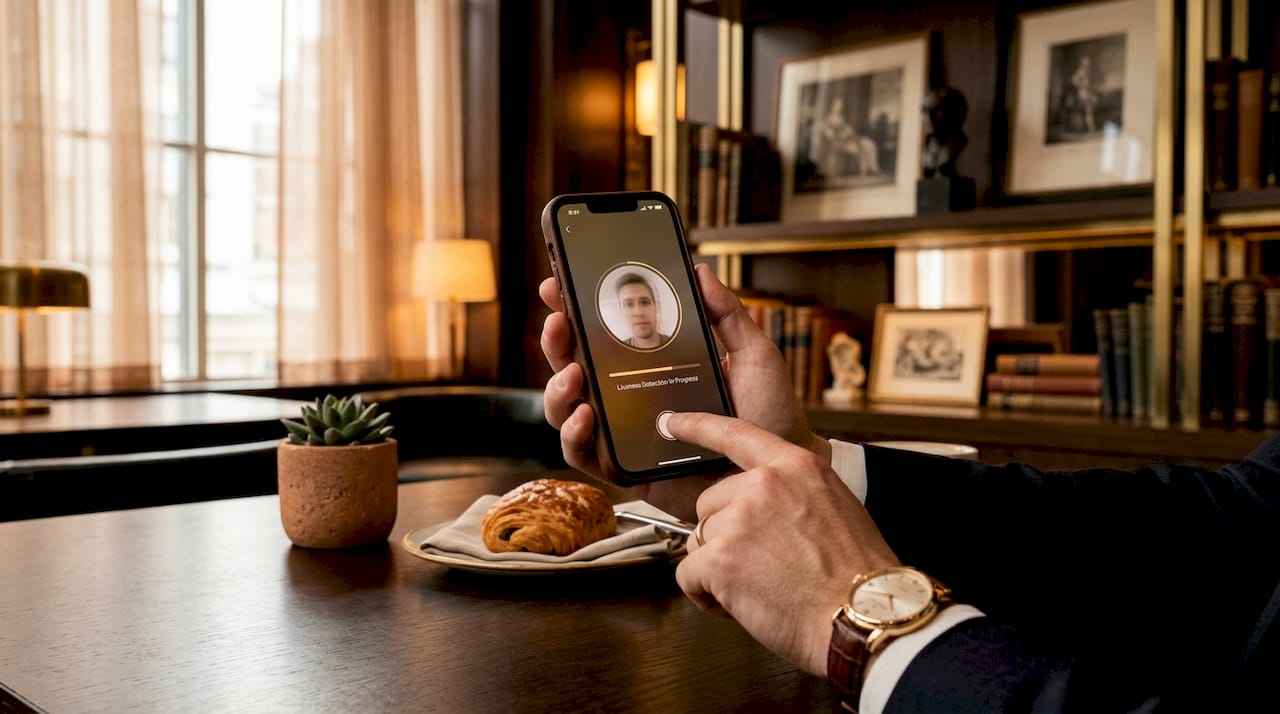
Beyond documents, you need a method of capturing biometric data. This typically means a selfie or short video taken in real time, combined with liveness detection software that confirms the person is physically present rather than holding up a printed photo. Tools such as Onfido, Jumio, and Veriff all offer this capability as part of their identity verification platforms.
You also need access to reliable data sources for cross-referencing. These include credit bureau records, Companies House for business buyers, the Electoral Roll, and sanctions or watchlist databases such as those maintained by HM Treasury and the Office of Financial Sanctions Implementation (OFSI). Third-party ID verification providers combine document checks, biometric matching, and database cross-referencing into a single workflow, which reduces both time and error.
Compliance considerations shape which tools you choose. If you operate in a regulated sector, your chosen platform must produce an auditable evidence trail. Vendor selection must prioritise suppliers with layered controls and the capability to supply traceable, evidence-backed verification records that meet regulatory scrutiny.
Pro Tip: Before selecting a verification platform, confirm it supports the document types most common among your buyers. A platform optimised for UK passports may struggle with international IDs, which matters if you deal with overseas clients.
How do you verify buyer identity step by step?
A layered verification approach combining document authenticity checks, biometric face matching, and liveness detection gives the highest confidence that a buyer is genuine and significantly reduces fraud risk. Here is how to execute it in practice.
Capture and authenticate a government-issued ID. Ask the buyer to photograph or scan their document. The system or reviewer checks for security features: holograms, microprint, UV-reactive ink, and machine-readable zone (MRZ) data. Automated platforms parse the MRZ instantly and flag inconsistencies such as mismatched dates or altered fonts. Manual checks are slower and less reliable, but remain valid for lower-risk transactions.
Perform biometric face matching. The buyer submits a selfie or short video. The system compares facial geometry from the selfie against the photo on the submitted ID. AI-driven matching tools measure dozens of facial landmarks and produce a confidence score. A score below the threshold triggers a manual review rather than an automatic rejection.
Conduct liveness detection. This step is where most fraud attempts fail. Liveness detection systems confirm the physical presence of a real person, resisting deepfake, mask, and replay attacks. Active detection prompts the user to blink, turn their head, or follow a moving dot. Behavioural biometrics, such as the natural micro-movements of a hand holding a phone, add a further layer of spoof prevention.
Cross-reference buyer data against trusted watchlists and databases. Run the buyer’s name, date of birth, and address against PEP (Politically Exposed Persons) lists, sanctions databases, and adverse media sources. For high-value transactions, also check source-of-funds documentation. Identity verification in real estate already requires this for all parties, including unrepresented buyers, and the same principle applies to luxury goods and private sales.
Perform cross-consistency checks. Compare data across all collected signals: the name on the ID, the address from the credit bureau, the email domain, and the phone number. Effective verification programmes perform cross-consistency checks across documents, biometrics, contact information, and records to reduce the risk of synthetic or mismatched identities. A buyer whose phone number is registered in a different country from their stated address warrants a closer look.
Pro Tip: Never treat a single passed step as sufficient. A fraudster can obtain a genuine passport fraudulently. It is the combination of document, biometric, and database signals that makes the verification defensible.
What buyer identity verification methods exist, and how do they compare?
Different identity verification for buyers methods suit different risk profiles. Understanding the trade-offs helps you choose the right approach for each transaction.
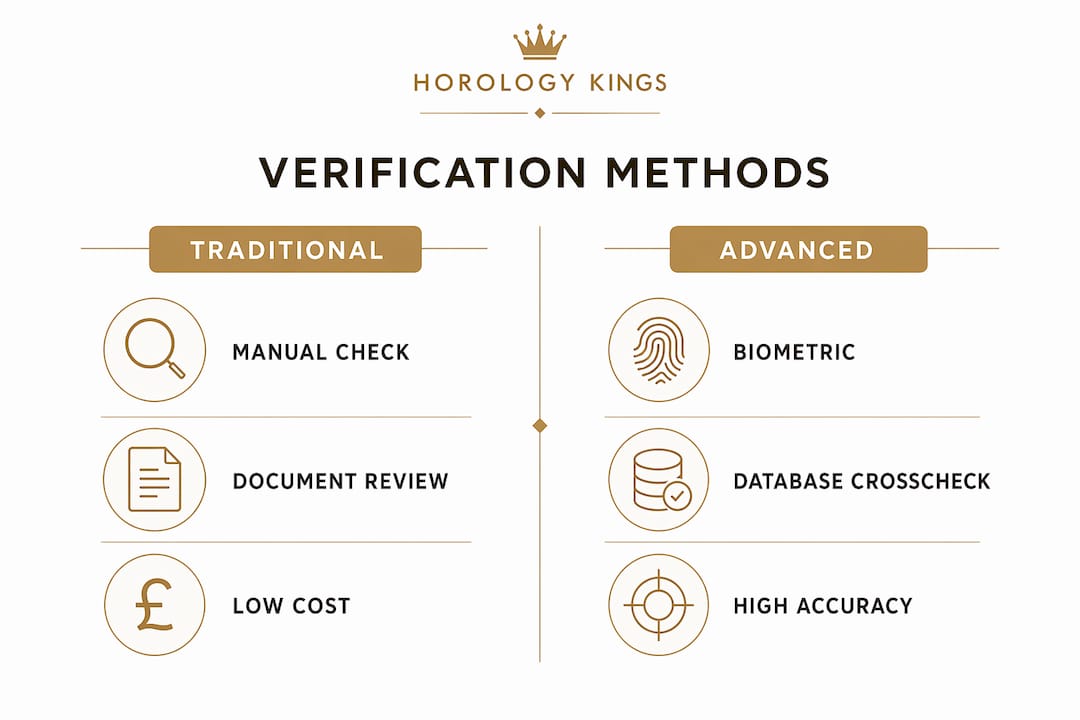
Manual document checks involve a human reviewer examining physical or scanned copies of ID. They are low cost and require no specialist software, but they are slow, inconsistent, and easily defeated by high-quality forgeries. For transactions above £5,000, manual checks alone are insufficient.
Biometric verification uses facial recognition and liveness detection to match a live image against a document photo. This method is fast, scalable, and highly resistant to spoofing. The limitation is that it requires the buyer to have a smartphone or webcam, which creates friction for some demographics.
Database cross-referencing checks buyer-supplied data against authoritative records. This includes credit bureau lookups, electoral roll matching, and sanctions screening. It adds no friction for the buyer but cannot confirm physical identity on its own.
Third-party KYC and IDV services combine all three methods into a single API-driven workflow. Platforms such as Onfido, Jumio, and Veriff handle document capture, biometric matching, liveness detection, and database checks in one pass. Outsourcing to third-party KYC vendors requires due diligence focused on layered controls and defensible audit evidence aligned with risk and regulatory requirements.
Method | Accuracy | Speed | Fraud resistance | User friction | Compliance suitability |
Manual document check | Moderate | Slow | Low | Low | Basic only |
Biometric face matching | High | Fast | High | Moderate | Strong |
Database cross-referencing | Moderate | Instant | Moderate | None | Moderate |
Third-party KYC platform | Very high | Fast | Very high | Moderate | Excellent |
For secure watch transactions and other high-value private sales, a third-party KYC platform combined with manual review of source-of-funds documentation represents best practice. The table above makes clear that no single method covers all bases.
What are the common challenges in verifying buyer identity?
Even well-designed verification processes encounter problems. Knowing where things go wrong lets you fix them before they cost you a transaction or expose you to fraud.
The most frequent challenges are:
Fake or altered documents. High-quality forgeries can defeat visual inspection. Automated MRZ parsing and UV feature checks catch most of these, but not all. Always use a platform that checks document templates against a global library of genuine specimens.
Synthetic identities. A synthetic identity combines real data (such as a genuine National Insurance number) with fabricated personal details. Single-point verification is insufficient against this threat. Only cross-consistency checks across multiple data sources reliably detect synthetic profiles.
Poor biometric capture. Bad lighting, low camera resolution, or a buyer who does not follow liveness prompts correctly all produce inconclusive results. Provide clear on-screen instructions and allow one retry before escalating to manual review.
User drop-off. Verification friction causes buyers to abandon transactions. Keep the process to under three minutes where possible, and communicate clearly why each step is required.
When a result is inconclusive, do not simply reject the buyer. Request an alternative document, escalate to a human reviewer, or ask for supplementary evidence such as a utility bill or bank statement. Document every step of this process.
Compliance documentation is not optional. Digital platform operators retain responsibility for verifying buyer information even when using third-party providers. Outsourcing the technology does not outsource the legal obligation.
Pro Tip: Keep a clear evidence trail for every verification attempt, including failed ones. Regulators and auditors want to see that you followed a consistent process, not just that you reached the right outcome.
Key takeaways
Effective buyer identity verification requires a layered combination of document authentication, biometric matching, liveness detection, and database cross-referencing, applied consistently across every high-value transaction.
Point | Details |
Layered verification is non-negotiable | Combining document, biometric, and database checks is the only reliable defence against synthetic identities and deepfakes. |
Third-party platforms add compliance value | KYC providers such as Onfido and Jumio produce auditable evidence trails that satisfy regulatory requirements. |
Cross-consistency checks catch synthetic IDs | Comparing data across documents, biometrics, and records exposes mismatches that single-point checks miss. |
User experience affects completion rates | Keeping verification under three minutes and providing clear instructions reduces buyer drop-off significantly. |
Outsourcing does not remove your liability | Organisations remain legally responsible for verification outcomes even when using third-party IDV services. |
Why I think most sellers underestimate verification until it is too late
Working in the luxury watch market, I have seen the consequences of inadequate buyer checks first-hand. A Patek Philippe Nautilus changes hands for tens of thousands of pounds. The idea that a quick look at a passport photo is sufficient due diligence at that price point is, frankly, alarming.
What I have found is that most individuals and small businesses treat verification as a box-ticking exercise rather than a genuine risk control. They collect a document, glance at it, and move on. That approach would not have caught the synthetic identity fraud cases that have targeted the luxury goods sector in recent years.
The shift I would encourage is to think about verification the way a bank does. Banks do not trust a single signal. They look at the document, the face, the address history, the transaction pattern, and the source of funds together. That is not bureaucracy. That is how you build a defensible position if something goes wrong.
The technology to do this is now accessible to individuals and small businesses, not just large institutions. Platforms like Onfido offer pay-as-you-go pricing that makes professional-grade verification affordable for a single transaction. The watch authentication process and buyer verification are two sides of the same coin. You would not skip authenticating the watch. Do not skip authenticating the buyer.
— Lewis
How Horology Kings protects every transaction

At Horology-kings, buyer identity verification is built into every transaction from the outset. Whether you are purchasing a pre-owned Rolex Submariner or selling a rare Audemars Piguet Royal Oak, every party is verified before funds move. This is not a formality. It is how Horology Kings maintains its reputation as a trusted dealer in Hertfordshire and beyond, handling secure UK bank transfers with confidence on both sides of the deal.
If you are looking to buy, sell, or source a specific watch, Horology Kings combines expert valuation with a verification process that protects your investment. Visit Horology Kings to explore the current catalogue or speak with the team directly about a discreet, verified transaction.
FAQ
What documents are acceptable for buyer identity verification?
Passports, photo-card driver’s licences, national identity cards, and biometric residence permits are the most widely accepted documents. For high-value transactions, supplementary evidence such as a utility bill or bank statement is often required alongside primary ID.
Is a passport check alone sufficient to verify a buyer?
No. Simple photo and passport checks are no longer sufficient to prevent identity fraud. A layered approach combining document authentication, biometric face matching, and database cross-referencing is required for reliable verification.
What is liveness detection and why does it matter?
Liveness detection confirms that the person submitting a biometric selfie is physically present, not a photograph, mask, or deepfake video. It is a critical step in preventing spoofing attacks during online identity verification.
Do I remain responsible if I use a third-party verification service?
Yes. Organisations retain ultimate responsibility for verifying identity data even when using third-party providers. Outsourcing the technology does not transfer the legal compliance obligation.
How does FATF Recommendation 10 affect buyer verification?
FATF Recommendation 10 requires customer due diligence including identity verification using reliable, independent sources, with enhanced measures applied in high-risk cases. It applies to financial institutions and many regulated businesses handling high-value transactions.
Recommended
Comments