.png)
Luxury watch etiquette rules every collector should know
TL;DR:
Luxury watch etiquette emphasizes proper fit, style matching to occasion, and respectful handling to preserve horological culture.
Asking permission before touching or photographing others’ watches and thoughtfully gift with attention to taste and provenance are essential.
Maintaining professionalism involves discreetness, appropriate storage, and knowing when to remove or not wear certain watches in various social contexts.
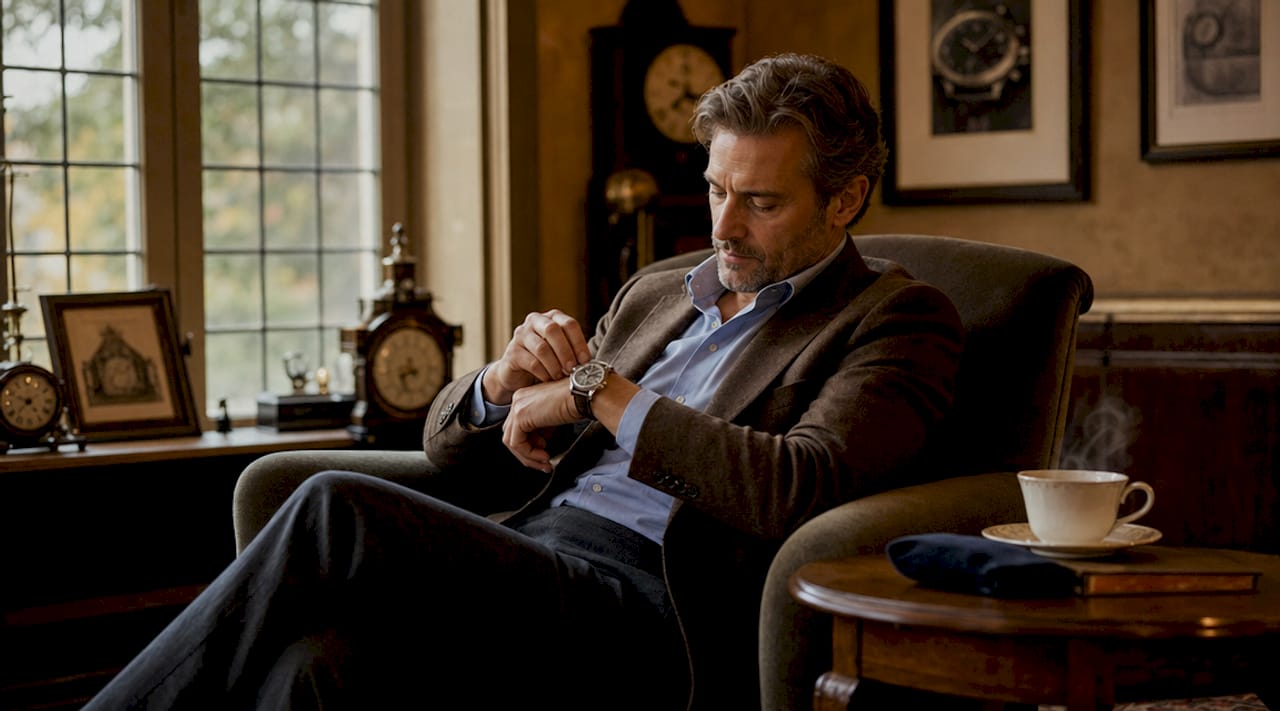
Luxury watch etiquette rules are the unwritten guidelines that govern how to wear, handle, gift, and discuss high-end timepieces with respect, confidence, and style. Whether you own a Rolex Submariner, a Patek Philippe Calatrava, or an Omega Seamaster, the way you carry and talk about your watch says as much about you as the piece itself. These conventions exist not to restrict personal expression, but to preserve the culture of horology and the relationships within it. Getting them right marks you as a genuine enthusiast rather than someone simply wearing a status symbol.
1. The core luxury watch etiquette rules for wearing correctly
The most fundamental rule of watch wearing etiquette is fit. An ideal case size sits between 38mm and 42mm for most wrists, with the lugs sitting flush rather than hanging over the edges. A watch that is too large looks clumsy; one that is too small reads as an afterthought. Neither serves you well in any social setting.
Wear your watch on the non-dominant wrist. For most people that is the left, though comfort and personal habit are legitimate exceptions. The watch should sit just above the wrist bone, snug enough to stay in place without cutting circulation. A loose watch that slides around the wrist looks careless and risks scratching the case.
Matching watch style to dress code is non-negotiable. A chunky sports watch clashes with formal tailoring in the same way brown shoes once clashed with black tie. Dress watches such as the Patek Philippe Calatrava or Cartier Tank belong with suits and evening wear. Reserve the Rolex Daytona or Audemars Piguet Royal Oak Offshore for casual and smart-casual occasions.
Pro Tip: If you are unsure whether a watch suits an occasion, default to the simpler, thinner piece. Understatement in formal settings is always the correct choice.
2. How to handle another person’s watch properly
Etiquette in watch collecting communities is as much about respect and risk avoidance as it is about style. The first rule is simple: never pick up or touch someone else’s watch without asking. Even a gentle handling can leave fingerprints on a polished bezel or, worse, a micro-scratch on a pristine dial.
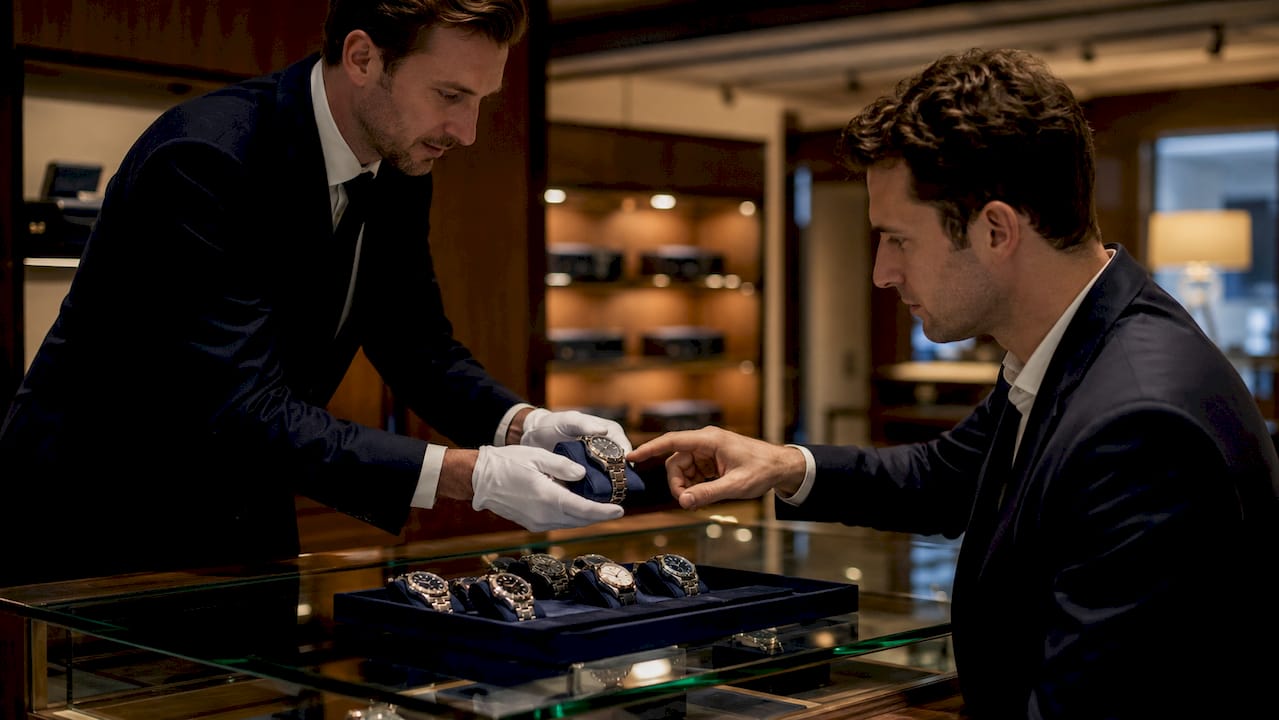
Before you handle any watch that is not yours, remove rings, bracelets, and any other jewellery from both hands. This is baseline responsible practice, even if you consider yourself careful, because micro-scratches add up over time and are irreversible on certain finishes. Hold the watch over a soft surface such as a watch cushion or folded cloth, never over a hard table.
Do not photograph someone else’s watch without permission. Sharing images of a collector’s piece on social media without consent is a breach of trust, particularly for those who prefer discretion about what they own. This matters especially in the UK collector community, where privacy around high-value assets is taken seriously.
3. Gifting a luxury watch with the right intention
A luxury watch is one of the most personal gifts you can give. The proper watch styling rules for gifting start with understanding the recipient’s taste before you spend a penny. A Rolex Datejust suits someone who values classic versatility; an Omega Speedmaster suits the space-history enthusiast. Gifting without this knowledge risks a beautiful watch sitting unworn in a drawer.
Consider the occasion carefully. Watches are traditional gifts for milestone events: graduations, significant birthdays, weddings, and retirements. Presenting a luxury timepiece at a casual gathering without context can feel performative rather than thoughtful. The setting and the story behind the gift matter as much as the piece itself.
Include the original box, papers, and any service history where possible. For pre-owned pieces, a watch authentication checklist gives the recipient confidence in what they have received. Gifting a watch without provenance, particularly a pre-owned one, creates doubt rather than delight.
4. How to discuss watches without losing the room
The conversation rules around luxury watches are where many enthusiasts stumble. Avoid discussing how much you paid for a piece unless directly and sincerely asked. Leading with price signals insecurity rather than passion. The watch should speak for itself.
Resale value is an equally poor opening topic. Discussing a watch purely in terms of its investment return shifts the emotional meaning of the piece and reduces a crafted object to a commodity. Celebrate a fellow collector’s new acquisition for what it is: a grail piece they have wanted, not a financial instrument they have acquired.
If someone asks your opinion on their watch and you have reservations, be honest but tactful. A private, gentle observation is always preferable to a public critique. Spotting a fake is a private matter. Calling out a counterfeit watch in front of others causes embarrassment and damages relationships without serving any constructive purpose.
Pro Tip: When someone shows you a new watch, ask about the story behind it before asking about the reference number or price. The story is always more interesting.
5. Watch etiquette for business meetings and formal events
Watch etiquette for business meetings centres on one principle: your watch should complement your professionalism, not compete with it. A slim dress watch in steel or gold reads as confident and considered. An oversized sports watch in a conservative boardroom reads as misjudged, regardless of the brand.
Checking your watch repeatedly during a conversation signals impatience or boredom. One discreet glance is acceptable; anything more is rude. If you need to track time during a meeting, position yourself where a wall clock is visible, or excuse yourself briefly.
At formal dinners and black-tie events, avoid stacking multiple watches or layering jewellery over a dress watch. The watch etiquette for events at this level demands restraint. One well-chosen piece, worn correctly, carries far more authority than several pieces competing for attention.
6. Smartwatch etiquette in professional and social settings
Smartwatches are appropriate in business casual environments but should be left at home for black-tie events, funerals, and traditional interviews. The screen, the notifications, and the sporty silicone strap all work against the formality these occasions demand.
When wearing a smartwatch in a professional setting, Do Not Disturb mode is non-negotiable. A screen lighting up mid-conversation is the modern equivalent of taking a phone call at the dinner table. Swap the silicone strap for a leather or metal bracelet to bring the watch closer to the visual language of a traditional timepiece.
Choose a clean, analogue-style watch face rather than a data-heavy digital display. An Apple Watch or Samsung Galaxy Watch wearing a simple dial face and a leather strap reads very differently from the same device showing fitness metrics and notification badges. The adjustment takes seconds and signals genuine social awareness.
7. When to remove your watch entirely
Knowing when to take a watch off is as important as knowing how to wear one. Remove non-water-resistant luxury watches before swimming, bathing, or any water-based activity. Even watches rated to 30 metres of water resistance are not designed for pool chemicals or pressurised showers.
Remove your watch before sleeping. Wearing a watch to bed risks scratching the crystal against a pillow or headboard, stressing the bracelet clasp, and disrupting sleep. For vintage pieces from brands such as Jaeger-LeCoultre or Vacheron Constantin, this is particularly important given the delicacy of older movements.
Take your watch off before contact sports, heavy gym sessions, or any manual work involving tools. A single impact can crack a crystal, dent a case, or damage a movement. The watch collection management principle here is straightforward: a watch you protect retains both its condition and its value.
8. Luxury watch care as an expression of etiquette
A dirty or neglected watch is a social statement, and not a positive one. Wipe your watch down weekly and carry out a deeper clean monthly to maintain the crystal, case, and strap in good condition. A well-maintained Rolex or Omega reflects the same attention to detail as polished shoes or a pressed shirt.
Establish a proper luxury watch care routine that includes professional servicing at the manufacturer’s recommended intervals. Rolex recommends servicing every ten years under normal use; Patek Philippe suggests every three to five years. Skipping service intervals shortens movement life and reduces resale value.
Store watches correctly when not in use. A watch box or dedicated watch winder for automatic movements prevents dust accumulation, protects crystals, and keeps straps from warping. Presenting a watch from a well-kept storage case when showing it to another collector is itself a mark of respect for the piece and the person viewing it.
Pro Tip: Before photographing a watch to share or sell, clean it thoroughly and stage it on a neutral surface. Tasteful watch photography presentation reflects well on both the piece and the owner.
9. Comparing etiquette by watch type and occasion
Different watch categories carry different social expectations. The table below summarises the key distinctions.
Watch type | Best occasions | Key etiquette point |
Dress watch (e.g. Cartier Tank, Patek Calatrava) | Formal events, business meetings, weddings | Keep it understated; avoid stacking jewellery |
Sport watch (e.g. Rolex Daytona, AP Royal Oak) | Smart casual, social gatherings, travel | Avoid at black tie or conservative interviews |
Smartwatch (e.g. Apple Watch, Samsung Galaxy Watch) | Business casual, everyday wear | Mute notifications; swap strap for formal settings |
Vintage piece (e.g. Jaeger-LeCoultre, Vacheron) | Collector events, personal wear | Handle with extra care; share provenance when gifting |
The core principle across all categories is context. A Rolex Submariner is a magnificent watch. Wearing it to a black-tie dinner is not a statement of confidence; it is a statement of misjudgement. Proper watch styling rules are not about limiting your collection. They are about deploying it intelligently.
Key takeaways
Luxury watch etiquette rules require matching watch type to occasion, handling timepieces with explicit permission, and prioritising respect over ostentation in every social interaction.
Point | Details |
Match watch to occasion | Dress watches for formal settings; sport watches for casual; smartwatches for business casual only. |
Ask before touching | Always seek permission before handling another person’s watch and remove all jewellery first. |
Avoid price-led conversation | Celebrate a watch for its craft and story, not its market value or resale potential. |
Maintain your watch visibly | Weekly cleaning and correct storage signal respect for the piece and those who see it. |
Know when to remove it | Protect your watch from water, sleep, and physical activity to preserve condition and value. |
The part most guides get wrong
I have been working with luxury watches long enough to notice that most etiquette advice focuses on what to wear and when. Very little of it addresses the harder social skill: knowing when to say nothing at all.
The watch community has a tendency to fill silence with specifications. Reference numbers, production years, movement calibres. That knowledge is genuinely interesting to the right person, but it can read as showing off to anyone outside the circle. The collectors I respect most are the ones who let others lead the conversation. They answer questions with enthusiasm and ask questions with genuine curiosity. They never volunteer the price.
The shift towards smartwatches has also changed the social calculus in ways that traditional etiquette guides have not caught up with. An Apple Watch in a boardroom is no longer automatically a faux pas. Context matters more than category now. What remains constant is the underlying principle: your watch should serve the moment, not dominate it.
Develop your own style within these frameworks rather than treating them as rigid rules. The best-dressed collectors I know break conventions occasionally, but they do so deliberately and with full awareness of what they are doing. That is the difference between personal style and simple ignorance.
— Lewis
Find your next piece with Horology Kings

Understanding these etiquette principles is only part of the picture. The other part is owning pieces worth wearing with confidence. Horology Kings, based in Hertfordshire, specialises in authenticated Rolex, Patek Philippe, Audemars Piguet, Omega, and Cartier timepieces bought, sold, and sourced with full transparency. Every transaction is backed by expert valuation and secure UK bank transfer. Whether you are buying or selling luxury watches or need a specific reference sourced through our expert network, the team at Horology Kings handles every enquiry with the same discretion the watches themselves deserve. Explore the full collection or use our watch sourcing service to find the exact piece you have been looking for.
FAQ
What wrist should a luxury watch be worn on?
The convention is the non-dominant wrist, which for most people is the left. Personal comfort is a legitimate exception, and no strict rule overrides it.
Is it rude to check your watch during a conversation?
One discreet glance is acceptable. Repeated checking signals impatience or boredom and is considered poor manners in both social and professional settings.
Can you wear a smartwatch to a formal event?
Smartwatches are not appropriate for black-tie events, funerals, or traditional interviews. For business casual settings, they are acceptable provided notifications are muted and the strap suits the outfit.
What is the correct way to handle someone else’s watch?
Always ask permission first. Remove all rings and bracelets before touching the piece, and hold it over a soft surface to minimise the risk of scratches or drops.
How often should a luxury watch be serviced?
Service intervals vary by brand. Rolex recommends every ten years under normal use; Patek Philippe advises every three to five years. Following manufacturer guidance preserves both the movement and the watch’s long-term value.
Recommended
Comments