.png)
Omega's role in watch history: collector insights
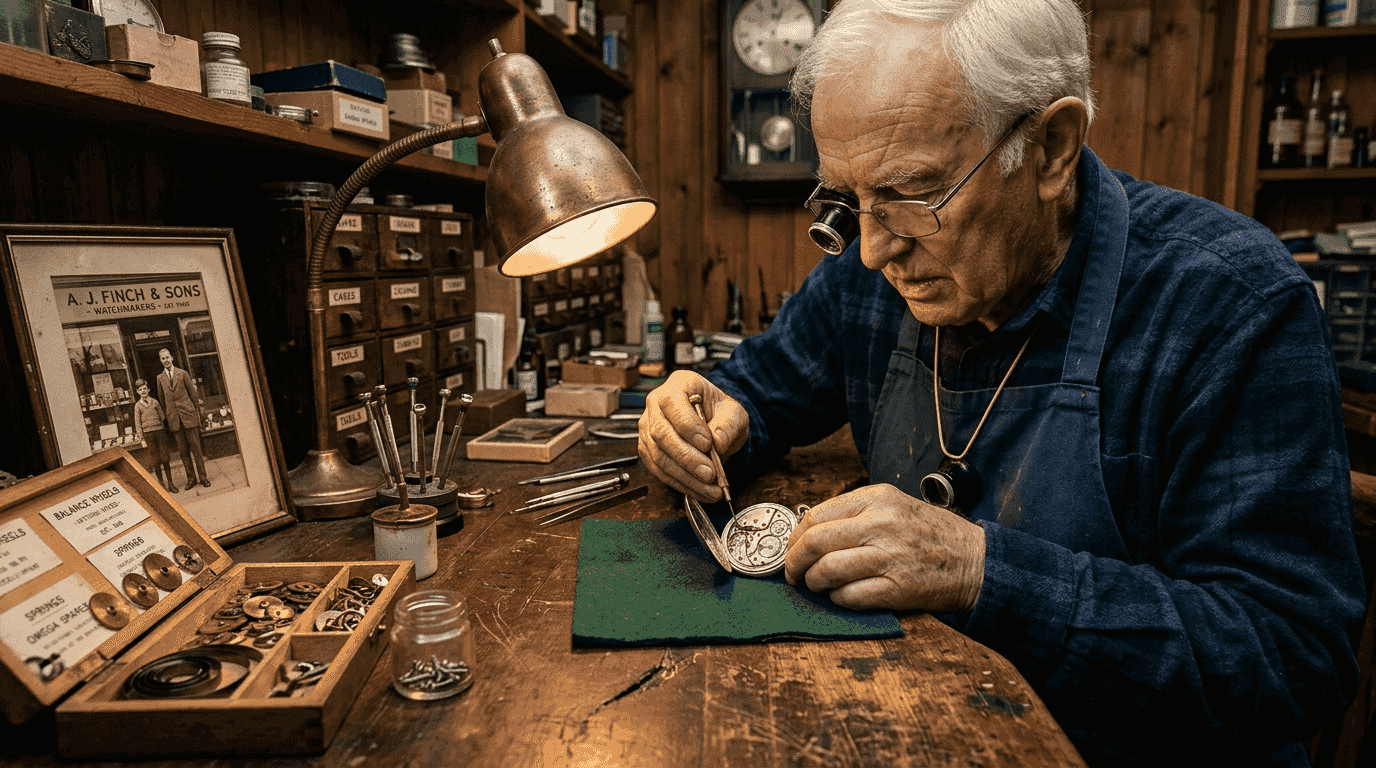
In 1894, Omega introduced a 19-ligne calibre with interchangeable parts that fundamentally transformed watchmaking from artisanal craft to industrial precision. This breakthrough allowed any watchmaker to service an Omega using standardised components, a radical departure from the bespoke handcrafted timepieces that dominated the era. Omega’s contributions extend far beyond aesthetic appeal, encompassing technical innovations that established new standards for accuracy, durability, and manufacturing efficiency. This article explores Omega’s pivotal milestones in horological history, examining how the brand’s technical achievements shaped modern luxury watchmaking and continue to influence collectors’ valuations and preferences in 2026.
Table of Contents
Key takeaways
Point | Details |
Interchangeable parts revolution | Omega’s 1894 calibre enabled standardised servicing and mass production, transforming the watch industry from bespoke craftsmanship to scalable manufacturing. |
Chronometer dominance | Omega’s 1931 Geneva Observatory world record and Olympic timekeeping role from 1932 established its reputation for unparalleled precision. |
Coaxial escapement innovation | This mechanism reduces sliding friction in mechanical movements, extending servicing intervals and improving long-term accuracy. |
Collector value drivers | Omega’s technical milestones and Olympic heritage make specific models highly sought after by collectors seeking historical significance. |
Omega’s hallmark innovation: the 19-ligne calibre and mass production
The 19-ligne calibre introduced in 1894 represented a watershed moment in watchmaking history. Before this innovation, watches were essentially unique creations, with each component hand-fitted to a specific movement. If a part broke, a watchmaker had to fabricate a replacement from scratch, making repairs time-consuming and expensive. Omega’s calibre changed everything by introducing fully interchangeable components, meaning any watchmaker could swap parts without custom fitting.
This standardisation dramatically reduced repair times from days to hours and slashed manufacturing costs. The 19-ligne calibre featured a precision-engineered design where each component met exact tolerances, allowing assembly line production whilst maintaining quality standards. The movement’s architecture included a going barrel, lateral lever escapement, and compensation balance, all manufactured to specifications that permitted seamless part replacement across thousands of watches.
The impact on the watch industry was profound and immediate. Other manufacturers quickly recognised that interchangeable parts represented the future of commercial watchmaking. Omega’s innovation enabled the brand to scale production whilst maintaining consistency, a combination previously thought impossible in precision timekeeping. This approach democratised access to reliable watches, as servicing became affordable and accessible beyond elite urban centres with master watchmakers.
Compared to previous handcrafted watches, the 19-ligne calibre offered several transformative advantages:
Repair costs dropped by approximately 60 per cent due to standardised replacement parts
Servicing time reduced from multiple days to a few hours for common repairs
Quality consistency improved as each component met identical manufacturing tolerances
Global servicing became feasible as watchmakers worldwide could stock standard parts
Production volumes increased tenfold without sacrificing precision or reliability
For collectors today, original 19-ligne calibre watches represent significant historical value. These pieces embody the transition from artisanal to industrial watchmaking, making them prized by enthusiasts who appreciate technical milestones. When evaluating such timepieces, examine case markings and movement signatures carefully, as period-correct examples command premium prices. You might also explore complementary pieces like the Cartier Santos WSSA0018, which similarly represents pivotal innovation in luxury watchmaking.
Pro Tip: When assessing vintage 19-ligne calibre watches, verify the movement serial number matches the case serial number range for the production year, as mismatched components significantly reduce authenticity and collector value.
Omega’s precision legacy: chronometer dominance and Olympic timekeeping
Omega’s reputation for exceptional accuracy stems from its world record at the 1931 Geneva Observatory trials, where the brand’s marine chronometers achieved unprecedented precision scores. These chronometer competitions represented the horological equivalent of Olympic gold, with observatories testing movements under extreme temperature variations, multiple positions, and extended periods. Omega’s performance established new benchmarks that competitors struggled to match for decades.

These chronometer victories mattered because they provided objective, third-party validation of accuracy claims. Unlike marketing assertions, observatory certificates represented rigorous scientific testing over weeks or months. For collectors and professional users alike, these certifications guaranteed that an Omega would maintain time within seconds per day under real-world conditions. This precision proved essential for navigation, scientific research, and any application where timing accuracy could mean the difference between success and failure.
Omega’s appointment as official Olympic Games timekeeper starting in 1932 transformed the brand’s global profile and technical capabilities. The Olympic role demanded continuous innovation to meet ever-increasing accuracy requirements as athletic performances improved and margins of victory narrowed. This partnership pushed Omega to develop specialised timing instruments that could measure hundredths and eventually thousandths of seconds reliably.
Key Olympic events that relied on Omega timing technology include:
Sprint races where photo-finish cameras synchronised with Omega timing systems determined winners separated by thousandths of seconds
Swimming competitions requiring underwater touchpads that registered finishes within milliseconds whilst withstanding chlorinated water exposure
Ski racing using infrared photocells and quantum timers to capture split times on mountain courses in extreme weather
Gymnastics and figure skating where judges’ scoring systems integrated with Omega’s timing infrastructure for real-time results
Track cycling events demanding precision timing at speeds exceeding 70 kilometres per hour in velodrome environments
“Omega’s Olympic timekeeping role elevated the brand beyond mere watchmaking into the realm of precision instrumentation, where fractions of seconds carry profound consequences for athletes’ careers and nations’ pride.”
These milestones significantly influenced collector enthusiasm and market values. Watches connected to Olympic history, particularly limited editions commemorating specific Games or featuring Olympic dial markings, command premiums in today’s market. Collectors recognise that Olympic-associated Omega timepieces represent not just horological craftsmanship but cultural moments frozen in mechanical form. If you’re interested in rare Swiss watches with strong value appreciation, Olympic-era Omega models deserve serious consideration. When you’re ready to acquire such pieces, learning how to source your dream timepiece safely becomes essential.
The coaxial escapement: innovation, debate, and mechanical mastery
The Coaxial escapement adopted by Omega represents one of the most significant advances in mechanical watch technology since the lever escapement dominated the industry in the 19th century. Invented by George Daniels and commercialised by Omega from 1999 onwards, this mechanism fundamentally reimagines how energy transfers from the mainspring to the balance wheel. Traditional lever escapements rely heavily on sliding friction between pallet stones and escape wheel teeth, causing wear that gradually degrades accuracy.
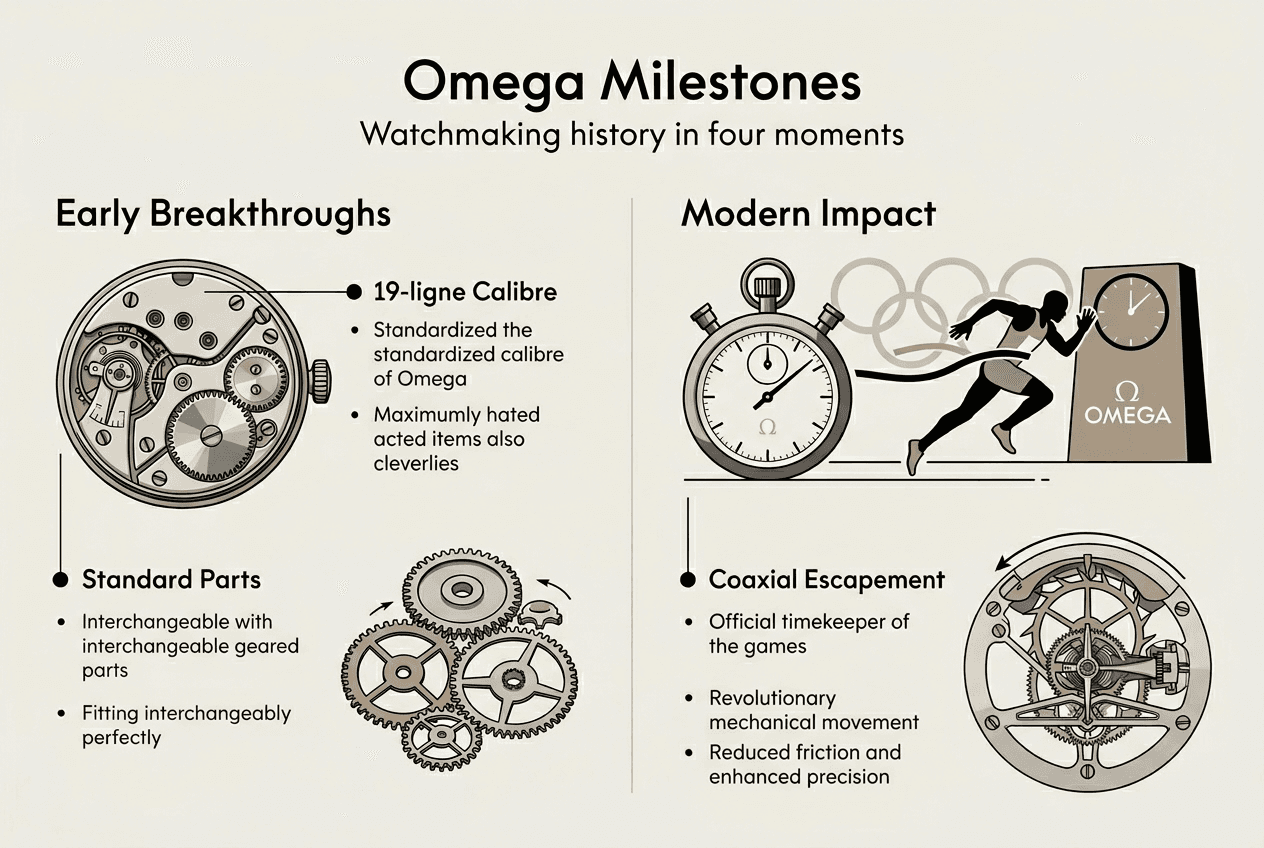
The Coaxial design minimises sliding friction by introducing radial impulses, where components push against each other perpendicular to their surfaces rather than sliding along them. This seemingly subtle change dramatically reduces wear on escapement components, the parts most vulnerable to deterioration in mechanical movements. The result is extended servicing intervals, potentially doubling the time between overhauls from the traditional five years to ten years or more.
Feature | Coaxial Escapement | Traditional Lever Escapement |
Friction type | Primarily radial impulse | Predominantly sliding friction |
Component wear rate | Significantly reduced over time | Higher wear requiring frequent servicing |
Servicing interval | 8-10 years typical | 4-5 years recommended |
Amplitude stability | Maintains consistency longer | Gradual degradation between services |
Manufacturing complexity | Requires extreme precision tolerances | Well-established production methods |
Long-term accuracy | Superior retention over years | Noticeable decline between overhauls |
The manufacturing precision required for Coaxial escapements exceeds traditional lever escapement tolerances substantially. Components must meet specifications within micrometres, and assembly demands exceptional skill. This sensitivity means that Coaxial movements can be more temperamental if serviced incorrectly or exposed to significant shocks. Not all watchmakers possess the specialised training to service these movements properly, which can complicate ownership outside areas with certified Omega service centres.
Key considerations regarding Coaxial escapement watches include:
Performance advantages are most noticeable over extended ownership periods of five years or more
Servicing must be performed by watchmakers specifically trained in Coaxial technology
Initial accuracy may not differ dramatically from high-quality lever escapements
Long-term amplitude retention and accuracy stability represent the primary benefits
Some horologists debate whether real-world advantages justify the manufacturing complexity
Shock resistance can be slightly lower than robust lever escapement designs
The horological community remains divided on the extent of Coaxial escapement advantages. Supporters point to measurable reductions in wear and extended service intervals as objective improvements. Critics argue that well-made traditional escapements, when properly maintained, deliver comparable performance at lower manufacturing costs and with wider service availability. Some experts suggest the benefits are most significant for owners who delay servicing beyond recommended intervals, where Coaxial movements maintain accuracy whilst lever escapements would have degraded noticeably.
Pro Tip: If you’re considering a Coaxial escapement Omega, verify that authorised service centres exist within reasonable distance of your location, as improper servicing by untrained watchmakers can damage these sensitive mechanisms and void warranties.
For collectors evaluating investable timepieces, Coaxial-equipped Omega models represent a calculated bet on technical innovation’s long-term appreciation. As these movements age and their durability advantages become empirically evident, early examples may gain historical significance. Proper luxury watch maintenance becomes even more critical with Coaxial movements, where specialised knowledge preserves both function and value.
Discover and care for your Omega timepiece with Horology Kings
Understanding Omega’s technical innovations and historical significance empowers you to make informed acquisition decisions, but sourcing authentic pieces and maintaining them properly requires expert guidance. Whether you’re seeking a vintage 19-ligne calibre watch, an Olympic-era Seamaster, or a modern Coaxial-equipped Speedmaster, working with specialists ensures authenticity and fair valuation.

Horology Kings offers comprehensive services for collectors pursuing Omega timepieces. Our expert team provides authenticated sourcing, professional valuations, and connections to rare models through our specialist network. We understand the nuances that distinguish valuable pieces from ordinary examples, from movement authenticity to period-correct components.
Our watch sourcing service connects you with specific Omega models that match your collecting goals, whether you’re pursuing historical significance or investment potential. Beyond acquisition, our watch repair and servicing ensures your Omega receives the specialised care these sophisticated movements demand. Key benefits include:
Expert authentication protecting you from counterfeits and frankenwatches
Access to rare and discontinued models through our specialist network
Professional servicing by watchmakers trained in Omega movements including Coaxial escapements
Transparent valuations based on current market conditions and historical significance
Secure transactions with full documentation and provenance verification
Explore our collection and services to find your next Omega timepiece with confidence.
FAQ
Which Omega watch models best represent its historical innovations?
The Seamaster and Speedmaster lines embody Omega’s technical achievements and cultural significance. Early Seamaster models from the 1940s showcased water resistance innovations, whilst the Speedmaster became the first watch worn on the moon in 1969. Vintage pieces featuring the 19-ligne calibre represent the brand’s manufacturing revolution, and modern models with Coaxial escapements demonstrate ongoing mechanical innovation. Olympic commemorative editions connect to Omega’s precision timekeeping legacy.
How does the coaxial escapement improve watch longevity and accuracy?
The Coaxial escapement reduces sliding friction between components by using radial impulses rather than the sliding contact found in traditional lever escapements. This design significantly lowers wear rates on escapement parts, which are typically the first components to degrade in mechanical movements. Reduced wear means the movement maintains consistent amplitude and accuracy for longer periods between servicing, potentially doubling service intervals from five years to ten years whilst preserving precision throughout.
Why is Omega’s role as Olympic timekeeper significant for collectors?
Omega’s Olympic partnership since 1932 reinforced the brand’s reputation for precision on a global stage, associating it with athletic excellence and technological innovation. This visibility elevated Omega beyond typical luxury watch marketing into objective demonstration of timing capabilities. Collectors value Olympic-associated models as cultural artefacts representing specific Games and historic athletic achievements. Limited editions and commemorative pieces from Olympic years command premiums due to their rarity and connection to memorable sporting moments.
What should collectors verify when purchasing vintage Omega watches?
Authenticity verification starts with matching serial numbers between the movement and case to confirm they originated together. Examine dial signatures, hands, and markers for period-correct details, as replacement parts can diminish value substantially. Request service history documentation when possible, and have movements inspected by qualified watchmakers to identify non-original components or poor repairs. Research production years and specifications for your target model to recognise deviations from factory standards that indicate modifications or frankenwatches.
How do chronometer certifications affect Omega watch values?
Chronometer certifications from observatories like Geneva or Neuchâtel represent objective third-party validation of accuracy, making certified pieces more valuable than non-certified examples from the same era. Original chronometer certificates accompanying a watch significantly enhance provenance and collector appeal. Observatory-tested marine chronometers and pocket watches command substantial premiums due to their rarity and documented precision. Modern COSC certification, whilst less exclusive, still indicates quality control and can influence resale values modestly compared to non-certified contemporary models.
Recommended
Comments