.png)
Secure watch transactions guide: buy and sell safely
TL;DR:
Losing a five-figure watch to fraud can happen to anyone, even experienced collectors.
Thorough research, independent authentication, secure escrow payments, and detailed documentation are essential to prevent scams.
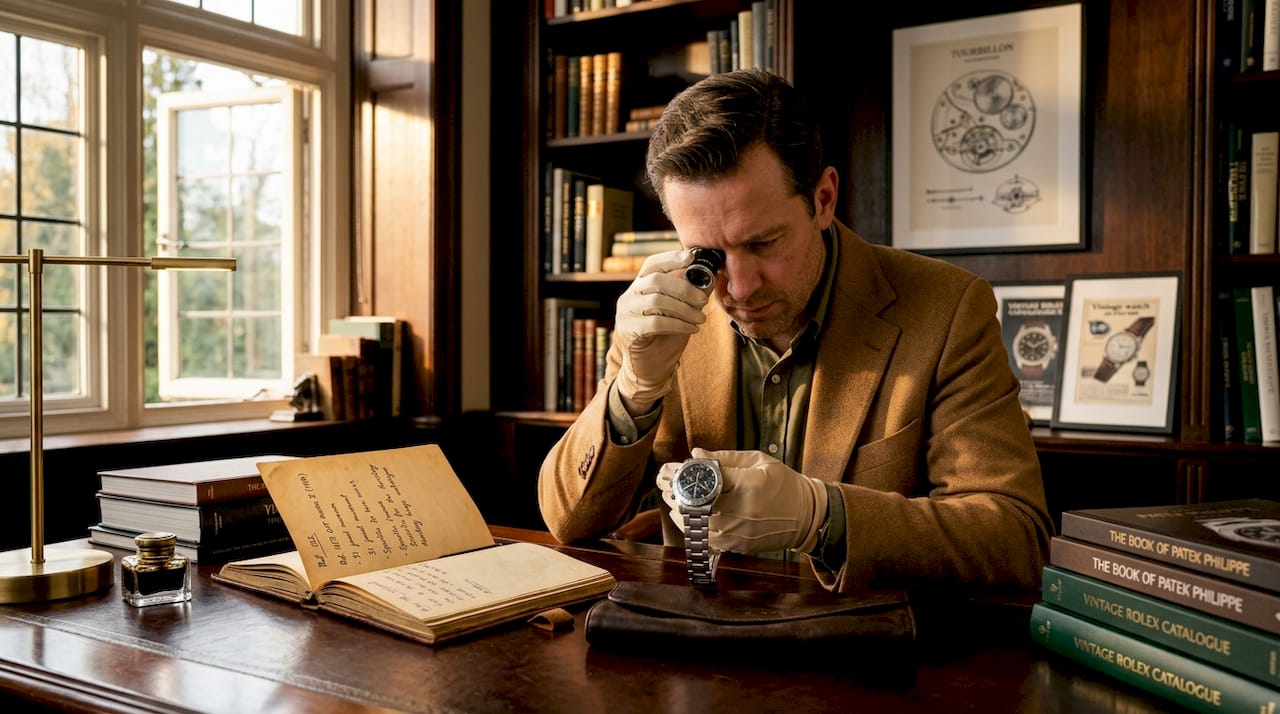
Losing a five-figure watch to fraud is not a remote possibility. It happens to experienced collectors, first-time buyers, and private sellers every year. Whether you are parting with a Patek Philippe or hunting down a specific Rolex reference, the risks in unvetted transactions are real: counterfeit watches, forged paperwork, stolen timepieces, and payment methods that offer zero recourse once the money leaves your account. This secure watch transactions guide walks you through every stage of the process, from research and verification to payment execution and dispute resolution, so you can transact with confidence rather than anxiety.
Table of Contents
Key takeaways
Point | Details |
Check stolen watch databases | Run every serial number through a database like StolenWatchCheck before agreeing to any purchase. |
Treat low prices as red flags | Any watch priced 20% or more below market value warrants serious investigation before proceeding. |
Use escrow for payment | Escrow services protect both parties by holding funds until inspection and delivery conditions are met. |
Document everything at handover | Photograph and film the unboxing and physical inspection to create an indisputable evidence trail. |
Insist on independent authentication | A certified watchmaker’s opinion before payment is finalised can save you thousands of pounds. |
Pre-transaction research and verification
The most preventable mistakes in luxury watch deals happen before any money changes hands. Thorough preparation is not optional at this level of transaction.
Verify the serial number first
Before you engage seriously with any seller, request the watch’s serial number and run it through a reputable database. Databases like StolenWatchCheck hold over 120,000 reported stolen or lost luxury watches, updated in real time. If a seller hesitates to provide the serial number, treat that hesitation as a serious warning sign. Refusal to share a serial number or resist independent inspection is one of the clearest indicators of an illegitimate deal.
Know what the watch is actually worth
Understanding market value is a core part of safeguarding watch purchases. Use grey market reference sites, recent auction results, and dealer listings to build a realistic price picture. Watches priced 20% or more below market value are a significant red flag, pointing either to stolen goods or an elaborate scam. A deal that looks too good almost always is.
Research the seller thoroughly
Spend time reading feedback on watch forums, marketplace reviews, and social media groups before committing. Look for patterns of complaints, recently created accounts, or unusually high-volume selling activity. Established collectors and reputable dealers will have a verifiable history you can trace.
Here is a pre-transaction verification checklist to work through before any deal progresses:
Obtain and check the serial number against stolen watch databases
Cross-reference the serial number with the warranty card, box documentation, and the physical watch case
Verify provenance documentation including original receipt, service records, and correspondence
Research the seller’s trading history on relevant platforms and forums
Confirm the watch’s current market value from at least three independent sources
Check whether the watch model has known dial, movement, or case variants that affect authenticity
Pro Tip: Look closely at the font, spacing, and print quality on warranty cards. Sophisticated counterfeiters often replicate the watch itself convincingly but produce paperwork where the font weight is inconsistent or the serial number stamping looks machine-generated rather than hand-pressed.
Document to request | What to verify |
Warranty card | Serial number matches case and movement |
Original purchase receipt | Authorised dealer name, date, and reference number |
Service history records | Authenticity of watchmaker stamps and dates |
Box and inner packaging | Correct model-specific reference numbers |
Previous sales documentation | Chain of ownership and no reported theft |
Secure payment methods and transaction execution
Getting the payment stage right is where most fraud actually occurs. The watch may be genuine, the seller may seem credible, and yet the payment method chosen can leave you with nothing if something goes wrong.
Why escrow is the safest option
Escrow services hold buyer funds in a secure account until both parties confirm that agreed conditions, such as physical delivery and inspection, have been met. Neither party can access those funds unilaterally. For high-value watch transactions, this model removes the central vulnerability of direct transfers: the point at which money leaves your control before you have verified what you are receiving.
Escrow reduces fraud risks including friendly fraud, chargebacks, and outright non-delivery, and major platforms processing billions in transactions show measurably lower fraud rates when escrow is used. That is not a theoretical benefit. It is a documented outcome.
Setting up and using escrow for a watch deal
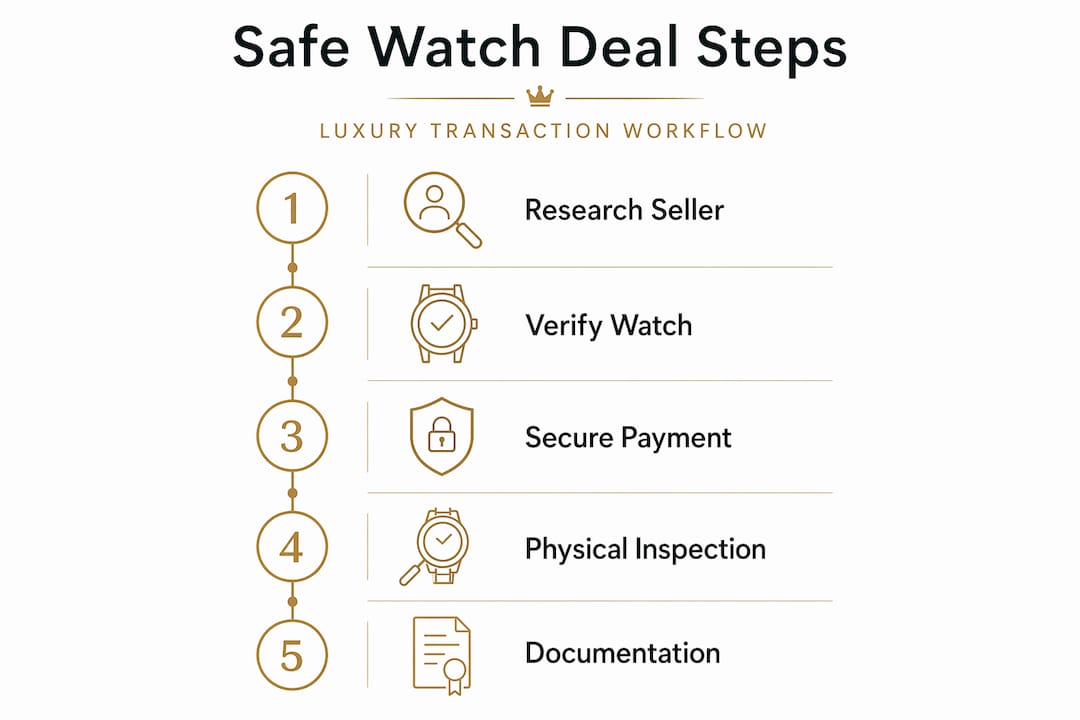
Agree on an escrow provider with the other party before discussing price. Both sides must register and verify their identity.
The buyer deposits funds into the escrow account. The escrow service confirms receipt to the seller.
The seller ships or delivers the watch, providing tracking information to the escrow platform.
The buyer inspects the watch and confirms it matches the agreed description within a set inspection window.
On confirmation, the escrow service releases funds to the seller. If there is a dispute, the platform mediates.
Pro Tip: Never agree to move a conversation off a marketplace platform to WhatsApp, email, or phone before the deal is secured through escrow or a professional intermediary. Off-platform discussions remove the audit trail that protects you in any dispute.
Payment method | Buyer protection | Seller protection | Recommended |
Escrow service | High | High | Yes |
Bank transfer (UK) | Low | Medium | Use with caution |
Credit card (through platform) | Medium | Low | Situational |
Cryptocurrency | None | High | No |
Gift cards or vouchers | None | None | Never |
Cash (in person) | Medium | Medium | With conditions |
For in-person deals, meet at a bank, an authorised dealer’s premises, or a professional watch dealer. Do not meet at a private address you cannot independently verify. Payment confirmation screenshots can be forged with little effort, so always confirm receipt of funds through your own bank or escrow platform before handing over the watch.
Physical inspection and authentication
No amount of paperwork verification replaces having an expert physically assess the watch. This step alone prevents the most costly mistakes.
Organise an independent inspection
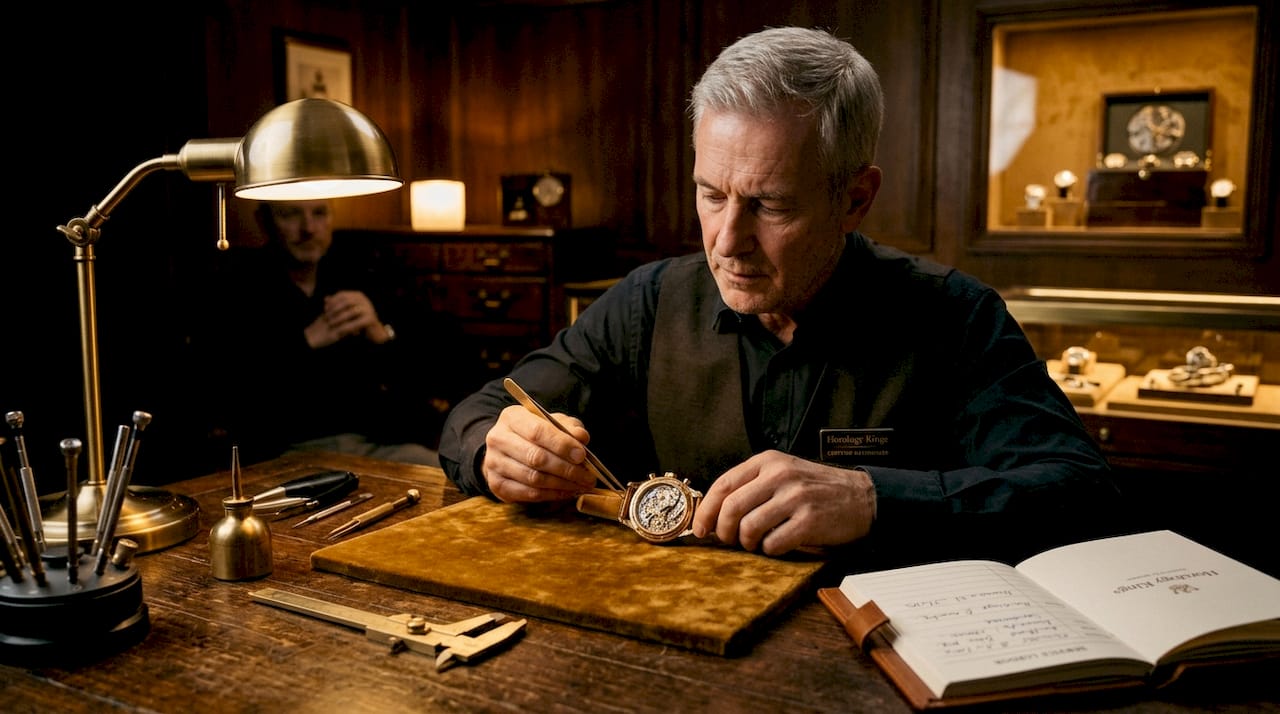
Book a certified watchmaker or visit an authorised service centre before finalising payment. This is not excessive caution. Professional authentication by certified watchmakers is a critical step that cannot be skipped on high-value timepieces without accepting serious financial risk.
For remote purchases, many specialist dealers offer third-party inspection services where the watch is sent directly to a watchmaker before funds are released from escrow. This is the model that serious collectors use. It is also worth reviewing a thorough watch authentication checklist before your appointment so you know what to ask.
What to verify during physical inspection
Case and serial number: Confirm the number engraved on the case matches all documentation exactly. Experienced insiders know that verifying serials on the physical watch is the most reliable counter to sophisticated fake paperwork.
Movement: Open the caseback where possible and compare the movement to verified reference images for that calibre.
Dial and hands: Look for relumed plots, repainted dials, or replaced indices. Originality dramatically affects value.
Engravings and finishing: Check case bevelling, lugs, and crown for signs of polishing that removes the original finish or re-engraving that alters serial numbers.
Crown and pushers: These are frequently overlooked but are often replaced with non-original parts.
Overall condition: Note scratches, dents, and crystal condition against what was described by the seller.
Pro Tip: Film the unboxing and initial inspection on video. If a dispute arises later, a timestamped video of the watch’s condition at handover is far more persuasive than photographs alone, and it removes any argument about when damage occurred.
Document all findings in writing and photograph every angle of the watch, including the caseback, crown, and any identifying engravings. This documentation is your primary defence if the transaction goes wrong.
Handling disputes and common red flags
Even when you follow every precaution, problems can arise. Knowing how to respond quickly matters as much as prevention.
The most common red flags during the transaction phase include a seller who becomes evasive after initial friendliness, requests to switch to unsupported payment methods mid-negotiation, inability to provide real-time photographs of the watch when requested, and pressure to complete the deal urgently. Any one of these should pause a transaction.
If you suspect fraud or the watch does not match what was agreed:
Stop all further payment immediately and do not release any escrow funds.
Contact the platform or marketplace where the deal originated and report the transaction formally.
Preserve all communications, screenshots, and records. Do not delete anything.
If you paid by credit card, contact your card provider to initiate a chargeback. Advanced verification and authentication measures on major platforms have reduced confirmed payment fraud by 37%, which reflects why platform-based transactions offer more recourse than private deals.
Report the watch to Action Fraud in the UK and, if the watch is believed stolen, add it to relevant databases.
“The single most effective fraud prevention tool is documentation. A fraudster who knows you have timestamps, serial numbers, photographs, communications, and an escrow record will rarely pursue a dispute. The ones who do lose.”
Keep copies of every message in a dedicated folder. If the deal ever reaches a legal or police stage, an organised record of events is the difference between a credible complaint and an unsubstantiated claim.
My honest take on watch transaction security
I’ve reviewed enough luxury watch deals gone wrong to know that the biggest vulnerabilities are almost never technical. They are psychological. Sellers get flattered by buyers who seem enthusiastic and skip documentation steps. Buyers get impatient when they’ve found a rare reference and cut corners on authentication. I’ve seen both play out badly.
What I’ve learned is that patience is the most undervalued tool in any watch transaction. The right Rolex or Patek will come around again. A lost five-figure sum rarely does. The advice I give consistently is this: if a seller creates urgency, remove yourself from the situation. Legitimate deals do not expire in 24 hours.
Something few guides mention is timing. Avoid finalising high-value transactions on a Friday afternoon or the day before a bank holiday. If a problem arises, you want your bank, your escrow provider, and any relevant platforms to be fully operational and reachable. It sounds minor. It has mattered.
There is also the question of privacy. When selling, think carefully about how much personal information you share with a buyer before funds are secured. Your home address, your collection’s scope, and your schedule are details that carry risk in the wrong hands. Discreet, professionally managed watch sales exist precisely for this reason.
— Lewis
How Horology-kings helps you transact securely
At Horology-kings, every transaction is structured around the principles in this guide. Buyers receive authenticated, fully verified timepieces with documented provenance. Sellers benefit from discreet, professionally managed processes and secure UK bank transfers that remove the risks of private sales entirely. Whether you are looking to buy, sell, or source a watch through a trusted specialist, or you need help sourcing a specific reference safely, Horology-kings handles the verification, authentication, and payment security on your behalf. No corners cut. No grey areas. Just transparent, expert-led transactions from a team that understands exactly what is at stake.
FAQ
How do I verify a watch isn’t stolen before buying?
Run the serial number through a database such as StolenWatchCheck, which holds over 120,000 stolen watch records updated in real time. Cross-reference the number against all physical markings and documentation.
What is the safest payment method for a luxury watch?
Escrow services offer the highest protection for both parties, holding funds until delivery and inspection conditions are met. Avoid cryptocurrency, gift cards, and unreversible wire transfers with private sellers.
What price difference should make me suspicious of a watch deal?
Any watch listed at 20% or more below its verified market value is a serious red flag. This threshold is widely recognised as the point at which scam or stolen goods risks become significant.
Do I really need a certified watchmaker to inspect a pre-owned watch?
Yes, particularly for watches above five figures. Professional authentication catches mismatched movements, re-engraved serials, and replaced parts that are invisible without specialist tools and training.
What should I do if a seller refuses to let me inspect the watch?
Walk away. Legitimate sellers provide all verification details willingly. Refusal to allow inspection is one of the clearest signals that something about the watch or the deal cannot withstand scrutiny.
Recommended
Comments